Building trust in physical AI
with synthetic data

Anyverse's physics-based simulation enables perception teams to train and validate their models on data that behaves like the real world.
New program to implement Euro NCAP's virtual assessment framework for in-cabin
WE ARE ANYVERSE

Looking real isn't enough, it has to be physically correct

Visual engines and generative world models optimize for how an image looks to people. Perception systems learn from how light reaches a sensor. Anyverse simulates light, materials and sensors the way physics does, spectrally, so what your model learns in simulation holds up on production.

01

Physics-grounded simulation

Generate scenes procedurally with our proprietary spectral engine. Materials and light behave as they do in the real world, so your models learn from physics, not approximations.

02

Sensor-accurate by design

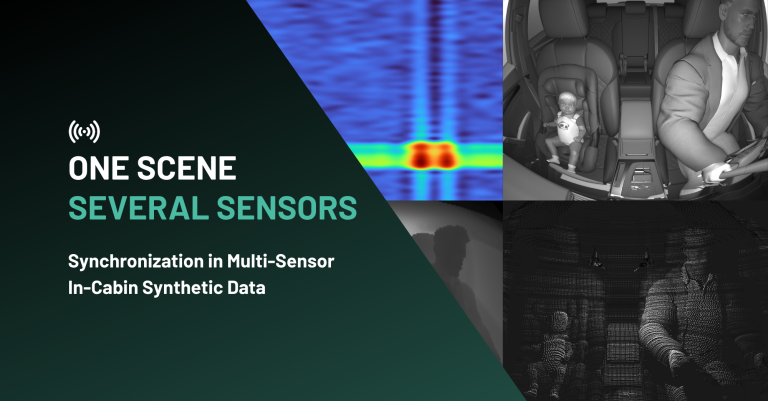
Model each sensor at its physical level, including cameras, LiDAR, ToF, and radar. Swap sensors or test a full rig on the same scene.

03

One validation framework

Run deterministic, reproducible datasets that standardize assessment across the supply chain, and back every result with evidence.

04

Control at scale

Control every variable, including sensor failure modes, with pixel-accurate ground truth, and reach coverage that real-world data collection can’t.

APPLICATIONS

One physics engine
Every perception domain

The same deterministic platform powers every application, so sensor models, materials and validation methods carry across programs and teams.

In-Cabin

Driver, occupant an child-presence monitoring sensor-accurate data, aligned twith Euro NCAP.

ADAS & AD

Physically accurate simulation at scale for ADAS and automated driving perception.

Defence

Multisensor data accross SWIR and thermal bands to strengthen perception-driven defence AI.

Robotics

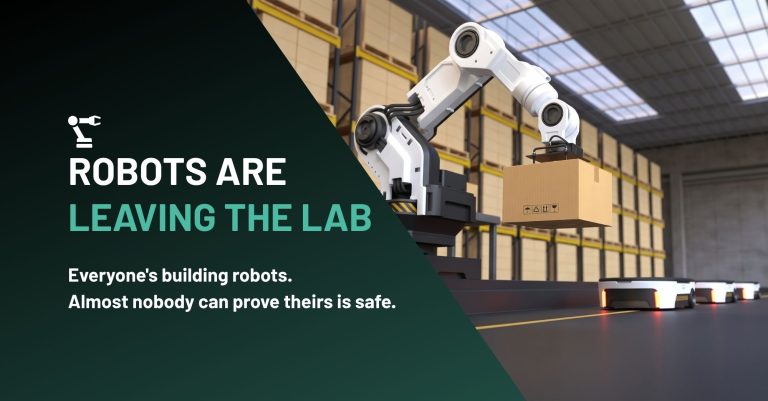
Close the sim-to-real gap in robot perception, and prove you closed it, with physics-compliant data.

TRUSTED BY
FEATURED NEWS
LATEST STORIES

Get started with Anyverse

Accelerate your physical AI validation processes today.

FAQs

Anyverse synthetic data platform for physical AI

What is the Anyverse Platform?

The Anyverse Platform is a cutting-edge synthetic data generation environment tailored for computer vision applications. It serves as the foundational technology behind applications like Anyverse InCabin, Anyverse ADAS, and Anyverse Defence, enabling the creation of high-fidelity, sensor-accurate datasets for physical AI model training and validation.

How does Anyverse differ from other simulation tools?

Unlike generic 3D engines or open-source simulators, Anyverse features a proprietary render engine that simulates light transport with physical accuracy. This results in highly realistic imagery and sensor data, ensuring superior domain transferability and reducing the sim-to-real gap in AI model performance.

What types of sensors and outputs does Anyverse support?

Anyverse supports a wide range of sensors, including RGB-IR cameras, near-infrared (NIR), LiDAR, radar, and thermal imaging. The platform generates sensor-specific outputs with pixel-level precision, encompassing radiometric and spectral fidelity where required, to closely mimic real-world sensor responses.

Can I customize scenarios and environments within the platform?

Absolutely. Anyverse offers extensive customization options, allowing users to define specific scenarios, environments, lighting conditions, and object behaviors. This flexibility ensures that the generated datasets align precisely with your project’s requirements and edge-case scenarios.

How does Anyverse handle environmental variability?

The platform can simulate diverse environmental conditions such as rain, snow, fog, glare, and varying lighting scenarios. This capability enables the creation of robust datasets that prepare physical AI models for real-world operational challenges.

What kind of annotations and metadata are provided?

The Anyverse Platform offers a rich suite of Arbitrary Output Variables (AOVs) sensor-accurate image layers that provide deep semantic, geometric, and physical insight into each scene. These outputs are essential for training, testing, and validating computer vision models in ADAS, autonomous driving, and in-cabin monitoring.

Each AOV captures a specific dimension of the environment, from color and material properties to motion vectors and spectral radiance. The result: a highly detailed and customizable dataset, generated with pixel-perfect accuracy and physical consistency.

Here’s a breakdown of the AOVs available through the Anyverse Platform:

Color Image

  • A standard RGB image rendered using Anyverse’s proprietary spectral rendering engine.
  • Supports 8 to 32 bits per color channel.
  • Produces photorealistic images with true physical lighting and color accuracy.

Label (Semantic Segmentation)

  • 8-bit image.
  • Each pixel is assigned a class label (e.g., pedestrian, vehicle, road) based on a defined ontology.

Instance (Instance Segmentation)

  • 8-bit image.
  • Differentiates between multiple instances of the same class, assigning unique IDs per object.

Material

  • 8-bit image.
  • Each pixel is tagged with its material type (e.g., glass, metal, rubber), based on the material ontology.

Depth

  • 32-bit EXR file with a single-channel floating-point format.
  • Contains inverse normalized radial depth [1-0] from the camera to the first object intersection.
    Depth values exceeding limits are marked as inf.

3D Position

  • 32-bit EXR file with three channels.
  • Provides world-space coordinates (X, Y, Z) of each pixel in Anyverse’s global reference frame.

Normal

  • 32-bit EXR file with three channels.
  • Stores surface normal vectors for each pixel in world space—critical for lighting and material interaction learning.

Roughness

  • Single-channel EXR image.
  • Material roughness per pixel, normalized in range [0-1]; black = smooth (0), white = rough (1).

Reflectance / Albedo

  • RGB color image.
  • Shows intrinsic material color without lighting—useful for isolating material properties.

Radiance

  • Encoded in CIE 1931 XYZ color space.
  • Converts spectral rendering output into a perceptually accurate format.

Spectral Radiance

  • Stores full spectral data per pixel, enabling in-depth color analysis and advanced sensor simulation.

Raw Image

  • 16-bit image simulating direct sensor capture.
  • Contains raw pixel data without compression, gamma correction, or post-processing.

Motion Vector 2D

  • 32-bit EXR with three channels (first two used).
  • Represents pixel velocity projected onto the image plane—not optical flow, but actual 2D motion data.

Motion Vector 3D

  • 32-bit EXR with three channels.
  • Captures full 3D velocity vectors of each pixel in world space.

These annotations and AOVs give developers complete control over the scene’s physical, semantic, and visual parameters—empowering them to train models with greater precision, robustness, and domain relevance.
How does Anyverse support automated data generation?

The Anyverse Platform is built for automation at scale. It allows users to procedurally generate synthetic datasets, automatically aligned with your project’s taxonomy, ontology, and labeling specifications. This ensures every generated image and annotation fits directly into your machine learning pipeline—no need for manual adjustments or reformatting.

From scenario configuration to labeling output, the process is fully automated, enabling fast iterations, continuous dataset updates, and efficient testing of new system features or edge cases.

How scalable is the Anyverse Platform?

Highly scalable by design, the Anyverse Platform leverages a cloud-native architecture to manage scene creation, sensor simulation, and image rendering at production scale. Whether you need hundreds or millions of annotated samples, Anyverse’s Cloud Engine distributes workloads intelligently and delivers results fast—without bottlenecks.

Generated datasets are stored in the cloud for easy access, integration, and collaboration across teams. It’s the ideal solution for enterprises looking to accelerate development cycles while maintaining consistency, quality, and control.

Who is behind the Anyverse Platform?

Anyverse is built by a trusted team of experts with over 25 years of experience developing cutting-edge technologies for complex, safety-critical systems. Our team combines deep expertise in physical AI, rendering, sensor modeling, and simulation to deliver reliable, high-quality solutions at scale.

We don’t just understand the unique challenges of generating data for training and validating AI—we solve them. From onboarding to project delivery, we work as partners, helping you deploy faster with datasets that drive results and meet the most demanding standards.

Who does Anyverse partner with?

Anyverse collaborates with industry leaders, top-tier data providers, and world-class research institutions to shape the future of computer vision and autonomy.

  • Data Solutions Partners like Tech Mahindra, Toyo Corporation, and Keymotek use our synthetic data technology to deliver high-fidelity datasets that power the development and validation of advanced AI systems around the globe.
  • Technology & Sensor Companies such as Google Cloud, SONY, NVIDIA, AWS, and CRONAI work with Anyverse to integrate best-in-class hardware and cloud infrastructure with our simulation technology—unlocking next-generation performance for perception systems.
  • Academic & Research Institutions including Stanford University, WMG University of Warwick, University of Galway, and Tsinghua University rely on Anyverse data to support cutting-edge research in AI, robotics, and autonomous driving.

These partnerships reflect our commitment to global innovation, cross-disciplinary collaboration, and delivering synthetic data solutions that move the industry forward.

Who is using Anyverse today?

Anyverse is trusted by leading global players across the automotive, technology, and automation industries. Our clients include top-tier OEMs, Tier 1 suppliers, and advanced tech companies developing cutting-edge physical AI for perception, autonomy, and safety.

From building Driver Monitoring and Occupant Monitoring Systems to validating ADAS and full-stack autonomous driving features, these organizations rely on Anyverse to generate high-fidelity, physics-accurate synthetic datasets that accelerate development, improve model robustness, and support regulatory compliance.

Whether for research, pre-production, or global deployment, Anyverse powers the next generation of intelligent systems—confidentially, securely, and at scale.

Is Anyverse suitable for regulatory compliance testing?

Yes, Anyverse is built for determinism in regulated markets.  It facilitates the generation of datasets aligned with regulatory standards such as Euro NCAP and UNECE protocols. By simulating standardized test scenarios, the platform aids in the development and validation of physical AI systems that meet industry safety requirements.

How can I get started with the Anyverse Platform?

To begin, you can request a personalized demo through our website. Our team will guide you through the platform’s capabilities and discuss how it can be tailored to your specific use case. Additionally, trial access may be available to evaluate the platform’s fit for your project needs.