
Table of Contents
Table of Contents
Executive Summary:
The Evolution of In-Cabin Sensing
As Euro NCAP and GSR2 make In-Cabin Monitoring Systems mandatory, Driver Monitoring Systems (DMS) must deliver more than compliance—they must prove reliability across glare, darkness, occlusions, and rare safety-critical events like child presence detection.
No single sensor can meet this demand alone. RGB provides semantic detail but struggles in poor lighting; IR improves low-light performance but lacks contextual richness; radar detects presence and micro-motion but offers limited scene understanding. Sensor fusion—combining RGB, IR, and radar—is therefore essential to achieve resilience, redundancy, and confidence-aware decision-making across the full Operational Design Domain (ODD).
However, fusion reliability hinges on validation. Real-world data cannot deliver the synchronized, diverse, and repeatable multimodal datasets required for certification-level confidence. Sensor-realistic synthetic data enables controlled scenario coverage, long-tail stress testing, and measurable benchmarking—making it foundational to production-ready, defensible in-cabin AI.

Sensor Fusion in Driver Monitoring Systems
The automotive industry has moved beyond debating whether in-cabin monitoring is necessary. Regulatory frameworks such as Euro NCAP protocols and GSR2 have already answered that question. The real inflection point lies elsewhere: how reliably these systems perform under real-world cabin variability. For OEMs and Tier-1 suppliers, the competitive differentiator is no longer feature inclusion, but demonstrable robustness across lighting extremes, occlusions, and occupant diversity.
The automotive industry is at an inflection point. The pursuit of next-generation vehicle safety, mandated by rigorous frameworks such as Euro NCAP protocols and GSR2, has made In-Cabin Monitoring Systems (ICMS) a regulatory requirement. However, for OEMs and Tier-1 suppliers, the stakes extend beyond mere compliance.
There is a fierce commercial imperative at play: the race to define the premium cabin experience. In a market where safety ratings are a primary decision metric for buyers, a robust DMS (Driver Monitoring System) is a competitive differentiator. A system that fails in direct sunlight, falsely alerts during normal driving, or ignores a child left in the back seat does not just fail a safety test. It damages brand reputation and cedes market share to competitors with more advanced perception stacks.
Achieving this level of uncompromising reliability requires moving beyond the limitations of single-sensor setups. RGB cameras, infrared (IR) sensors, and radar each provide unique insights into the cabin environment. Yet each modality is limited: RGB cameras fail in glare or darkness, radar lacks semantic detail, and IR struggles with reflective surfaces or certain fabrics. Vehicle cabins are highly dynamic environments, with unpredictable lighting, occlusions, and diverse occupants. A child may be hidden under a blanket, a driver may wear sunglasses, or sunlight may shift rapidly across the dashboard. Single sensors simply cannot handle this complexity alone, making DMS sensor fusion not just an option, but a necessity.
Merging RGB, IR, and radar streams into a unified perception system, offers a robust solution. Beyond safety, fusion systems are commercially strategic: they provide the reliability and feature completeness needed to differentiate products, achieve higher safety ratings, and reduce liability risks. This article examines the technical, operational, and data-centric foundations of DMS sensor fusion, highlighting why synthetic data has become indispensable for delivering production-ready, certifiable systems.

Hardware Selection: Balancing RGB, IR, and Radar for Occupant Monitoring
A production-grade in-cabin monitoring system is rarely built on a single sensing modality. RGB cameras, infrared systems, and in-cabin radar each address different physical aspects of perception — from semantic understanding to illumination resilience and micro-motion detection. The challenge is not choosing the “best” sensor, but understanding where each modality fails when operating alone. Therefore, fusion is not a luxury but an architectural necessity to cover the blind spots inherent in every modality.
RGB Cameras in DMS: Semantic Power Under Environmental Constraints
RGB cameras are the workhorse of today’s in-cabin monitoring systems. They provide the rich visual detail needed for tasks such as face detection, gaze tracking, and occupant classification.
Strengths
- Capture color, texture, and high-resolution detail
- Provide strong semantic cues for identity, pose, and object recognition
- Well-supported by mature computer vision pipelines and tooling
Weaknesses
- Highly sensitive to ambient lighting
- Performance drops sharply in darkness, shadows, or direct glare
- Struggle with occlusions like sunglasses, hats, or hands
- Can miss subtle motions, especially when the driver is still or partially hidden
RGB cameras excel at understanding what is happening, but only when they can see clearly.

Infrared (IR) Cameras in DMS — Lighting Independence With Physical Constraints
Infrared cameras add a controlled illumination source, making them a powerful complement to RGB.
Strengths
- Unaffected by ambient light, enabling reliable night-time performance
- Facilitate depth perception and 3D pose estimation in some implementations
- Support physiological monitoring, such as blink detection and coarse gaze estimation, under controlled conditions
- Better resilience against shadows or sun glare
Weaknesses
- Susceptible to reflections from glasses, glossy materials, or certain fabrics
- Provide limited contextual detail compared to RGB imagery. Performance can degrade with low-resolution sensors, reflective glasses, or certain fabrics
- Can struggle in scenes with complex material compositions
IR provides consistent visibility, but not the semantic richness needed for full-scene understanding.

In-Cabin Radar: Micro-Motion and Child Presence Detection
Radar is emerging as a critical modality for DMS and OMS thanks to its robustness in challenging environments.
Strengths
- Completely independent of lighting conditions
- Penetrates obscurants such as clothing, blankets, or seatbacks
- Detects micro-motions (breathing, heartbeat, subtle posture shifts) under ideal conditions
- Robust against fog, smoke, and other visual interferences
- Provides range and velocity data unavailable to camera-based systems
Weaknesses
- Very low spatial resolution
- Cannot reliably identify faces, classify detailed objects, or interpret complex scenes without complementary sensors
- Offers minimal semantic information
Radar gives the how (movement, presence, micro-motion) but not the what.

ICMS Sensor Comparison Table
Sensor Type | Strengths | Blind Spots / Limitations | Best For |
RGB Camera | • High semantic detail (face, gaze, behavior) • Mature CV tooling • Strong feature extraction | • Dependent on ambient light • Sensitive to glare/shadows • Occluded easily (hands, sunglasses, visors) | Behavior classification, face ID, gaze, posture |
Infrared (IR / NIR / ToF) | • Works in darkness • Robust to lighting changes • Strong depth + 3D pose cues • Useful for physiology signals | • Reflective material issues • Less contextual detail • Some fabrics degrade depth accuracy | Night-time DMS, occlusion-robust pose, vital signs |
Radar (60–77GHz / 4D radar) | • Lighting-independent • Penetrates blankets/clothing • Detects micro-motion (breathing, heartbeat) • Strong for presence detection | • Very low spatial resolution • Poor semantic understanding • Clutter can cause false positives | Child presence detection, vital signs, occupancy |
Why Multimodal Sensor Fusion Is Architecturally Essential for Robust DMS and OMS
Even the strongest single modality fails under the full spectrum of cabin scenarios. The combination of RGB + IR + radar offers a far more balanced and reliable perception stack.
Fusion benefits:
- Complementary strengths: RGB’s semantic clarity + IR’s lighting resilience + radar’s micro-motion detection
- Mitigation of weaknesses: One sensor compensates when another falters
- Redundancy: Multimodal agreement increases confidence and reduces false alarms
- Scenario completeness: From bright sunlight to pitch-dark cabins, from hidden infants to sleeping adults, fusion dramatically broadens coverage
Together, these sensors create a more resilient view of the cabin, but only if they can be made to speak the same technical language. And that’s where the real challenge begins: aligning disparate data streams, balancing conflicting signals, and building fusion architectures capable of operating under automotive constraints.
Architecting Robust Sensor Fusion for In-Cabin Monitoring AI
Integrating heterogeneous sensor streams into a single perception output introduces non-trivial systems engineering complexity. Sampling rates differ, coordinate systems misalign, and noise characteristics vary significantly between modalities. Without disciplined architectural design, fusion risks amplifying inconsistency rather than resolving it. For engineers and decision-makers in OEMs and Tier-1s, these are daily challenges that often dictate whether a system can achieve certification-level reliability.
ICMS Sensor Synchronization and Calibration: Aligning the Different Streams
Every sensor captures the world in its own frame of reference, literally and temporally. Cameras produce high-resolution RGB frames at tens of Hertz, IR sensors may sample differently, and radar emits pulses that must be interpreted as point clouds.
- Temporal Misalignment: Even millisecond discrepancies can lead to contradictory readings (e.g., gaze vs. head pose).
- Spatial Registration: Mapping a radar point cloud onto a 2D image plane requires rigorous, continuous calibration to account for thermal drift and vibration common in automotive environments.
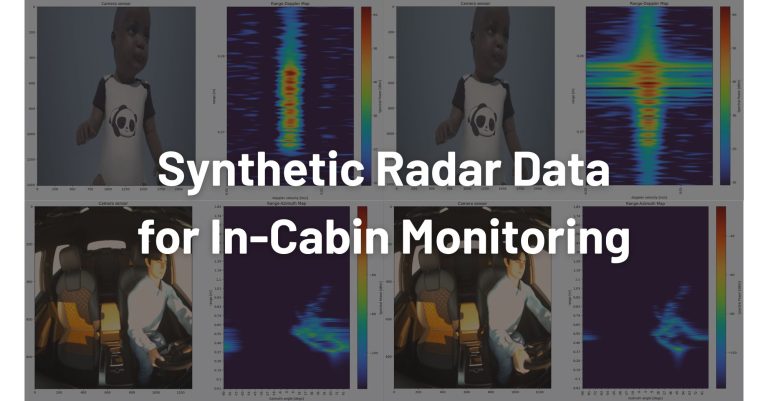
For example, Vayyar’s 4D radar systems illustrate the importance of precise alignment, using calibrated radar point clouds to track occupancy and vital signs reliably, even under blankets or in low-light conditions. This demonstrates how hardware-level calibration paired with careful software synchronization ensures that each sensor’s perspective contributes meaningfully to the fused output.
Synchronization and calibration are foundational: without them, fusion algorithms can produce inconsistent, unreliable outputs. This requires both precise hardware-level alignment and software-level timestamping, often with continuous self-checks to compensate for vibrations, thermal drift, and other automotive realities.
Resolving Sensor Disagreement: Confidence Weighting and Learned DMS Fusion Models
Even perfectly synchronized data does not guarantee agreement. Situations frequently arise where sensors report conflicting information and fusion algorithms must resolve conflicting signals.
- Example: Radar detects a heartbeat under a blanket, but the camera sees an empty seat.
- Solution: Advanced “Learned Fusion” architectures use neural networks to dynamically weight sensor inputs based on environmental context, rather than relying on static, rule-based logic.
Companies such as MulticoreWare and Cipia have demonstrated this in practice with their 60GHz radar + camera prototype at CES, successfully fusing high-resolution radar and camera data in real time. Similarly, Tobii and Texas Instruments’ demos highlight radar-camera pipelines that improve gaze tracking and micro-motion detection under challenging conditions, illustrating how intelligent fusion resolves sensor conflicts.
Fusion systems must implement robust confidence weighting and conflict-resolution strategies. Learned fusion approaches where neural networks integrate multimodal inputs can dynamically assign reliability to each sensor depending on the scenario. Early- and late-fusion strategies each have trade-offs: early fusion combines raw features but is sensitive to noise and misalignment; late fusion merges decisions but may lose fine-grained correlations. Balancing these strategies is as much art as it is science.

Design Principles for Sensor Fusion Architectures in DMS
From an architectural perspective, several principles guide successful fusion:
- Modularity: Keep sensor processing pipelines separable for maintainability and debugging.
- Redundancy: Ensure multiple sensors can confirm critical signals for safety-critical decisions.
- Low-latency integration: Automotive systems require near-real-time response; fusion must respect strict timing constraints.
- Confidence-aware decision-making: Algorithms must reason probabilistically about uncertain or conflicting inputs.
- Synthetic-first validation: Treat synthetic data as a core component for evaluating reliability under extreme and rare conditions.
Taken together, these design principles help bridge the gap between theoretical sensor fusion and real-world, certifiable performance, laying the groundwork for the advanced validation and benchmarking discussed in later sections.
No OEM or Tier-1 can realistically collect synchronized RGB, IR, and radar data that spans every geography, occupant profile, and cabin condition their systems must handle. Capturing rare occupant states, sensitive child scenarios, and extreme environments at scale is logistically infeasible and constrained by cost, privacy, and time.
Even teams deploying advanced, production-grade systems face the same limitation: real-world data is inherently fragmented and poorly suited for validating complex fusion behavior. When system reliability depends on perfectly aligned, repeatable multimodal data, physical collection reaches its limits forcing the industry to seek a fundamentally different validation approach.
Closing the Data Gap: Using Synthetic Data to Engineer DMS Fusion Robustness
As fusion architectures grow more complex, the bottleneck isn’t algorithm design, it’s data. Real-world collection simply cannot deliver the volume, diversity, synchronization, and scenario coverage required to train and validate multi-sensor DMS systems with confidence. The cabin environment is too dynamic, too variable, and too constrained by privacy and operational limitations. Synthetic data transforms this bottleneck into an opportunity.
When perception systems depend on tightly coupled interactions between RGB, IR, and radar, validation requires data that is synchronized by design, exhaustive by construction, and measurable by default.
Perfect Sensor Synchronization for ICMS by Construction
Multimodal fusion stands or falls on alignment. If sensors aren’t tightly synchronized, pixel to radar return, frame to depth map, fusion networks inherit noise, drift, and ambiguity. Synthetic data can greatly reduce this problem at the root.
In a sensor-realistic simulation environment, every modality (RGB, IR, depth, and radar) is generated from the same underlying scene. This means:
- Pixel-perfect temporal alignment between RGB and IR frames
- Radar point clouds temporally and spatially registered to the same events
- Identical ground-truth labels across all sensors
- Frame-accurate calibration and transformation matrices
- Deterministic repetition for debugging and A/B evaluation
This level of synchronization is effectively impossible to guarantee at scale with real-world data, yet it is foundational for debugging and validating fusion behavior. Synthetic data removes ambiguity at the source, allowing engineers to attribute performance outcomes to model behavior and not data noise.
Holistic Control of In-Cabin Scenarios
Beyond alignment, simulation provides something even more valuable: intentional in-cabin scenario design.
Synthetic data platforms allow engineers to author, iterate, and parameterize targeted scenarios, those that typically defeat camera-only or radar-only systems:
- A toddler hidden beneath a reflective blanket
- A driver’s face intermittently occluded by sun visor, hands, or accessories
- Mixed lighting conditions: low sun + IR reflections + headlight flicker
- Unusual seating postures and rare physiological traits
- Ultra-low illumination where RGB is blind but radar still detects micro-motion
Crucially, these scenarios are not isolated “edge cases.” They represent realistic combinations of conditions that fusion systems must handle reliably to meet safety expectations. Synthetic data allows teams to explore this combinatorial space systematically rather than opportunistically.
From Data Generation to Validation Infrastructure for In-Cabin Monitoring
The most mature synthetic data platforms go beyond image generation. They model sensor physics, ensuring that IR radiometry, noise characteristics, and radar point-cloud behavior reflect real hardware constraints. This distinction matters: fusion models trained or validated on unrealistic data may overperform in simulation and underperform in production.
Platforms such as Anyverse InCabin operate at this system level, providing a simulation environment where:
- Camera, IR, and radar outputs are generated from a shared, physically grounded scene
- Sensor behavior reflects real-world limitations, not idealized signals
- Ground truth is comprehensive, consistent, and directly usable for assessment
In this context, synthetic data becomes more than a training aid. It forms the backbone of a repeatable validation and benchmarking strategy, enabling teams to quantify fusion performance, compare architectural choices, and document results with the rigor required for internal review and external assessment.

Synthetic Data as a Core Enabler of Sensor Fusion Performance in DMS
Critically, synthetic data is not merely a tool to “add” corner cases. It is the only scalable, controlled, repeatable environment where multimodal fusion can be systematically validated. It enables:
- Traceable scenario coverage aligned with safety requirements
- Repeatable test conditions, essential for debugging disagreements between sensors
- Controlled sensor fault injection (e.g., radar dropout, IR drift)
- Benchmarking architectures under identical conditions to guide design choices
In short, synthetic data becomes the proving ground for the entire fusion development cycle from training to evaluation, from algorithmic decisions to safety case preparation.
And as we turn to testing and benchmarking, this becomes even more essential: without synthetic datasets, we cannot measure fusion performance at the level regulators, safety teams, and OEM leadership now demand.
KPIs for DMS Sensor Fusion: Benchmarking Fusion Performance & Reliability
Fusion performance cannot be reduced to aggregate accuracy metrics. Validation must operate at three distinct but connected levels: modality fidelity, cross-modal agreement, and system-level behavior under stress. Each layer reveals different aspects of robustness. A rigorous validation strategy must therefore evaluate each modality independently and the fused output as a cohesive whole.
Modality-Level KPIs: Ensuring Each Sensor Meets Baseline Functional Requirements
Before signals enter the fusion layer, they must satisfy physics-consistent performance thresholds.
Typical modality-specific metrics include:
- RGB / IR cameras
- Face and eye detection rates
- Head-pose and gaze estimation accuracy
- Occlusion tolerance
- Temporal stability under lighting changes
- Radar
- Presence and occupancy detection reliability
- Range and velocity estimation error
- Micro-motion sensitivity (e.g., breathing patterns, heartbeat)
- Target separation in cluttered cabins
These tests validate whether each modality meets baseline functional expectations before entering the fusion pipeline. Synthetic data is particularly valuable here because ground truth is always complete and modality-aligned.
Fusion-Level Metrics: Reliability Under Disagreement and Sensor Degradation
Fusion performance is not a simple aggregation of sensor accuracy. What matters is behavior under disagreement. Systems must demonstrate graceful degradation, not brittle collapse. Evaluating behavior under partial sensor dropout or ambiguous cross-modal cues reveals architectural maturity.
Key fusion-level indicators include:
- Overall task performance (precision, recall, false positives/negatives)
- Temporal consistency of outputs (e.g., gaze or posture stability over time)
- Cross-modality confidence estimation (is the system weighting sensors correctly?)
- Failure-mode robustness, such as how gracefully the system handles missing or corrupted sensor data
For example, if radar detects micro-motion but the camera view is occluded, does the system correctly lower semantic confidence while maintaining presence awareness? These dynamics are almost impossible to quantify without synthetic scenarios where sensor conditions are intentionally manipulated.
In Cabin Stress Testing the Long Tail: Synthetic Validation for Rare but Safety-Critical Events
Edge cases — severe occlusion, unusual seating postures, extreme illumination — disproportionately contribute to safety risk. This is where conventional datasets fall short. Real-world data tends to cluster around normal driving conditions. Fusion evaluation, however, demands controlled exposure to scenarios that are rare but safety-critical.
Synthetic validation enables systematic stress testing across:
- Extreme lighting: sun glare, deep shadow, rapid transitions (sun to tunnel)
- Partial and full occlusions: hands, accessories, seatbacks, blankets
- Clutter and cabin geometry variation
- Rear-seat complexity: multiple occupants, unusual poses
- Sensor faults, noise injection, or temporary dropouts: radar interference, sudden IR failure, RGB overexposure
- Unusual postures, clothing materials, and body types
Real-world testing cannot reliably reproduce these conditions in a controlled and repeatable manner. Yet regulators increasingly expect evidence that systems can handle them.

Using Synthetic Data for Robust DMS Sensor Fusion
Synthetic data becomes indispensable at this stage not to “fill in gaps,” but to systematically construct and evaluate necessary scenarios.
Synthetic validation enables:
- Repeatable, parameterized stress tests across lighting, pose, occlusion, and sensor conditions
- Massive scenario sweeps that quantify system sensitivity to edge-case variations
- Consistency checks across perfectly synchronized modalities (critical for debugging fusion disagreements)
- Controlled fault injection, such as intentional radar dropout or IR noise
This level of precision is impossible with purely real-world data collection.
Hybrid Validation:
Combining Synthetic Scale with Real-World Hardware Grounding
The most effective programs converge on a hybrid strategy:
- Synthetic data for scale, synchronization, scenario coverage and control, and repeatability
- Targeted real-world data for hardware grounding and final system confirmation
This approach balances realism with control and is rapidly becoming the de facto standard for production-grade DMS fusion validation. Synthetic data, used intentionally and scientifically, ensures that fusion systems are not only high-performing but verifiably trustworthy.

A Practical Framework for Production-Grade DMS Fusion Success
Robust multimodal systems emerge from disciplined integration of architecture, data strategy, and validation methodology. Treating fusion as an afterthought — or data as an afterthought — leads to brittle deployments and regulatory friction.
Successful OEMs and Tier-1s bringing multimodal in-cabin monitoring systems to market consistently apply these four principles:
Step 1: Define Use Cases Through Failure-Mode and ODD Analysis
Every fusion pipeline begins with clarity on the Operational Design Domain (ODD), not just what the system should detect, but when, where, and under which constraints.
Key questions include:
- What occupant states matter most? (drowsiness, distraction, vital signs, child presence)
- Which seating positions and cabin configurations must be covered?
- Which occupant states carry the highest risk or regulatory weight?
- How should the system behave when sensors disagree or degrade?
- What failures are unacceptable from a safety or rating perspective?
This framing keeps fusion grounded in safety outcomes and avoids over-engineering.
Step 2: Commit to Fusion Architecture Early (Early vs. Mid vs. Late Fusion)
Fusion strategy should be chosen with intentionality, not bolted on after single-sensor models are trained.
Common fusion paradigms include:
- Early fusion: combining raw or low-level sensor data
- Mid-level fusion: merging feature representations
- Late fusion: aggregating model outputs or confidence maps
Choosing the right approach depends on:
- Real-time constraints
- Sensor availability and placement
- Expected failure modes
- Explainability or traceability requirements for regulatory dossiers
Early architectural clarity simplifies downstream engineering, reduces model churn, and ensures that sensor- and algorithm-level decisions reinforce one another.
Step 3: Build a Data-Centric, Synthetic-First Multimodal Pipeline
Sensor fusion success is overwhelmingly determined by data diversity, alignment, and coverage.
A robust pipeline adopts a synthetic-first methodology, generating the foundational datasets for development and validation, which are then grounded with targeted real-world data.
- Synthetic-first datasets to generate large, balanced, and perfectly aligned multimodal data
- Targeted real-world datasets to anchor models to true sensor behavior
- Automated scenario generation to cover lighting, occlusions, poses, clutter, and edge-case physiology
- Ground-truth completeness only achievable through sensor-realistic simulation
Here, synthetic data is not just an accelerator; it is the only scalable method to capture the combinatorial explosion of multi-sensor conditions that must be tested for production validation.
Step 4: Validate for the Long Tail, Align with Euro NCAP and Child Presence Detection Expectations
Real robustness emerges only when the system is evaluated against rare, safety-relevant events.
A long-tail validation strategy includes:
- Stress tests for lighting, occlusion, sensor dropout, and multi-occupant complexity
- Scenario families, not isolated events, to measure the sensitivity of fusion outputs
- Cross-modality disagreement tests to ensure confidence estimation behaves predictably
- Regulatory-aligned scenario suites, aligned with Euro NCAP and CPD expectations
Synthetic data plays a central role here, allowing engineers to systematically probe where fusion fails, tune confidence thresholds, and document traceable evidence for compliance frameworks.
Fusion systems become production-ready not when they perform well on average, but when they behave reliably in the long tail. By following this framework and grounding every stage with structured, sensor-realistic synthetic data, teams can transform fusion from a research challenge into a dependable, certifiable safety technology.
The Future of In-Cabin Safety is Data-Driven & Sensor Fusion
The evolution of in-cabin monitoring is no longer driven solely by compliance. It is driven by competition.
OEMs are racing to deliver DMS and OMS solutions that are:
- Safer, to secure strong consumer-test ratings
- More robust, to avoid recalls and liability
- More advanced, to differentiate in increasingly crowded vehicle segments
Sensor fusion, combining RGB, IR, and radar, has emerged as the only viable path to meet these expectations consistently. It transforms fragile, single-sensor perception into a resilient, context-aware understanding of the cabin.
Yet the industry has learned a hard lesson: fusion is easy to demonstrate, but difficult to prove. Validation, not architecture, is now the limiting factor.
Real-world data alone cannot provide the scale, diversity, synchronization, or repeatability required to certify multimodal systems with confidence. This is why synthetic data has moved from a “useful tool” to a foundational requirement for in-cabin development.
Sensor-realistic simulation enables:
- Systematic stress testing across the full scenario space
- Quantifiable confidence in fusion behavior
- Evidence-based validation aligned with future Euro NCAP and CPD expectations
For teams that embrace this shift, the payoff is substantial: faster development cycles, clearer safety cases, stronger ratings performance, and ultimately, more competitive vehicles.
The message is clear: the future of in-cabin monitoring belongs to teams who combine strong fusion engineering with an equally strong synthetic data strategy. Together, they form the scalable, evidence-based path to the safer, smarter, and legally defensible vehicles of the future.
FAQs: DMS Sensor Fusion
What is the Operational Design Domain (ODD) in DMS development?
The Operational Design Domain (ODD) defines the environmental and usage conditions under which the system must function reliably. In DMS, this includes lighting variability (glare, tunnels, night driving), occupant diversity, seating positions, occlusions, and sensor degradation scenarios. Fusion architectures must be validated across the entire ODD, not just nominal driving conditions.
What is synchronization and calibration in sensor fusion?
Synchronization ensures that sensor data streams (RGB frames, IR depth maps, radar point clouds) are temporally aligned. Calibration ensures spatial alignment across coordinate systems. In automotive environments subject to vibration and thermal drift, maintaining accurate timestamping and transformation matrices is essential to prevent contradictory interpretations in the fusion layer.
What is “confidence-aware decision-making” in multimodal DMS?
Confidence-aware decision-making refers to probabilistic reasoning within fusion architectures. Instead of treating all sensor inputs equally, learned fusion models dynamically weight modalities based on reliability in context (e.g., lowering RGB weight during glare conditions). This reduces instability during sensor disagreement and improves safety-case defensibility.
What is micro-motion detection, and why is it important?
Micro-motion detection captures subtle physiological movements such as breathing or heartbeat. Radar is uniquely capable of measuring these through occlusions, enabling occupancy and child presence monitoring in low-visibility conditions. Detecting micro-motions is crucial for safety-critical alerts and validating system reliability under extreme scenarios.
What is fault injection in synthetic validation?
Fault injection is the intentional simulation of sensor failures or degraded performance, such as IR noise, radar dropout, or overexposed RGB frames. It allows engineers to test fusion resilience and confidence-weighting strategies under conditions that are difficult or unsafe to reproduce in real vehicles, supporting long-tail validation and regulatory documentation.
What are blind spots in single-sensor DMS systems?
Blind spots are the limitations of individual sensor modalities. For example, RGB cameras can miss occluded faces or fail under strong sunlight; IR cameras struggle with reflective glasses or certain fabrics; radar cannot provide semantic detail or classify complex objects. Sensor fusion mitigates these blind spots by leveraging complementary strengths.