
Explaining in-cabin monitoring systems the tech behind safer vehicles
SHARE

In-cabin monitoring systems are transforming vehicle safety by utilizing advanced sensors, cameras, and hardware to monitor drivers’ and passengers’ behaviors and well-being. This seamless integration of advanced perception technologies and AI models is essential for developing smarter, safer vehicles. It enables critical features like driver distraction alerts, fatigue detection, and child presence monitoring, ensuring a safer driving experience and enhancing overall vehicle intelligence.

As in-cabin monitoring systems and regulations advance, industry professionals must understand the technology behind driver and occupational monitoring systems. These systems accurately perceive and analyze the environment to enhance driver safety.

The core technologies powering in-cabin monitoring systems

Interior monitoring systems use an array of sensors and cameras to capture and analyze real-time inputs while the vehicle is in motion. These technologies continuously monitor driver and occupant behaviors, manage vehicle control when needed, and provide insights into safety, comfort, and infotainment. This ensures a more responsive and safer driving experience. Below is a breakdown of the most commonly used technologies:

Cameras and sensors inside the cabin

  1. Optical cameras: Various types of optical cameras are at the heart of in-cabin monitoring systems. They capture essential information such as facial expressions, eye movements, and head positions, all of which are crucial for detecting driver fatigue or distraction.
  2. Accelerometers and gyroscopes: These sensors track physical and environmental changes inside the vehicle, such as sudden braking or swerving, further enhancing the system’s safety features.

Types of cameras sensors and their applications

Different types of camera sensors have specific applications, and no single technology is perfect for all scenarios. Here’s a closer look at the key types:

  • Depth cameras (3D): These include time-of-flight (ToF) sensors, stereo systems, and multi-camera setups that triangulate the scene’s geometry to provide 3D imaging.
  • Surface reflectance (2D): RGB or near-infrared (NIR) sensors can analyze the reflectance of surfaces inside the cabin, which can inform about material properties or even skin conditions.
  • Thermal cameras (FIR): Far-infrared (FIR) cameras detect temperature variations, enabling applications like occupant detection and monitoring body heat changes due to illness or stress.


While each camera type has its strengths, combining several camera types, camera positions, and different sensors creates a more robust system capable of a wider range of applications. For instance, pairing an RGB camera with a thermal imaging sensor can enable both visual monitoring and temperature detection.

Key sensor differences

Understanding the differences between these sensors is crucial for selecting the best combination for any in-cabin system:

  • Applications: Different sensors are suitable for various use cases, such as detecting color, temperature, or light intensity.
  • Spectral sensitivity: Sensors like RGB detect visible light, while NIR captures near-infrared, and FIR picks up thermal radiation.
  • Image output: RGB cameras provide color images, FIR sensors produce thermal imagery, and NIR sensors generate images based on infrared illumination.

Additional in-cabin monitoring systems technology

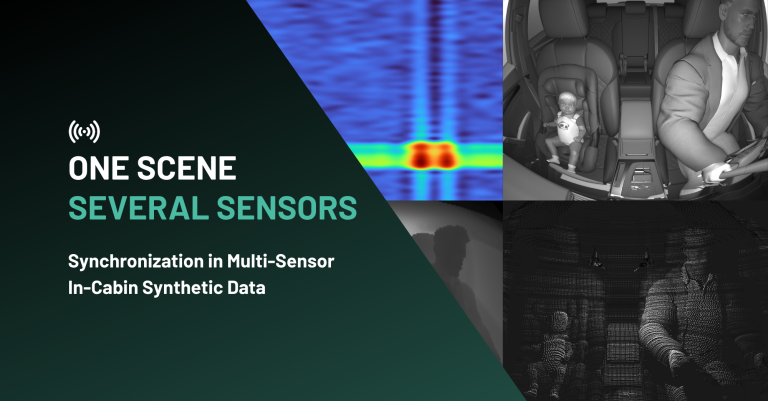
  1. Radar: Unlike cameras, radar systems use radio waves to detect the distance, speed, and direction of objects. Radar operates effectively even in poor lighting conditions and through materials like seats. However, it struggles with fine details like facial expressions, making it better suited for detecting object movement or use in parked vehicles.
  2. Time-of-Flight (ToF) cameras: ToF technology calculates the time it takes for light pulses to travel to an object and return. This enables accurate 3D mapping, perfect for gesture recognition or distance measurement within the cabin.
  3. NIR and FIR cameras: These sensors operate in different light spectrums, providing data about occupants’ skin reflectance or temperature. For example, NIR sensors can track facial expressions in both light and dark conditions, making them ideal for driver monitoring day or night.

Current market usage

At the moment, near-infrared (NIR) illuminated monochrome cameras are the most widely used sensors for in-cabin monitoring, with over half of in-car sensors falling into this category. These cameras, aided by infrared LEDs, illuminate the driver’s face, allowing for the detection of facial expressions and eye movements in low-light conditions. The main use case is fatigue or distraction monitoring.

Regular RGB cameras, the second most common type, typically occupy a central location within the cabin and are used for infotainment purposes, like recording photos or videos. However, they lack built-in illumination, limiting their functionality at night.

A more advanced solution involves RGB-IR cameras, which combine the features of RGB cameras with NIR components to maintain color fidelity while providing nighttime functionality.

Other non-camera-based sensors, such as radar and ultrasound, are also making their way into the market, particularly for cost-effective occupant monitoring systems that don’t require video recording.

Major challenges ahead

Driver Monitoring Systems (DMS) and Occupant Monitoring Systems (OMS) are crucial for ensuring passenger safety. As in-cabin technology evolves, regulations are also becoming more stringent, leading to increasingly complex assessment programs and consumer tests for manufacturers.

The industry has emphasized the urgent need for robust validation processes and clear standards. Ensuring the accuracy and reliability of these systems under real-world conditions is vital for manufacturers focused on enhancing safety and regulatory compliance. This highlights the complexities involved in testing and validating in-cabin monitoring systems, a challenge that must be addressed to fully realize the potential of these technologies.

The In-cabin monitoring validation gymkhana

Validating in-cabin monitoring systems presents a series of formidable challenges for the automotive industry. One of the primary hurdles is the lack of reliable real-world data, which is essential for ensuring safety and performance. Privacy concerns further complicate data collection, as manufacturers must navigate strict regulations to avoid legal pitfalls. Additionally, the absence of standardized validation processes makes it difficult for companies to benchmark their systems against industry norms. Anyverse addresses these challenges with a comprehensive validation workflow, designed to streamline and enhance the validation process. Providing regulatory-compliant test cases, realistic simulations of humans, behavior, and physics, no privacy issues, and all the variability needed to get in-cabin monitoring systems market-ready faster. 

With Anyverse, navigating the validation gymkhana becomes a streamlined journey toward achieving reliable, compliant, and effective in-cabin monitoring systems.
Enjoyed this article?

Add us as a Preferred Source on Google to see more content like this in Discover and Top Stories.

About Anyverse

With over 25 years of heritage in physics-based simulation and a 2008 Academy Technical Achievement Award, Anyverse is a leading provider of high-fidelity synthetic data and validation tools for advanced Perception AI.

While Anyverse remains a premier partner for the Automotive market, specializing in In-Cabin Monitoring systems and ADAS, its technology is increasingly adopted across Defence, Robotics, and Industry 4.0. Leveraging a proprietary physics-grounded engine, procedural synthetic data generation, and next-gen Generative AI, Anyverse produces datasets with unmatched realism and sensor-level accuracy (including RGB, NIR, Radar, LiDAR, and Thermal).

Its unified validation framework helps partners ensure compliance with specific regulations like Euro NCAP, as well as broader safety standards for autonomous systems. By bridging the gap between simulation and reality, Anyverse accelerates development, reduces costs, and ensures trustworthy perception for vehicles, robots, and intelligent machines.

Explaining in-cabin monitoring systems the tech behind safer vehicles

SHARE

In-cabin monitoring systems are transforming vehicle safety by utilizing advanced sensors, cameras, and hardware to monitor drivers’ and passengers’ behaviors and well-being. This seamless integration of advanced perception technologies and AI models is essential for developing smarter, safer vehicles. It enables critical features like driver distraction alerts, fatigue detection, and child presence monitoring, ensuring a safer driving experience and enhancing overall vehicle intelligence.

As in-cabin monitoring systems and regulations advance, industry professionals must understand the technology behind driver and occupational monitoring systems. These systems accurately perceive and analyze the environment to enhance driver safety.

The core technologies powering in-cabin monitoring systems

Interior monitoring systems use an array of sensors and cameras to capture and analyze real-time inputs while the vehicle is in motion. These technologies continuously monitor driver and occupant behaviors, manage vehicle control when needed, and provide insights into safety, comfort, and infotainment. This ensures a more responsive and safer driving experience. Below is a breakdown of the most commonly used technologies:

Cameras and sensors inside the cabin

  1. Optical cameras: Various types of optical cameras are at the heart of in-cabin monitoring systems. They capture essential information such as facial expressions, eye movements, and head positions, all of which are crucial for detecting driver fatigue or distraction.
  2. Accelerometers and gyroscopes: These sensors track physical and environmental changes inside the vehicle, such as sudden braking or swerving, further enhancing the system’s safety features.

Types of cameras sensors and their applications

Different types of camera sensors have specific applications, and no single technology is perfect for all scenarios. Here’s a closer look at the key types:

  • Depth cameras (3D): These include time-of-flight (ToF) sensors, stereo systems, and multi-camera setups that triangulate the scene’s geometry to provide 3D imaging.
  • Surface reflectance (2D): RGB or near-infrared (NIR) sensors can analyze the reflectance of surfaces inside the cabin, which can inform about material properties or even skin conditions.
  • Thermal cameras (FIR): Far-infrared (FIR) cameras detect temperature variations, enabling applications like occupant detection and monitoring body heat changes due to illness or stress.


While each camera type has its strengths, combining several camera types, camera positions, and different sensors creates a more robust system capable of a wider range of applications. For instance, pairing an RGB camera with a thermal imaging sensor can enable both visual monitoring and temperature detection.

Key sensor differences

Understanding the differences between these sensors is crucial for selecting the best combination for any in-cabin system:

  • Applications: Different sensors are suitable for various use cases, such as detecting color, temperature, or light intensity.
  • Spectral sensitivity: Sensors like RGB detect visible light, while NIR captures near-infrared, and FIR picks up thermal radiation.
  • Image output: RGB cameras provide color images, FIR sensors produce thermal imagery, and NIR sensors generate images based on infrared illumination.

Additional in-cabin monitoring systems technology

  1. Radar: Unlike cameras, radar systems use radio waves to detect the distance, speed, and direction of objects. Radar operates effectively even in poor lighting conditions and through materials like seats. However, it struggles with fine details like facial expressions, making it better suited for detecting object movement or use in parked vehicles.
  2. Time-of-Flight (ToF) cameras: ToF technology calculates the time it takes for light pulses to travel to an object and return. This enables accurate 3D mapping, perfect for gesture recognition or distance measurement within the cabin.
  3. NIR and FIR cameras: These sensors operate in different light spectrums, providing data about occupants’ skin reflectance or temperature. For example, NIR sensors can track facial expressions in both light and dark conditions, making them ideal for driver monitoring day or night.

Current market usage

At the moment, near-infrared (NIR) illuminated monochrome cameras are the most widely used sensors for in-cabin monitoring, with over half of in-car sensors falling into this category. These cameras, aided by infrared LEDs, illuminate the driver’s face, allowing for the detection of facial expressions and eye movements in low-light conditions. The main use case is fatigue or distraction monitoring.

Regular RGB cameras, the second most common type, typically occupy a central location within the cabin and are used for infotainment purposes, like recording photos or videos. However, they lack built-in illumination, limiting their functionality at night.

A more advanced solution involves RGB-IR cameras, which combine the features of RGB cameras with NIR components to maintain color fidelity while providing nighttime functionality.

Other non-camera-based sensors, such as radar and ultrasound, are also making their way into the market, particularly for cost-effective occupant monitoring systems that don’t require video recording.

Major challenges ahead

Driver Monitoring Systems (DMS) and Occupant Monitoring Systems (OMS) are crucial for ensuring passenger safety. As in-cabin technology evolves, regulations are also becoming more stringent, leading to increasingly complex assessment programs and consumer tests for manufacturers.

The industry has emphasized the urgent need for robust validation processes and clear standards. Ensuring the accuracy and reliability of these systems under real-world conditions is vital for manufacturers focused on enhancing safety and regulatory compliance. This highlights the complexities involved in testing and validating in-cabin monitoring systems, a challenge that must be addressed to fully realize the potential of these technologies.

The In-cabin monitoring validation gymkhana

Validating in-cabin monitoring systems presents a series of formidable challenges for the automotive industry. One of the primary hurdles is the lack of reliable real-world data, which is essential for ensuring safety and performance. Privacy concerns further complicate data collection, as manufacturers must navigate strict regulations to avoid legal pitfalls. Additionally, the absence of standardized validation processes makes it difficult for companies to benchmark their systems against industry norms. Anyverse addresses these challenges with a comprehensive validation workflow, designed to streamline and enhance the validation process. Providing regulatory-compliant test cases, realistic simulations of humans, behavior, and physics, no privacy issues, and all the variability needed to get in-cabin monitoring systems market-ready faster. 

With Anyverse, navigating the validation gymkhana becomes a streamlined journey toward achieving reliable, compliant, and effective in-cabin monitoring systems.

Enjoyed this article?

Tap to add us as a Preferred Source on Google to see more content like this.

About Anyverse

With over 25 years of heritage in physics-based simulation and a 2008 Academy Technical Achievement Award, Anyverse is a leading provider of high-fidelity synthetic data and validation tools for advanced Perception AI.

While Anyverse remains a premier partner for the Automotive market, specializing in In-Cabin Monitoring systems and ADAS, its technology is increasingly adopted across Defence, Robotics, and Industry 4.0. Leveraging a proprietary physics-grounded engine, procedural synthetic data generation, and next-gen Generative AI, Anyverse produces datasets with unmatched realism and sensor-level accuracy (including RGB, NIR, Radar, LiDAR, and Thermal).

Its unified validation framework helps partners ensure compliance with specific regulations like Euro NCAP, as well as broader safety standards for autonomous systems. By bridging the gap between simulation and reality, Anyverse accelerates development, reduces costs, and ensures trustworthy perception for vehicles, robots, and intelligent machines.