
Eye-Tracking and AI: The Role of High-Quality Data in Automotive Safety
SHARE

Table of Contents

Table of Contents

Eye-tracking technology is the driving force behind driver monitoring systems (DMS), and the foundation that makes them possible. By bridging human intentions and actions with advanced sensors and artificial intelligence, eye-tracking enables vehicles to understand driver behavior in real-time. 

In this blog, we’ll explore what an eye-tracking system is, why it’s essential for in-cabin monitoring, and how it works. We’ll also examine its connection to emerging road safety regulations and assessment programs, as well as the crucial role that eye-tracking data quality plays in developing and validating the machine learning models behind this technology.

Eye-Tracking technology: What it is and how it works

Eye-tracking technology acts as a bridge between human intentions and driver monitoring systems, enabling vehicles to interpret driver behavior in real time. It relies on a combination of human anatomy, specifically the eyes and face, hardware such as camera sensors to capture data, and advanced software and artificial intelligence models to process and interpret this data, allowing the system to take appropriate actions.

Eye tracking involves monitoring eye movements to determine where a person is looking, their level of attention, and their cognitive state. This is achieved through advanced camera systems and algorithms that analyze:

  • Pupil movement and dilation
  • Blink rates and patterns
  • Fixations and gaze direction


Infrared light is typically used to analyze the cornea, while sophisticated algorithms detect the iris and pupil to determine gaze direction.

As the system gathers more data, AI continuously refines its understanding of individual drivers, improving overall performance. 

Some DMS suppliers already offer multi-camera solutions to further enhance accuracy by analyzing head position and orientation, ensuring reliable performance even in challenging real-world conditions.

These insights enable the in-cabin monitoring system to assess drivers’ focus, alertness, and engagement, essential data for new-generation automotive safety systems, and even applications in other industries.

Applications of Eye-Tracking Technology in In-Cabin Monitoring

Eye-tracking is not only used to monitor the driver’s status but also holds potential for enhancing occupant monitoring systems and child presence detection in the vehicle.

  • Driver drowiness monitoring and fatigue detection
    By monitoring gaze patterns and blink rates, systems can identify if a driver is distracted or drowsy, enabling timely interventions.
  • Driver distraction Detection
    Eye-tracking helps identify if drivers are fixated on potential distractions, such as a smartphone, and not paying attention to the road.
  • Detecting interaction with the surroundings
    By tracking eye movements, the system helps assess whether drivers are scanning their surroundings properly and remaining aware of pedestrians and other potential hazards.
  • Monitoring passenger emotions
    Analyzing eye movements and facial expressions to gauge emotional states such as stress, frustration, or road rage.
  • Passenger status monitoring
    In addition to monitoring drivers, eye-tracking is used to observe passengers, particularly children, ensuring that all occupants are accounted for and safe.
  • Child Presence Detection: Using eye-tracking to ensure children are in the vehicle and actively monitoring their safety, especially in rear seats.
  • Enhanced Gesture Control: Allowing drivers and passengers to interact with the vehicle’s systems (e.g., adjusting volume or navigation) through eye movements as part of a hands-free interface.
  • Driver Identification and Authentication: Eye-tracking could be used for biometric identification, ensuring only authorized individuals operate the vehicle.
  • In-Vehicle Health Monitoring: Detecting eye strain, signs of discomfort, or even early symptoms of medical issues based on eye behavior and interaction patterns.
  • Adaptive Lighting and Displays: Eye-tracking can adjust in-cabin lighting or display brightness based on where the driver or passengers are looking.


​Eye tracking technology enhances driver safety by monitoring focus and alertness in real-time.

Safety Regulations Address Eye-Tracking in Automotive Systems

As the automotive industry continues to prioritize safety, regulatory bodies, and safety assessment programs are increasingly incorporating eye-tracking technology into their guidelines for in-cabin monitoring systems. Programs like Euro NCAP (European New Car Assessment Program) have recognized the potential of eye-tracking to enhance driver safety and well-being, setting clear criteria for its integration into modern vehicles.

Eye-tracking technology is no longer a plus, it is becoming a regulatory requirement. Let’s explore a few examples from Europe and the United States.

  • [Europe] Euro NCAP Standards: Euro NCAP’s latest protocols emphasize driver monitoring systems (DMS) to reduce distracted driving and improve road safety. Eye tracking is central to these systems, as it ensures compliance with Euro NCAP’s stringent safety ratings.
  • [U.S.] Legislative Push: With frameworks like the Stay Aware for Everyone (SAFE) Act of 2021 and Infrastructure Investment and Jobs Act (IIJA) in the U.S., automotive manufacturers are compelled to integrate robust eye-tracking solutions to meet safety standards.


Automotive manufacturers must demonstrate that their In-Cabin Monitoring systems can reliably detect and respond to critical scenarios, making accurate and extensive training and subsequent validation essential.

Data Challenges in the Development of Eye-Tracking Technology

Developing effective eye-tracking models for driver monitoring (and other applications) is a complex challenge. These models must accurately interpret the physical world, in this case, human physiology and behavior. Their performance heavily depends on the availability and quality of training data. However, collecting and labeling real-world data is costly and time-consuming. Additionally, the variability and diversity required for a multi-region-effective model, including differences in eye features, ethnicities, facial traits, and environmental conditions, make relying solely on real-world data a significant (or even unattainable) challenge.

While generative AI offers a way to supplement datasets, it also introduces significant risks if the generated data does not adhere to physical principles. Inaccurate, incomplete or biased AI-generated data can lead to model corruption, hallucinations, and a lack of reliability, ultimately compromising the effectiveness of eye-tracking technology.

Without proper data traceability, developers and auditors struggle to identify the reasons behind an AI model’s behavior, making it difficult to correct errors or ensure fairness. Governments are aware and start to take action, with the European Union leading the way. 

In engineering, understanding why something fails is key to making it safer—and AI should be no different. That’s why the European Commission has just introduced new guidelines to ensure AI is ethical, transparent, and trustworthy. The focus? High-quality, well-documented data that keeps AI fair, accountable, and explainable.

The Anyverse Method: Advancing Eye-Tracking with Better Data

At Anyverse, we understand the challenge of balancing cutting-edge AI with ethics and trust. That’s why we’ve developed a high-quality synthetic data platform designed to help in-cabin monitoring developers train and validate AI models using traceable, structured, and bias-free data.

For both training and validation, physically accurate and diverse eye-tracking datasets are essential to ensure system reliability and fairness. These datasets must account for:

  • Demographic Variability: Eye shape, size, and movement patterns vary across different ethnicities and age groups, requiring diverse and representative data.
  • Environmental Conditions: Eye-tracking systems must function under various lighting conditions, reflections, and occlusions caused by accessories like glasses or sunglasses.
  • Realistic Scenarios: To improve adaptability, datasets should cover a broad range of real-world conditions, including different seating positions, head movements, and passenger interactions.


The Anyverse platform is designed to generate synthetic data tailored to these requirements, providing structured, high-fidelity datasets that enhance the training and validation of driver monitoring models incorporating eye-tracking, ensuring greater accuracy and efficiency.

Conclusion

Eye-tracking is a game-changing technology in the automotive industry, enhancing safety, intelligence, and ensuring regulatory compliance in in-cabin monitoring systems. With increasing regulatory demands and rising consumer expectations, access to high-quality data is more critical than ever for developing accurate and reliable driver monitoring systems.
Enjoyed this article?

Add us as a Preferred Source on Google to see more content like this in Discover and Top Stories.

About Anyverse

With over 25 years of heritage in physics-based simulation and a 2008 Academy Technical Achievement Award, Anyverse is a leading provider of high-fidelity synthetic data and validation tools for advanced Perception AI.

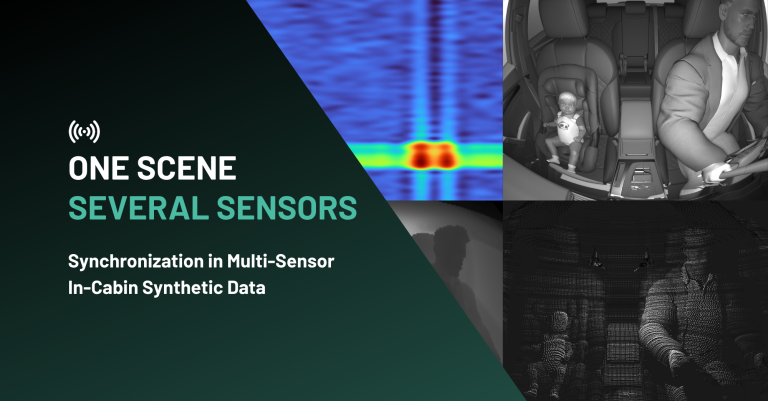
While Anyverse remains a premier partner for the Automotive market, specializing in In-Cabin Monitoring systems and ADAS, its technology is increasingly adopted across Defence, Robotics, and Industry 4.0. Leveraging a proprietary physics-grounded engine, procedural synthetic data generation, and next-gen Generative AI, Anyverse produces datasets with unmatched realism and sensor-level accuracy (including RGB, NIR, Radar, LiDAR, and Thermal).

Its unified validation framework helps partners ensure compliance with specific regulations like Euro NCAP, as well as broader safety standards for autonomous systems. By bridging the gap between simulation and reality, Anyverse accelerates development, reduces costs, and ensures trustworthy perception for vehicles, robots, and intelligent machines.

Eye-Tracking and AI: The Role of High-Quality Data in Automotive Safety

SHARE

Table of Contents

Table of Contents

Eye-tracking technology is the driving force behind driver monitoring systems (DMS), and the foundation that makes them possible. By bridging human intentions and actions with advanced sensors and artificial intelligence, eye-tracking enables vehicles to understand driver behavior in real-time. 

In this blog, we’ll explore what an eye-tracking system is, why it’s essential for in-cabin monitoring, and how it works. We’ll also examine its connection to emerging road safety regulations and assessment programs, as well as the crucial role that eye-tracking data quality plays in developing and validating the machine learning models behind this technology.

Eye-Tracking technology: What it is and how it works

Eye-tracking technology acts as a bridge between human intentions and driver monitoring systems, enabling vehicles to interpret driver behavior in real time. It relies on a combination of human anatomy, specifically the eyes and face, hardware such as camera sensors to capture data, and advanced software and artificial intelligence models to process and interpret this data, allowing the system to take appropriate actions.

Eye tracking involves monitoring eye movements to determine where a person is looking, their level of attention, and their cognitive state. This is achieved through advanced camera systems and algorithms that analyze:

  • Pupil movement and dilation
  • Blink rates and patterns
  • Fixations and gaze direction


Infrared light is typically used to analyze the cornea, while sophisticated algorithms detect the iris and pupil to determine gaze direction.

As the system gathers more data, AI continuously refines its understanding of individual drivers, improving overall performance. 

Some DMS suppliers already offer multi-camera solutions to further enhance accuracy by analyzing head position and orientation, ensuring reliable performance even in challenging real-world conditions.

These insights enable the in-cabin monitoring system to assess drivers’ focus, alertness, and engagement, essential data for new-generation automotive safety systems, and even applications in other industries.

Applications of Eye-Tracking Technology in In-Cabin Monitoring

Eye-tracking is not only used to monitor the driver’s status but also holds potential for enhancing occupant monitoring systems and child presence detection in the vehicle.

  • Driver drowiness monitoring and fatigue detection
    By monitoring gaze patterns and blink rates, systems can identify if a driver is distracted or drowsy, enabling timely interventions.
  • Driver distraction Detection
    Eye-tracking helps identify if drivers are fixated on potential distractions, such as a smartphone, and not paying attention to the road.
  • Detecting interaction with the surroundings
    By tracking eye movements, the system helps assess whether drivers are scanning their surroundings properly and remaining aware of pedestrians and other potential hazards.
  • Monitoring passenger emotions
    Analyzing eye movements and facial expressions to gauge emotional states such as stress, frustration, or road rage.
  • Passenger status monitoring
    In addition to monitoring drivers, eye-tracking is used to observe passengers, particularly children, ensuring that all occupants are accounted for and safe.
  • Child Presence Detection: Using eye-tracking to ensure children are in the vehicle and actively monitoring their safety, especially in rear seats.
  • Enhanced Gesture Control: Allowing drivers and passengers to interact with the vehicle’s systems (e.g., adjusting volume or navigation) through eye movements as part of a hands-free interface.
  • Driver Identification and Authentication: Eye-tracking could be used for biometric identification, ensuring only authorized individuals operate the vehicle.
  • In-Vehicle Health Monitoring: Detecting eye strain, signs of discomfort, or even early symptoms of medical issues based on eye behavior and interaction patterns.
  • Adaptive Lighting and Displays: Eye-tracking can adjust in-cabin lighting or display brightness based on where the driver or passengers are looking.


​Eye tracking technology enhances driver safety by monitoring focus and alertness in real-time.

Safety Regulations Address Eye-Tracking in Automotive Systems

As the automotive industry continues to prioritize safety, regulatory bodies, and safety assessment programs are increasingly incorporating eye-tracking technology into their guidelines for in-cabin monitoring systems. Programs like Euro NCAP (European New Car Assessment Program) have recognized the potential of eye-tracking to enhance driver safety and well-being, setting clear criteria for its integration into modern vehicles.

Eye-tracking technology is no longer a plus, it is becoming a regulatory requirement. Let’s explore a few examples from Europe and the United States.

  • [Europe] Euro NCAP Standards: Euro NCAP’s latest protocols emphasize driver monitoring systems (DMS) to reduce distracted driving and improve road safety. Eye tracking is central to these systems, as it ensures compliance with Euro NCAP’s stringent safety ratings.
  • [U.S.] Legislative Push: With frameworks like the Stay Aware for Everyone (SAFE) Act of 2021 and Infrastructure Investment and Jobs Act (IIJA) in the U.S., automotive manufacturers are compelled to integrate robust eye-tracking solutions to meet safety standards.


Automotive manufacturers must demonstrate that their In-Cabin Monitoring systems can reliably detect and respond to critical scenarios, making accurate and extensive training and subsequent validation essential.

Data Challenges in the Development of Eye-Tracking Technology

Developing effective eye-tracking models for driver monitoring (and other applications) is a complex challenge. These models must accurately interpret the physical world, in this case, human physiology and behavior. Their performance heavily depends on the availability and quality of training data. However, collecting and labeling real-world data is costly and time-consuming. Additionally, the variability and diversity required for a multi-region-effective model, including differences in eye features, ethnicities, facial traits, and environmental conditions, make relying solely on real-world data a significant (or even unattainable) challenge.

While generative AI offers a way to supplement datasets, it also introduces significant risks if the generated data does not adhere to physical principles. Inaccurate, incomplete or biased AI-generated data can lead to model corruption, hallucinations, and a lack of reliability, ultimately compromising the effectiveness of eye-tracking technology.

Without proper data traceability, developers and auditors struggle to identify the reasons behind an AI model’s behavior, making it difficult to correct errors or ensure fairness. Governments are aware and start to take action, with the European Union leading the way. 

In engineering, understanding why something fails is key to making it safer—and AI should be no different. That’s why the European Commission has just introduced new guidelines to ensure AI is ethical, transparent, and trustworthy. The focus? High-quality, well-documented data that keeps AI fair, accountable, and explainable.

The Anyverse Method: Advancing Eye-Tracking with Better Data

At Anyverse, we understand the challenge of balancing cutting-edge AI with ethics and trust. That’s why we’ve developed a high-quality synthetic data platform designed to help in-cabin monitoring developers train and validate AI models using traceable, structured, and bias-free data.

For both training and validation, physically accurate and diverse eye-tracking datasets are essential to ensure system reliability and fairness. These datasets must account for:

  • Demographic Variability: Eye shape, size, and movement patterns vary across different ethnicities and age groups, requiring diverse and representative data.
  • Environmental Conditions: Eye-tracking systems must function under various lighting conditions, reflections, and occlusions caused by accessories like glasses or sunglasses.
  • Realistic Scenarios: To improve adaptability, datasets should cover a broad range of real-world conditions, including different seating positions, head movements, and passenger interactions.


The Anyverse platform is designed to generate synthetic data tailored to these requirements, providing structured, high-fidelity datasets that enhance the training and validation of driver monitoring models incorporating eye-tracking, ensuring greater accuracy and efficiency.

Conclusion

Eye-tracking is a game-changing technology in the automotive industry, enhancing safety, intelligence, and ensuring regulatory compliance in in-cabin monitoring systems. With increasing regulatory demands and rising consumer expectations, access to high-quality data is more critical than ever for developing accurate and reliable driver monitoring systems.

Enjoyed this article?

Tap to add us as a Preferred Source on Google to see more content like this.

About Anyverse

With over 25 years of heritage in physics-based simulation and a 2008 Academy Technical Achievement Award, Anyverse is a leading provider of high-fidelity synthetic data and validation tools for advanced Perception AI.

While Anyverse remains a premier partner for the Automotive market, specializing in In-Cabin Monitoring systems and ADAS, its technology is increasingly adopted across Defence, Robotics, and Industry 4.0. Leveraging a proprietary physics-grounded engine, procedural synthetic data generation, and next-gen Generative AI, Anyverse produces datasets with unmatched realism and sensor-level accuracy (including RGB, NIR, Radar, LiDAR, and Thermal).

Its unified validation framework helps partners ensure compliance with specific regulations like Euro NCAP, as well as broader safety standards for autonomous systems. By bridging the gap between simulation and reality, Anyverse accelerates development, reduces costs, and ensures trustworthy perception for vehicles, robots, and intelligent machines.