
Reliable, Robust Occupant Monitoring AI: Built with Synthetic Data
SHARE

Table of Contents

Table of Contents

In-cabin monitoring safety technology is rapidly advancing. In addition to driver monitoring systems (DMS), occupant monitoring systems (OMS) are pivotal in ensuring passenger safety, comfort, and regulatory compliance. These systems are critical for modern automotive safety, from detecting occupant status and activity to identifying the presence of children or animals.

We have previously covered how in-cabin monitoring systems improve traffic safety, key global regulations, privacy concerns, and solutions in validation processes.  Now we will explore OMS functionality and applications across vehicle types, regulatory impacts, and the critical role of synthetic data generating critical data to develop and validate OMS AI models at system level.

What are occupant monitoring systems?

Occupant Monitoring Systems are advanced technologies designed to observe and interpret the behavior and status of passengers inside a vehicle. Using a combination of cameras, sensors, and AI algorithms, OMS can:

  • Detect the number and position of occupants.
  • Identify occupant activities, such as sleeping, eating, or distraction.
  • Recognize the presence of children or animals left in the car.
  • Monitor seatbelt usage and posture.
  • Identify objects left in the cabin that could pose safety risks.


These features are vital for preventing accidents and ensuring compliance with safety regulations.

Key factors monitored by OMS

1. Occupant Status and Activity

OMS can detect whether the driver is drowsy, distracted, or not paying attention to the road, as well as numerous passenger activities, such as seatbelt use or improper posture.

2. Object Detection

OMS are designed to identify objects left behind in the vehicle, such as bags or personal belongings. This functionality prevents forgotten items from becoming hazards, such as obstructing emergency egress or overheating in extreme temperatures.

3. Children’s Presence Detection

One of the most critical applications of OMS is detecting children left unattended in vehicles. Heatstroke in parked cars is a significant safety concern, and OMS can alert caregivers or trigger emergency actions to prevent tragedies.

4. Animal Presence Detection

Similar to detecting children, OMS can identify the presence of pets left in the vehicle. This feature ensures that animals are not left in unsafe conditions, addressing both safety and ethical concerns.

5. Unusual Activities

From identifying intruders to detecting violent movements, OMS can enhance security by recognizing and responding to unusual activities inside the car.

Driver vs. Occupant Monitoring Systems

While Driver Monitoring Systems (DMS) and Occupant Monitoring Systems (OMS) share the goal of enhancing in-cabin safety, their focus differs significantly. DMS primarily concentrates on the driver, monitoring their attention, fatigue, and distraction levels to prevent accidents caused by human error. In contrast, OMS expands the scope to include all vehicle occupants, detecting behaviors, presence, and activities of passengers. By addressing broader safety concerns, OMS complements DMS to create a holistic in-cabin monitoring solution.

Current regulations surrounding OMS

Regulatory bodies worldwide are increasingly mandating OMS for improved safety. For example:

  • European Union: The EU’s General Safety Regulation requires advanced safety systems, including OMS, in new vehicles starting in 2024 to monitor driver distraction and fatigue.
  • United States: The National Highway Traffic Safety Administration (NHTSA) is exploring regulations to include OMS for preventing hot car deaths and improving seatbelt compliance.
  • Global NCAP: New Car Assessment Programs in various regions assess vehicles on OMS integration as part of their safety ratings.


These regulations underscore the critical role of OMS in reducing fatalities and injuries caused by inattention, heatstroke, or unrestrained passengers.

Applications across different vehicle types

Occupant Monitoring Systems are crucial not just in private cars but across various types of vehicles:

  • Private Vehicles: Ensures driver and passenger safety by monitoring behaviors like distraction and ensuring compliance with seatbelt and posture guidelines.
  • Public Transportation: In buses and trains, OMS can detect unusual activities, enhancing passenger safety and security. For example, identifying unattended children or suspicious behaviors in public transit vehicles.
  • Commercial Fleets: Trucks and delivery vehicles benefit from OMS by ensuring driver alertness during long hauls and monitoring cargo areas for unauthorized access.
  • Shared Mobility Solutions: Rideshare and autonomous taxi services use OMS to ensure passenger safety, cleanliness, and proper usage of the vehicle.


By tailoring OMS capabilities to the unique needs of these vehicle types, the technology becomes an indispensable part of modern transportation.

Developing a reliable Occupant Monitoring System (OMS) AI requires robust, diverse data. Traditional data collection methods often fall short due to:

  • Privacy concerns when capturing real-world data.
  • Difficulty simulating rare but critical scenarios.
  • High costs and time associated with large-scale data collection.


Anyverse offers a solution by generating diverse, high-quality deterministic synthetic data that helps overcome the limitations of real-world datasets and erratic data generated through generative AI.

Imagine being able to test and validate your in-cabin AI models on a virtually limitless variety of test scenarios, from different lighting conditions and occupant positions to challenging situations with occlusions or child car seats – all without the time and cost of manual data collection. This capability translates directly to enhanced AI performance, increasing model robustness and accuracy in real-world environments. 

By using Anyverse’s synthetic data platform, OEMs, suppliers, and integrators can accelerate the development of occupant monitoring systems, achieve higher detection rates, and ultimately deploy safer, more reliable in-cabin systems for everyone. It’s about getting AI to perform at its best, with data that is tailored to its needs.

Conclusion

As in-cabin monitoring systems (ICMS) become mandatory for modern vehicles, synthetic data emerges not as an alternative but as the only viable path forward. It eliminates privacy concerns, adheres to strict regulatory standards, and reduces the staggering costs and time associated with traditional data collection. By enabling manufacturers to simulate diverse, realistic scenarios—from children in car seats to distracted drivers—synthetic data ensures robust system validation without ethical or financial compromises. For those looking to innovate efficiently, meet deadlines, and stay within budget, synthetic data is the clear choice to drive the future of safer, smarter vehicles.
Enjoyed this article?

Add us as a Preferred Source on Google to see more content like this in Discover and Top Stories.

About Anyverse

With over 25 years of heritage in physics-based simulation and a 2008 Academy Technical Achievement Award, Anyverse is a leading provider of high-fidelity synthetic data and validation tools for advanced Perception AI.

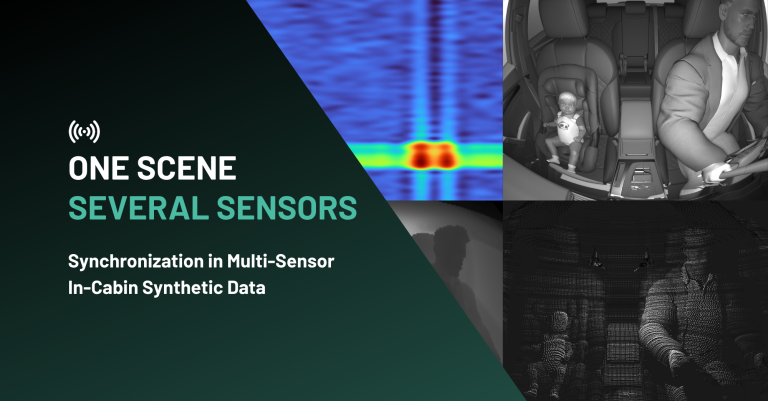
While Anyverse remains a premier partner for the Automotive market, specializing in In-Cabin Monitoring systems and ADAS, its technology is increasingly adopted across Defence, Robotics, and Industry 4.0. Leveraging a proprietary physics-grounded engine, procedural synthetic data generation, and next-gen Generative AI, Anyverse produces datasets with unmatched realism and sensor-level accuracy (including RGB, NIR, Radar, LiDAR, and Thermal).

Its unified validation framework helps partners ensure compliance with specific regulations like Euro NCAP, as well as broader safety standards for autonomous systems. By bridging the gap between simulation and reality, Anyverse accelerates development, reduces costs, and ensures trustworthy perception for vehicles, robots, and intelligent machines.

Reliable, Robust Occupant Monitoring AI: Built with Synthetic Data

SHARE

Table of Contents

Table of Contents

In-cabin monitoring safety technology is rapidly advancing. In addition to driver monitoring systems (DMS), occupant monitoring systems (OMS) are pivotal in ensuring passenger safety, comfort, and regulatory compliance. These systems are critical for modern automotive safety, from detecting occupant status and activity to identifying the presence of children or animals.

We have previously covered how in-cabin monitoring systems improve traffic safety, key global regulations, privacy concerns, and solutions in validation processes.  Now we will explore OMS functionality and applications across vehicle types, regulatory impacts, and the critical role of synthetic data generating critical data to develop and validate OMS AI models at system level.

What are occupant monitoring systems?

Occupant Monitoring Systems are advanced technologies designed to observe and interpret the behavior and status of passengers inside a vehicle. Using a combination of cameras, sensors, and AI algorithms, OMS can:

  • Detect the number and position of occupants.
  • Identify occupant activities, such as sleeping, eating, or distraction.
  • Recognize the presence of children or animals left in the car.
  • Monitor seatbelt usage and posture.
  • Identify objects left in the cabin that could pose safety risks.


These features are vital for preventing accidents and ensuring compliance with safety regulations.

Key factors monitored by OMS

1. Occupant Status and Activity

OMS can detect whether the driver is drowsy, distracted, or not paying attention to the road, as well as numerous passenger activities, such as seatbelt use or improper posture.

2. Object Detection

OMS are designed to identify objects left behind in the vehicle, such as bags or personal belongings. This functionality prevents forgotten items from becoming hazards, such as obstructing emergency egress or overheating in extreme temperatures.

3. Children’s Presence Detection

One of the most critical applications of OMS is detecting children left unattended in vehicles. Heatstroke in parked cars is a significant safety concern, and OMS can alert caregivers or trigger emergency actions to prevent tragedies.

4. Animal Presence Detection

Similar to detecting children, OMS can identify the presence of pets left in the vehicle. This feature ensures that animals are not left in unsafe conditions, addressing both safety and ethical concerns.

5. Unusual Activities

From identifying intruders to detecting violent movements, OMS can enhance security by recognizing and responding to unusual activities inside the car.

Driver vs. Occupant Monitoring Systems

While Driver Monitoring Systems (DMS) and Occupant Monitoring Systems (OMS) share the goal of enhancing in-cabin safety, their focus differs significantly. DMS primarily concentrates on the driver, monitoring their attention, fatigue, and distraction levels to prevent accidents caused by human error. In contrast, OMS expands the scope to include all vehicle occupants, detecting behaviors, presence, and activities of passengers. By addressing broader safety concerns, OMS complements DMS to create a holistic in-cabin monitoring solution.

Current regulations surrounding OMS

Regulatory bodies worldwide are increasingly mandating OMS for improved safety. For example:

  • European Union: The EU’s General Safety Regulation requires advanced safety systems, including OMS, in new vehicles starting in 2024 to monitor driver distraction and fatigue.
  • United States: The National Highway Traffic Safety Administration (NHTSA) is exploring regulations to include OMS for preventing hot car deaths and improving seatbelt compliance.
  • Global NCAP: New Car Assessment Programs in various regions assess vehicles on OMS integration as part of their safety ratings.


These regulations underscore the critical role of OMS in reducing fatalities and injuries caused by inattention, heatstroke, or unrestrained passengers.

Applications across different vehicle types

Occupant Monitoring Systems are crucial not just in private cars but across various types of vehicles:

  • Private Vehicles: Ensures driver and passenger safety by monitoring behaviors like distraction and ensuring compliance with seatbelt and posture guidelines.
  • Public Transportation: In buses and trains, OMS can detect unusual activities, enhancing passenger safety and security. For example, identifying unattended children or suspicious behaviors in public transit vehicles.
  • Commercial Fleets: Trucks and delivery vehicles benefit from OMS by ensuring driver alertness during long hauls and monitoring cargo areas for unauthorized access.
  • Shared Mobility Solutions: Rideshare and autonomous taxi services use OMS to ensure passenger safety, cleanliness, and proper usage of the vehicle.


By tailoring OMS capabilities to the unique needs of these vehicle types, the technology becomes an indispensable part of modern transportation.

Developing a reliable Occupant Monitoring System (OMS) AI requires robust, diverse data. Traditional data collection methods often fall short due to:

  • Privacy concerns when capturing real-world data.
  • Difficulty simulating rare but critical scenarios.
  • High costs and time associated with large-scale data collection.


Anyverse offers a solution by generating diverse, high-quality deterministic synthetic data that helps overcome the limitations of real-world datasets and erratic data generated through generative AI.

Imagine being able to test and validate your in-cabin AI models on a virtually limitless variety of test scenarios, from different lighting conditions and occupant positions to challenging situations with occlusions or child car seats – all without the time and cost of manual data collection. This capability translates directly to enhanced AI performance, increasing model robustness and accuracy in real-world environments. 

By using Anyverse’s synthetic data platform, OEMs, suppliers, and integrators can accelerate the development of occupant monitoring systems, achieve higher detection rates, and ultimately deploy safer, more reliable in-cabin systems for everyone. It’s about getting AI to perform at its best, with data that is tailored to its needs.

Conclusion

As in-cabin monitoring systems (ICMS) become mandatory for modern vehicles, synthetic data emerges not as an alternative but as the only viable path forward. It eliminates privacy concerns, adheres to strict regulatory standards, and reduces the staggering costs and time associated with traditional data collection. By enabling manufacturers to simulate diverse, realistic scenarios—from children in car seats to distracted drivers—synthetic data ensures robust system validation without ethical or financial compromises. For those looking to innovate efficiently, meet deadlines, and stay within budget, synthetic data is the clear choice to drive the future of safer, smarter vehicles.

Enjoyed this article?

Tap to add us as a Preferred Source on Google to see more content like this.

About Anyverse

With over 25 years of heritage in physics-based simulation and a 2008 Academy Technical Achievement Award, Anyverse is a leading provider of high-fidelity synthetic data and validation tools for advanced Perception AI.

While Anyverse remains a premier partner for the Automotive market, specializing in In-Cabin Monitoring systems and ADAS, its technology is increasingly adopted across Defence, Robotics, and Industry 4.0. Leveraging a proprietary physics-grounded engine, procedural synthetic data generation, and next-gen Generative AI, Anyverse produces datasets with unmatched realism and sensor-level accuracy (including RGB, NIR, Radar, LiDAR, and Thermal).

Its unified validation framework helps partners ensure compliance with specific regulations like Euro NCAP, as well as broader safety standards for autonomous systems. By bridging the gap between simulation and reality, Anyverse accelerates development, reduces costs, and ensures trustworthy perception for vehicles, robots, and intelligent machines.