
Table of Contents
Table of Contents
Executive Summary
False positives in driver monitoring systems (DMS) and in-cabin monitoring systems (ICMS) represent a structural validation challenge and are not merely a tuning issue. As regulatory frameworks such as Euro NCAP increase scrutiny on driver state detection, systems must reliably distinguish genuine cognitive distraction from safe, context-driven behavior.
This article argues one central point:
Reducing false positives requires moving from behavior-based thresholds to context-aware validation powered by synthetic data.
By enabling scalable modeling of true negatives, adversarial attention DMS scenarios, demographic variability, and precise ground-truth labeling, synthetic data transforms how in-cabin monitoring AI is developed and validated.
For OEMs, Tier-1 suppliers, and ML teams developing in-cabin monitoring AI, the implication is clear: Precision, and not sensitivity, is the next competitive differentiator.

Why False Positives Undermine DMS Reliability and Euro NCAP Compliance
False positives remain one of the most significant unresolved challenges in modern driver monitoring systems (DMS) and in-cabin monitoring systems (ICMS). These occur when an ICMS incorrectly identifies a driver as distracted or disengaged, even though they are attentive and responding safely to driving conditions. These errors directly impact regulatory scoring, automated driving readiness, and user trust.
Modern systems typically rely on measurable proxies:
- Gaze direction
- Head pose angle
- Eye openness
- Blink rate
- Temporal gaze thresholds
These signals are necessary inputs, but they are not direct measurements of attention. Attention is a cognitive state, while DMS operate on observable geometry.
Industry Pressure on Driver Monitoring Performance
As regulatory bodies such as Euro NCAP continue strengthening performance expectations for driver state monitoring, the tolerance for misclassification decreases. Systems must be sensitive to true distraction without penalizing safe attentional deviations.
Across the automotive industry, pressure is intensifying on multiple fronts:
- Regulatory escalation: Euro NCAP 2026+ roadmap continues to strengthen expectations for robust driver monitoring performance.
- OEM accountability: Driver monitoring is now directly tied to ADAS credibility and automated driving readiness.
- Consumer tolerance: Drivers expect safety systems to be accurate, not intrusive or overly sensitive.
The core structural issue is this:
- Not looking forward is not a distraction.
- Observable deviation is not disengagement.
- Behavioral proxies are not equivalent to cognitive ground truth.
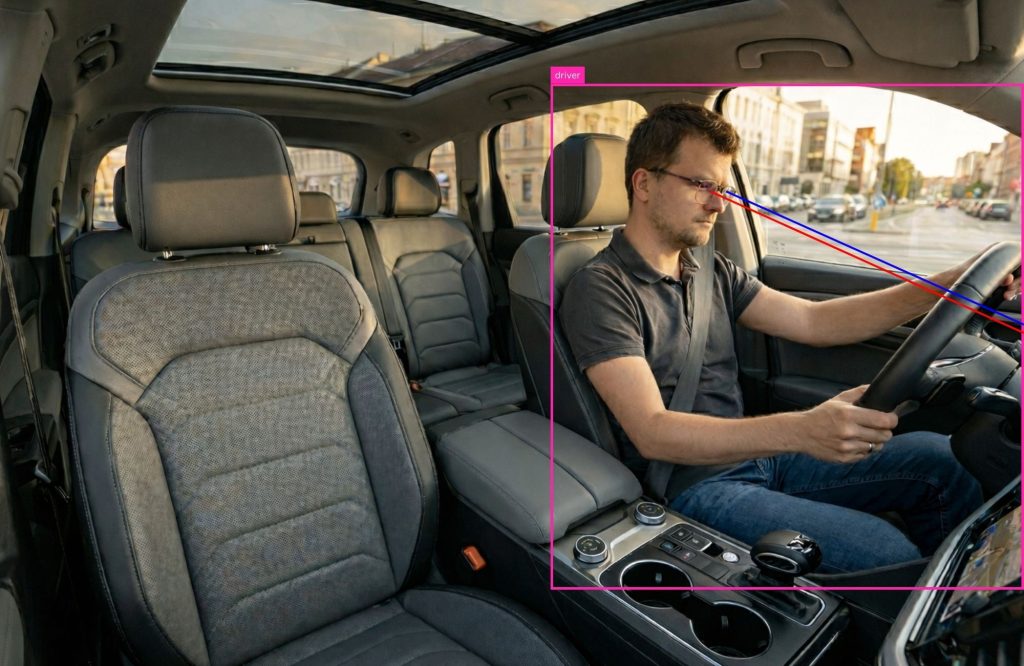
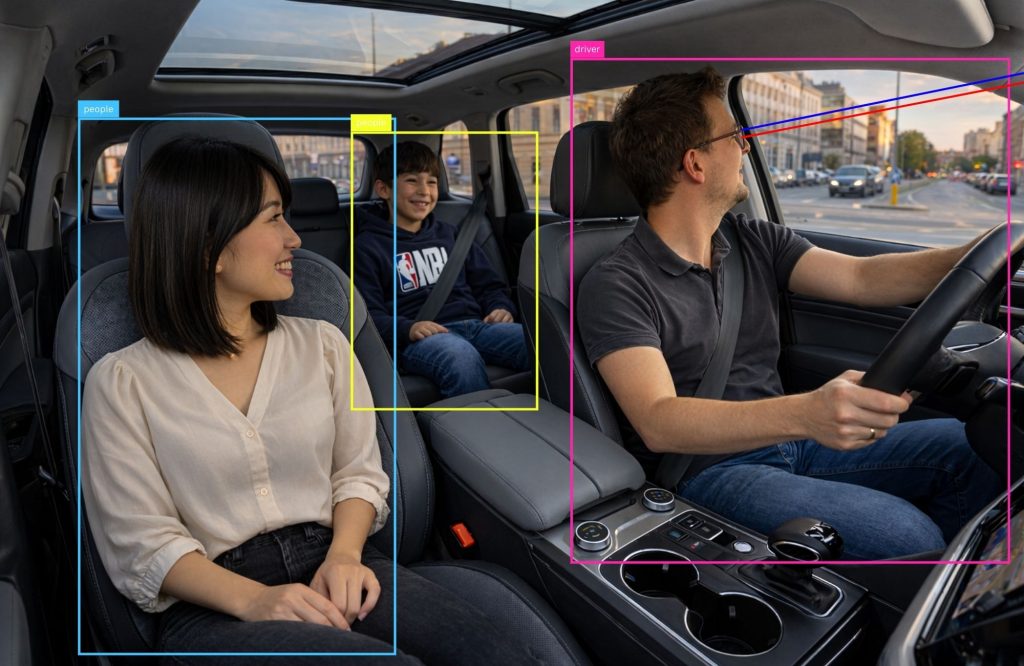
At the center of this issue lies a structural simplification: many driver distraction detection systems oversimplify attention logic — equating any deviation from a nominal behavior (like forward gaze, head position, or hand activity) with distraction.
While measurable metrics like gaze direction are easy to track, true driver attention is contextual and multi-dimensional. Reducing false positives, therefore, is not simply a threshold-tuning exercise. It requires a deeper rethinking of how attention is modeled and validated.
Operational Impact of False Positives in ICMS
When ICMS overreacts to normal driving behavior, this can lead to:
- Alert fatigue, reducing responsiveness to genuine warnings
- Erosion of user trust, weakening long-term system adoption
- Compromised safety escalation logic, particularly in semi-automated driving
- Regulatory risk, as protocols demand increasing performance robustness
In short, precision in driver monitoring systems is no longer a feature but a requirement.
As vehicles move toward higher levels of automation, attention detection must evolve from simple gaze heuristics to context-aware validation frameworks. That evolution begins with a fundamental question:
If looking away does not always mean distraction, how should ICMS distinguish between safe situational awareness and true cognitive disengagement?
Defining True Negatives in DMS: When Looking Away Is Not Distraction
Looking away from the forward roadway does not automatically indicate distraction; in many cases, it reflects necessary situational awareness. For driver monitoring systems (DMS) to function reliably, they must distinguish between cognitive distraction and safety-driven gaze deviations — otherwise, false positives become inevitable.
True Negatives in Driver Attention Testing
Real-world driving is dynamic. Drivers continuously scan their environment to maintain situational awareness. This includes:
- Checking side mirrors and rear-view mirrors
- Performing blind-spot verification before lane changes
- Monitoring pedestrians at crosswalks
- Assessing merging or overtaking vehicles
- Briefly glancing at instrument clusters or navigation prompts
- Interacting with passengers or in-cabin controls
These behaviors represent situational awareness, not cognitive disengagement.

The Limits of Threshold-Based In-Cabin Monitoring AI
Many production in-cabin monitoring systems (ICMS) still rely on simplified detection logic:
- Fixed forward-gaze timeout thresholds
- Angular deviation limits from the road axis
- Head-pose heuristics without environmental context
While computationally efficient, this approach conflates gaze direction with attention state. As a result, systems may trigger alerts during normal scanning behavior — particularly in dense urban traffic or complex highway merging scenarios.
From a validation perspective, this creates two critical classification categories:
- False positives in distraction detection: Attentive drivers incorrectly labeled as distracted
- True negatives: Drivers who are attentive despite non-forward gaze
The latter category — true negatives or cases where the driver is attentive despite behavior that appears “abnormal” to the system, are systematically underrepresented in validation datasets.. As a result, models are often well-trained to detect obvious distractions (e.g., phone use) but insufficiently trained to distinguish nuanced attentional scanning.
Adversarial attention scenarios illustrate the complexity of real-world driving: extended mirror checks in dense traffic, multi-stimulus scanning in intersections, or simultaneous monitoring of multiple hazards. These scenarios force ICMS to infer cognitive engagement, not just track behavior metrics.
Modern ICMS must go beyond metric thresholds to evaluate context, intent, and engagement — reducing false positives while maintaining vigilance against true distraction.
Adversarial Attention Scenarios in Driver Monitoring Systems
A more advanced framework considers adversarial attention scenarios — situations where gaze deviation is intentional, necessary, and safety-relevant. Examples include extended mirror checks, peripheral hazard monitoring, intersection scanning, and tracking merging vehicles. These scenarios stress-test ICMS logic. They force systems to answer a harder question:
Is the driver disengaged, or actively assessing the risk?
From a systems engineering standpoint, this is a cognitive inference challenge, not merely a computer vision problem.
Why Gaze-Based Driver Distraction Detection Fails Without Cognitive Context
Accurate gaze tracking alone is insufficient for robust driver distraction detection. What matters is contextual interpretation — understanding whether gaze deviation corresponds to safety-relevant stimuli or cognitive disengagement.
This distinction becomes even more critical under evolving regulatory frameworks. As expectations for driver state detection rise, systems must demonstrate not only sensitivity to distraction but resilience against false positives.
The challenge, however, is not purely algorithmic.
It is fundamentally a validation problem.
If distinguishing true negatives from false positives is so central to ICMS performance, why do current validation strategies struggle to capture these cases reliably?

Why Real-World Data Alone Cannot Eliminate False Positives in ICMS Validation
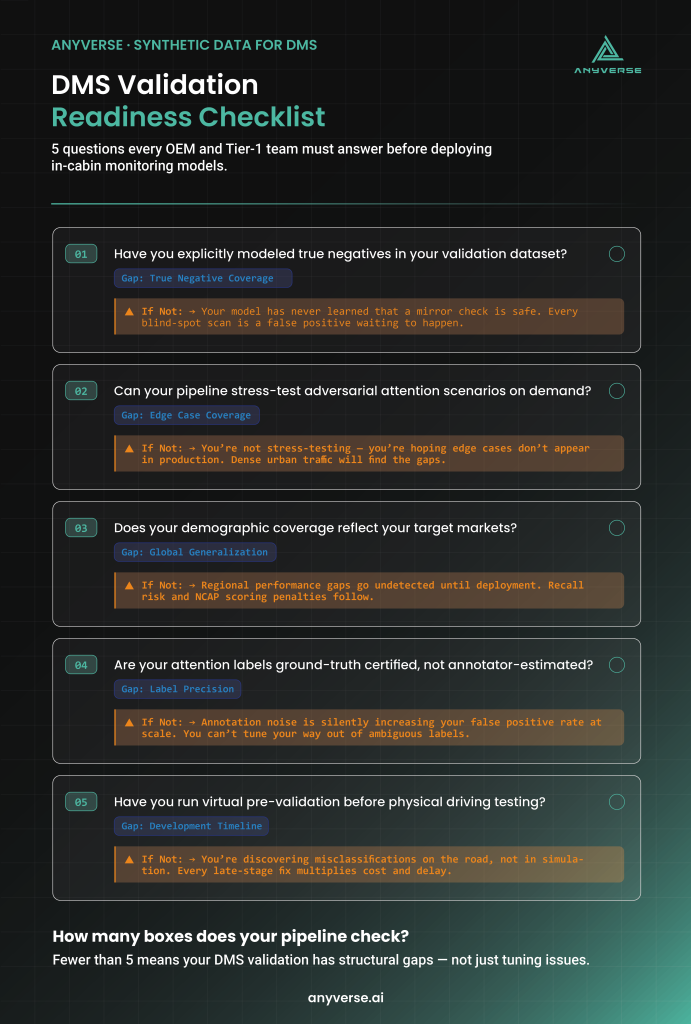
Real-world datasets alone cannot fully address false positives in driver monitoring systems (DMS) and in-cabin monitoring systems (ICMS). While they provide valuable behavioral recordings, they underrepresent true negatives, offer limited coverage of rare or adversarial attention scenarios, and lack precise cognitive context. As a result, engineers struggle to validate attention logic reliably, leaving ICMS prone to misclassifying attentive drivers as distracted.
As discussed in the previous section, distinguishing between situational awareness and cognitive distraction is a context-dependent problem. Yet most traditional validation pipelines rely heavily on recorded driving datasets, which introduce several critical limitations.
Underrepresented DMS safety-critical scenarios
Many false positives occur in rare but safety-critical scenarios that are difficult to capture naturally. In fleet-collected datasets, these events occur sporadically and unpredictably. Engineers cannot systematically increase their frequency for targeted evaluation. Models tested on real-world data often fail under nuanced conditions, generating false positives when drivers behave attentively but unconventionally.
The Annotation Gap in Driver Attention Testing
Even when adversarial scenarios are captured, labeling them objectively presents another challenge.
In real-world recordings, annotators can reliably label:
- Gaze direction
- Head pose
- Eye openness
But they cannot directly observe:
- Cognitive engagement
- Risk awareness
- Intentional scanning behavior
This leads to ambiguity in driver attention testing. True cognitive engagement is unobservable, creating ambiguity: a driver may glance at a dashboard or mirror while fully attentive, but traditional labels might mark it as distracted. Over time, this annotation noise increases the likelihood of false positives in deployed ICMS models.
In short, real-world data captures behavior — not necessarily intent.
DMS Demographic and Behavioral Variability in Global Deployment
Driver morphology, seating position, and cultural driving behaviors vary significantly. Limitations in real-world datasets include:
- Height and torso length
- Seat positioning and steering geometry
- Head rotation amplitude
- Cultural scanning patterns
- Use of eyewear or accessories
Traditional datasets rarely provide controlled demographic balancing. Instead, they reflect the incidental composition of test fleets.
For global OEM deployment, this presents a risk. A system validated primarily on limited demographic distributions may not generalize robustly across markets — directly impacting automotive safety validation outcomes, increasing false positives, and compromising global deployment reliability.
Ethical and Practical Constraints Limit Driver Distraction Testing
Certain distraction scenarios cannot be ethically or practically staged repeatedly in physical vehicles:
- Intentional cognitive disengagement under real traffic risk
- Near-miss scenarios with multiple external stimuli
- Multi-tasking while driving in safety-critical conditions
Moreover, reproducing identical conditions across test cycles is nearly impossible. Environmental variability from lighting, weather, and traffic density introduces noise that complicates controlled evaluation. These constraints limit structured stress testing and the quantitative isolation of false positives versus true negatives.
In summary: Using only Real-world data cannot guarantee ICMS will reliably distinguish attentive drivers from distracted ones. False positives remain unavoidable without controlled, annotated, and diverse scenarios.
Taken together, these constraints create a systemic issue:
- True negatives are underrepresented
- Cognitive context is uncertain
- Adversarial scenarios are rare
- Demographic variation is uncontrolled
As regulatory frameworks and consumer expectations continue to evolve, this gap becomes increasingly problematic. Validation methodologies must move beyond opportunistic data collection toward structured, context-aware evaluation.
If real-world data alone cannot reliably model and test attention logic at scale, the question becomes clear:
How can engineers systematically generate, annotate, and stress-test true attention scenarios, including rare and adversarial cases, before vehicles reach the road?
That is where synthetic data fundamentally reshapes the validation landscape.

Scaling True Negative & False Positive Testing with Synthetic Data
Synthetic data provides a practical solution to the limitations of real-world datasets, allowing engineers to systematically generate, annotate, and stress-test driver monitoring systems (DMS) and in-cabin monitoring systems (ICMS) against false positives. By generating fully controlled virtual environments, engineers can test in-cabin monitoring systems against true negatives, false positives, and adversarial attention scenarios at scale, without the ethical, logistical, or cost limitations of physical testing. They can replicate rare, adversarial, and true negative scenarios, ensuring that ICMS models can distinguish between cognitive distraction and safe, attentive behavior before vehicles reach the road.
Modeling DMS Attention Context with Synthetic Data
Traditional ICMS rely heavily on forward-gaze assumptions and fixed time thresholds to detect distraction. Synthetic data allows engineers to model driver attention dynamically, accounting for real-world behaviors such as:
- Briefly checking navigation prompts before an upcoming turn
- Verifying adaptive cruise control distance settings
- Tracking a vehicle approaching quickly from behind
- Observing traffic signal countdown timers before proceeding
By simulating these natural gaze deviations, synthetic datasets create true negative cases, moments when the driver is attentive but not looking straight ahead. This allows ICMS models to interpret context, not just measurable metrics, reducing false positives triggered by safe, engaged behaviors.
Adversarial Scenario Simulation for ICMS Robustness Testing
Many false positives in driver monitoring occur in rare or complex situations that are underrepresented in real-world datasets. Synthetic data enables targeted creation of adversarial scenarios, such as:
- Sudden or unexpected external events (pedestrians stepping into the road, erratic vehicles)
- Obstructed or partially occluded head poses
- Low-light, glare, or adverse weather conditions
- Ambiguous attention situations, such as split attention between multiple stimuli
By explicitly controlling these variables, ICMS models can be stress-tested to ensure robust attention detection, preventing overreaction in safe but unusual situations while remaining sensitive to true distractions.
Parameterizing Demographic Diversity for Driver Monitoring
Robust driver monitoring systems must generalize across diverse driver populations, yet demographic variability is often underrepresented in validation datasets. Synthetic data allows systematic variation of these factors:
- Height, weight, and body posture
- Head pose, rotation, and micro-movements
- Gaze strategies and habitual scanning patterns
- Interactions with in-cabin objects (infotainment, climate controls)
This ensures ICMS models generalize effectively, reducing false positives for drivers of different sizes, postures, and habits, and supporting international deployment with confidence.
Ground-Truth Attention Annotation in Synthetic Data
One of the greatest advantages of synthetic data is ground-truth certainty. Every simulated scenario comes with exact annotations of:
- Gaze direction and head orientation
- Cognitive attention context (attentive, distracted, or ambiguous)
- Environmental stimuli and their timing
- Interaction with in-cabin objects or external events
These annotations eliminate the ambiguity and labeling errors that plague real-world datasets, allowing supervised learning and model validation with unmatched precision.
Stress-Testing False Positives and False Negatives in Virtual ICMS Environments
Synthetic datasets allow engineers to explicitly challenge ICMS models with false-positive and false-negative conditions. For example:
- True negatives: attentive drivers performing safe gaze deviations (e.g., mirror checks, dashboard glances)
- False negatives: subtle distractions, cognitive disengagement, or multitasking that might otherwise go undetected
- Borderline cases: complex combinations of behavior, demographic factors, and environmental conditions
This approach ensures that ICMS models robustly differentiate safe attention from distraction, reducing unnecessary alerts and improving reliability in real-world deployment.
Replacing Rule-Based Logic with Context-Aware Validation in DMS
By combining dynamic scenario simulation, demographic diversity, and ground-truth labeling, synthetic data transforms ICMS evaluation:
- Moves from rigid thresholds and simplistic rules to context-aware reasoning
- Enables models to differentiate situational awareness from cognitive distraction
- Supports continuous improvement through controlled, repeatable virtual testing cycles
This approach allows engineers to optimize attention detection logic proactively, ensuring ICMS models are not only compliant with Euro NCAP protocols but also practical and trustworthy in everyday driving conditions.

DMS Sensor Fusion + Synthetic Data to Ensure In-Cabin Safety
How Synthetic Data Transforms ICMS Validation: Precision, Robustness, and Virtual Validation
Synthetic data fundamentally changes how driver monitoring systems (DMS) and in-cabin monitoring systems (ICMS) are validated, bridging the gap left by real-world datasets. By enabling controlled, repeatable, and fully annotated scenarios, engineers can test true negatives, false positives, and adversarial attention cases at scale — before deploying models on physical vehicles.
This approach provides three key benefits: reducing false positives, improving model robustness across diverse driver populations, and enabling virtual pre-validation prior to physical testing.
Reducing False Positives Through True Negative Testing
False positives persist when validation datasets underrepresent attentive drivers exhibiting non-nominal behaviors. Synthetic data corrects this imbalance by explicitly generating:
- Safe gaze deviations and mirror checks (For example a driver checking mirrors while merging is correctly identified as attentive)
- Dashboard and infotainment interactions under attentive conditions
- Multi-stimulus urban scanning scenarios (For example peripheral scanning for pedestrians is treated as a true negative, not a distraction)
- Demographically varied but attentive driving behaviors
Benefits include:
- Fewer unnecessary alerts, reducing driver annoyance and alert fatigue
- Improved alignment with Euro NCAP protocols on distraction detection
- Stronger trust in ICMS performance among end-users and OEMs
By explicitly modeling these true negative behaviors, engineers move beyond simple threshold adjustments and toward context-aware attention evaluation. Instead of discovering misclassifications post-deployment, teams can eliminate them during controlled validation cycles.
Improving Model Generalization Across in-cabin monitoring Systems
ICMS must function reliably across global markets. By systematically varying driver morphology, head pose, gaze strategies, and seating positions, synthetic environments ensure models generalize effectively. This parametric control guarantees that models do not overreact to specific physical characteristics or habitual scanning patterns. The result is reduced false positives across demographic groups and greater confidence in global rollout strategies.
For OEMs and Tier-1 suppliers, this translates directly into:
- Reduced regional performance discrepancies
- Lower recall or recalibration risk
- Stronger consumer trust in driver assistance systems
Virtual Validation Before Physical Vehicle Testing
Perhaps the most transformative advantage is virtual validation. Traditional validation depends heavily on fleet collection and physical test campaigns, which are costly, time-consuming, and limited in scenario diversity. Synthetic data enables:
- Early-stage stress testing before hardware integration
- Repeatable adversarial scenario evaluation
- Rapid iteration cycles for attention logic tuning
- Quantitative comparison between model versions
Simulation allows repeated, precise testing under conditions that would be impractical or unsafe in real-world vehicles. This accelerates development timelines, lowers validation costs, and ensures ICMS models are proactively validated rather than discovered to fail reactively. False positives can be identified and corrected in simulation long before they affect production vehicles.
Core takeaway: Synthetic data shifts ICMS development from reactive testing to proactive, precision-driven validation. Engineers can now optimize attention logic confidently, knowing models have been evaluated under controlled, diverse, and challenging scenarios — all before real-world exposure.
Aligning Driver Monitoring Systems with Regulatory and Safety Expectations
As Euro NCAP continues strengthening its assessment of driver state monitoring performance, OEMs must demonstrate not only detection capability but reliability and robustness.
Synthetic data supports this by enabling:
- Demonstrable coverage of rare and adversarial attention scenarios
- Structured validation documentation
- Reproducible performance benchmarks
- Transparent testing methodologies
While synthetic data does not replace real-world validation, it significantly strengthens the evidence base supporting ICMS performance claims.
In a regulatory landscape where reliability matters as much as detection capability, reducing false positives becomes a competitive differentiator.
Building In-Cabin Monitoring Systems Trust Beyond Accuracy Metrics
Ultimately, false positives are not just a model performance issue but a systems engineering and user experience issue.
By reducing unnecessary alerts through structured validation, synthetic data contributes to:
- Higher user trust
- More stable human-machine interaction
- Stronger integration between ICMS and automated driving features
This is the transition from measuring attention signals to engineering attention reliability.
Synthetic data transforms ICMS validation from passive data collection into active, precision-driven safety engineering, directly addressing false positives while strengthening robustness, compliance, and driver trust.

Rethinking Attention Testing: How Synthetic Data Enables Reliable ICMS Performance
We have established that geometric gaze vectors and simple thresholds are poor proxies for true cognitive attention. Drivers can glance away from the road without compromising attention or safety. Misclassifying attentive drivers generates false positives that compromise both safety logic and user trust in advanced driver assistance systems (ADAS).
By leveraging synthetic data for in-cabin monitoring systems (ICMS), engineers can systematically model true negatives, simulate adversarial attention scenarios, and account for demographic and behavioral diversity at scale. This approach overcomes the limitations of real-world datasets, enabling precise, ground-truth validation of driver attention and ensuring that ICMS reliably distinguishes between safe situational awareness and genuine cognitive disengagement.
Key Takeaways for Modern ICMS Development
- Distinguishing attention from distraction
- True negative modeling ensures ICMS only flags genuine cognitive disengagement.
- Reducing false positives and improving user trust
- Structured synthetic scenarios teach models to recognize safe gaze deviations, preventing unnecessary alerts.
- Improving robustness across demographics and behaviors
- Controlled variation in driver morphology, head pose, and gaze patterns ensures models generalize across global markets.
- Enabling virtual pre-validation before physical testing
- Rare, safety-critical, and adversarial scenarios can be stress-tested in fully simulated environments, reducing iteration cycles, cost, and risk.
- Aligning with regulatory and consumer expectations
- Systems validated in this way are better positioned to meet Euro NCAP protocols and OEM performance standards.
The Future of Driver Monitoring Systems
Synthetic data is more than a tool; it represents a paradigm shift in ICMS validation. By proactively modeling attention, engineers move from reactive, threshold-based testing to context-aware, precision-driven evaluation.
Through scalable, controlled, and demographically diverse synthetic scenarios, Anyverse is helping redefine how driver monitoring systems are evaluated — improving precision, robustness, and confidence before vehicles ever reach public roads.
Bottom line: Accurate driver monitoring is not just about measuring where drivers look. It is about understanding what they see, how they respond, and whether they remain cognitively engaged — and synthetic data makes that understanding both measurable and actionable.

FAQs: Reducing False Positives in Driver Monitoring Systems
Why Gaze Threshold Adjustments Do Not Eliminate False Positives in Driver Monitoring Systems (DMS)?
Adjusting gaze-away thresholds only shifts the sensitivity boundary; it does not resolve the underlying semantic ambiguity between behavior and attention. Lower thresholds increase false negatives (missed distraction), while higher thresholds increase false positives. Without contextual modeling of environmental stimuli and driver intent, threshold tuning becomes a trade-off exercise rather than a structural solution.
What is the difference between behavioral detection and cognitive attention modeling in DMS?
Behavioral detection measures observable metrics such as head pose, eye openness, and gaze direction. Cognitive attention modeling attempts to infer whether the driver is mentally engaged with the driving task. The two are not equivalent. A driver can exhibit non-forward gaze while remaining cognitively engaged. Reducing false positives requires models that incorporate contextual signals rather than relying solely on geometric thresholds.
How Does Scenario Coverage Reduce False Positives in Driver Monitoring Systems and In-Cabin Monitoring AI?
Scenario coverage refers to the systematic inclusion of diverse environmental, behavioral, and demographic conditions during validation. Limited coverage increases the risk that attention edge cases are misclassified. Synthetic data enables controlled expansion of coverage across rare but safety-critical scenarios, reducing misclassification risk before deployment.
How do demographic variations impact false-positive rates in DMS?
Driver height, seating posture, head rotation amplitude, and accessory usage (e.g., glasses) affect perceived gaze geometry. Models trained on imbalanced datasets may misinterpret normal variations as distraction. Structured demographic balancing during validation improves generalization and reduces bias-induced false positives.
Why is attention modeling critical for Euro NCAP Compliance and Driver Monitoring System Validation?
Programs such as Euro NCAP are tightening performance requirements for driver monitoring. As scoring frameworks evolve, robustness under diverse and realistic scenarios becomes critical. Systems that produce excessive false positives risk failing usability and reliability benchmarks, even if detection sensitivity is high.
How do false positives in In-Cabin Monitoring Systems affect user experience and long-term system trust?
Frequent unnecessary alerts cause alert fatigue, leading drivers to ignore warnings or disable features when possible. Trust degradation can reduce adoption of advanced driver assistance systems and negatively impact perceived vehicle safety. Precision in alerting is therefore as important as detection capability.
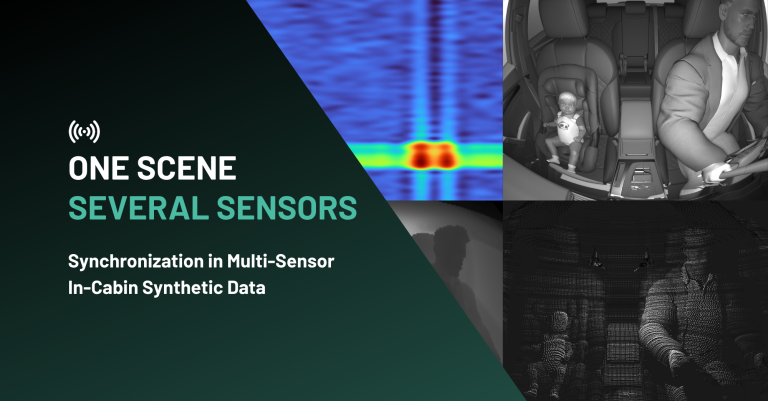
Can Multi-Modal Sensor Fusion Reduce False Positives in In-Cabin Monitoring Systems?
Sensor fusion, combining RGB cameras, infrared imaging, radar, or depth sensors, can improve robustness, but it does not inherently solve false positives. Without context-aware validation, multi-modal systems may still misinterpret safe gaze deviations. Fusion enhances signal richness; structured validation ensures correct interpretation.
What Does a Validation-First Approach to Reducing False Positives in Driver Monitoring Systems Look Like?
A validation-first approach treats false positives as a measurable engineering target rather than an incidental artifact. It includes:
- Explicit true-negative modeling
- Structured adversarial scenario testing
- Demographic balancing
- Ground-truth attention annotation
- Iterative stress testing in simulation before physical deployment
This shifts DMS development from heuristic tuning to systematic robustness engineering.