In-Cabin Monitoring at CES 2026: From Driver Monitoring to Agentic Cabin Intelligence
In-Cabin Monitoring at CES 2026 From Driver Monitoring to Agentic Cabin Intelligence
SHARE

Table of Contents

Table of Contents

Executive Summary: In-Cabin Monitoring at CES 2026

CES 2026 marked a transition in automotive in-cabin monitoring from driver-only attention systems to full-cabin, AI-driven intelligence. Automakers and Tier-1 suppliers showcased integrated Driver and Occupant Monitoring Systems (DMS/OMS) capable of detecting distraction, drowsiness, impairment, child presence, and medical emergencies in real time.

Key trends included the adoption of Vision-Language Models (VLMs) and Large Language Models (LLMs) for multi-modal reasoning inside the cabin, combining gaze, gesture, speech, and contextual data to enable intent prediction and proactive vehicle behavior. Sensor fusion architectures, particularly radar plus vision, emerged as the dominant approach for robust Child Presence Detection and occupant classification under occlusion.

Euro NCAP 2026 significantly influenced system design by expanding safety scoring to include holistic in-cabin sensing, impairment detection, and Minimum Risk Maneuvers. To meet these requirements, companies demonstrated under-display cameras, centralized AI compute platforms from Qualcomm, Renesas, and NVIDIA, and mixed-criticality software architectures capable of running safety-critical monitoring alongside infotainment.

As in-cabin systems evolve toward medical-grade monitoring and agent-based decision making, validation and training have become the primary bottlenecks. Physics-based synthetic data was widely referenced as the only scalable and ethical method for generating the long-tail, safety-critical scenarios required for validating and certifying these systems under upcoming regulatory frameworks.

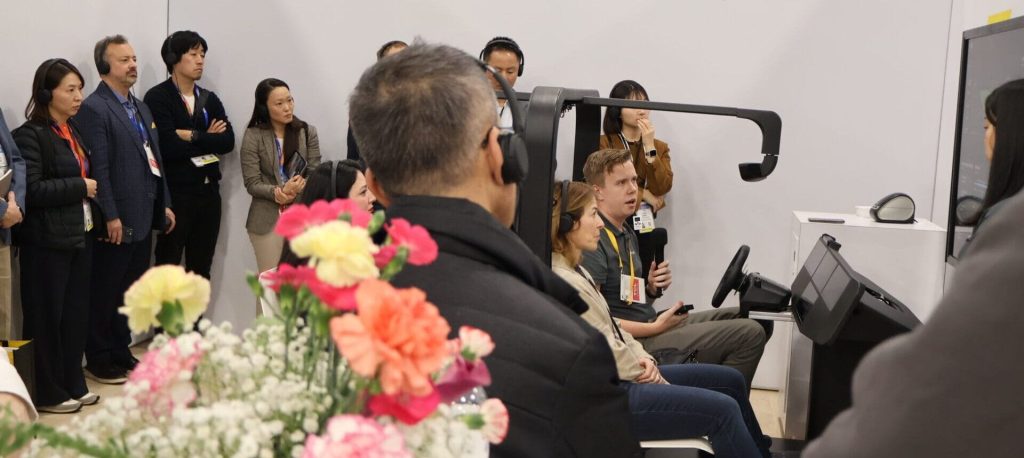
CES 2026

Source: CES

In-Cabin Monitoring at CES 2026: From Driver Monitoring to Agentic Cabin Intelligence

CES 2026 represented a structural shift in automotive in-cabin monitoring. What was once a collection of isolated Driver Monitoring Systems (DMS) has evolved into a unified, AI-driven cabin intelligence stack that combines perception, reasoning, and actuation.

Automakers and Tier-1 suppliers demonstrated systems capable of understanding not only driver attention, but also occupant behavior, health, impairment, and intent, in real time.

Three forces converged to drive this transition. First, the maturation of Vision-Language Models (VLMs) and Large Language Models (LLMs) has moved cockpit AI beyond voice assistants into multi-modal reasoning engines that fuse gaze, gesture, speech, and environmental context.

Second, the UNECE Global Safety Regulations (GSR) now formally recognize in-cabin monitoring as a core component of driver and occupant safety, while Euro NCAP 2026 protocols have elevated in-cabin sensing to a key safety category, shifting regulatory focus from driver-only monitoring to full-cabin awareness, impairment detection, and child presence detection.

Third, advances in sensor integration, including under-display cameras, radar-vision fusion, and centralized domain controllers, enabled these capabilities to be deployed without compromising interior design or cost.

At the same time, CES 2026 exposed a new bottleneck. As in-cabin systems expand to medical-grade monitoring, behavioral impairment detection, and agent-driven decision making, validation and training have become the limiting factors. Proving safety across rare, ethically sensitive, and long-tail scenarios is no longer achievable with real-world data alone.

CES 2026 In-Cabin Monitoring: Trends and Implications

To understand the specific launches, we must first look at the fiver “macro-trends” dominating the automotive engineering space this year:

  • “Invisible” Integration & High-Transmittance Displays: Shifting IR cameras behind LCD/OLED displays (UDC) to maintain optimal Owl (head-based) and Lizard (eye-based) tracking angles (required for GSR and NCAP compliance) without compromising cabin aesthetics.
  • Behavioral Impairment Detection: Moving beyond breathalyzers to detect intoxication and Cognitive State Recognition (stress, rage, sudden sickness) via micro-expression and pupil-pattern analysis.
  • The Rise of Vision Language Models (VLM): Cockpit AI now utilizes VLMs to achieve Intent Prediction. Systems correlate passenger gestures with external GPS data to provide a context-aware concierge experience.
  • Sensor Fusion (Radar + Vision): The “Radar vs. Camera” debate has ended in fusion. Radar provides the “micro-motion” detection needed for Child Presence Detection (CPD) through blankets, while vision provides the semantic data for occupant classification.
  • Medical-Grade Monitoring: DMS is evolving into a health tool, capable of detecting “Sudden Sickness” (seizures/strokes) and tracking vital signs like heart rate and breathing wirelessly.

CES 2026 In-Cabin Monitoring: Company Announcements and Innovations

What Was Shown at CES 2026: In-Cabin Monitoring Technology Overview & System Classification

Company / PartnerTechnology / ModuleMonitoring TypeKey Feature / DifferentiatorRegulatory / Safety Relevance
Smart EyeDMS behind LCD (Invisible Cabin)Driver MonitoringEye/eyelid tracking, real-time alcohol detectionEuro NCAP 2026, GSR
Seeing MachinesICMS + 3D Cabin MappingDriver & OccupantHolistic safety loop, hazard detection via gazeEuro NCAP 2026
ValeoPanovision HUDDriver AwarenessTracks if driver sees hazards, helmet detection for 2-wheelersEuro NCAP, GSR
MagnaNVIDIA DRIVE Hyperion ECUFull-cabinHigh-performance compute for holistic monitoringEuro NCAP, SDV architecture
Gentex2D + 3D Sensor FusionOccupant & MedicalSix-seat vital signs, Sudden Sickness detectionEuro NCAP, GSR
Sony Honda Mobility (AFEELA)VLM-powered AI AgentDriver & PassengerIntent prediction, mood-aware cabin personalizationEuro NCAP 2026, VLM, LLM
NovelicRadar + Camera FusionOccupant & Child PresenceRedundant detection under blankets/occlusionEuro NCAP 2026
AptivVision-based CMSOccupantReplaces weight sensors, edge processing, synthetic data trainingEuro NCAP, CPD, SDV, Synthetic Data
LG InnotekUnder-Display Camera + AI RestorationDriver & OccupantInvisible camera, 99% image fidelity, UWB CPDEuro NCAP 2026
BoschAI Extension Platform + VLMDriver & PassengerMulti-step reasoning, context-aware actionsEuro NCAP, VLM, LLM
Uber / Lucid / NuroRobotaxi Sensor HaloPassenger360° perception, health monitoring, left-behind itemsEuro NCAP, Level 4 autonomy
RenesasR-Car X5H SoCDriver & OccupantASIL-B compliant, Smart Eye integrationEuro NCAP, SDV compute backbone
QualcommSnapdragon Cockpit EliteFull-cabinHigh-performance compute for VLM/LLM, centralized AIEuro NCAP, SDV architecture
NVIDIAAlpamayo + DRIVE HyperionDriver & OccupantVision-Language-Action models, full-stack AI computeEuro NCAP, simulation & AI training

1. Smart Eye: Alcohol Detection & The Invisible Cabin

Smart Eye dominated the conversation with two major breakthroughs:

Smart Eye CES

Source: Smart Eye

2. Seeing Machines: 3D Mapping & Holistic Safety

Seeing Machines showcased its leadership in high-fidelity sensing through:

  • StradVision Partnership: This collaboration fuses StradVision’s SVNet (external perception) with Seeing Machines’ internal DMS to create a “holistic” safety loop, correlating road hazards with driver gaze to provide context-aware warnings.
  • 3D Cabin Perception Mapping: Seeing Machines unveiled a live, high-fidelity 3D map of the cabin that tracks the presence, position, and behavior of all occupants in real-time for advanced restraint optimization, specifically designed to meet 2026 Euro NCAP protocols.

Source: Seeing Machines

3. Valeo & Seeing Machines: Integrated In‑Cabin Monitoring

Valeo showcased its next‑generation in‑cabin monitoring applications in collaboration with Seeing Machines’ ICMS software at CES 2026, combining Valeo’s system‑level design and integration expertise with advanced perception for enhanced safety and regulatory readiness. The demonstrations included the Valeo Panovision head‑up display, which uses gaze tracking to assess whether drivers have noticed detected hazards, and the Valeo Safe InSight vehicle demo that layers interior sensing to observe driver and passenger states. Valeo also highlighted a SmartCluster Helmet Detection system for two‑wheelers that identifies an absent helmet before departure, underscoring how integrated in‑cabin monitoring can extend across mobility segments. This partnership demonstrates how Seeing Machines’ DMS/OMS capabilities are embedded into Valeo’s safety‑centric architectures to meet emerging global vehicle safety demands.

4. Magna: Scaling Impairment Detection & AI Compute

NVIDIA DRIVE Hyperion Integration: In a major 2026 move toward the Software-Defined Vehicle (SDV), Magna announced it is now providing Hyperion-compatible ECUs for the NVIDIA DRIVE AGX Thor platform. For ML engineers, this means Magna is providing the high-performance hardware architecture required to run the “Holistic” safety loops that fuse internal occupant monitoring with external ADAS data.

5. Gentex: Medical-Grade Monitoring and Cognitive Awareness

  • Scalable In-Cabin Monitoring (Six-Seater Demo): Gentex brought to CES an all-new monitoring demonstrator in a six-seater van, utilizing a fusion of 2D and structured-light 3D sensors. For the first time, this system tracks head pose, gaze, and posture for all six occupants simultaneously. It moves beyond occupancy to detect biometric vital signs, tracking respiratory rates and micro-variations in skin tone, to identify Sudden Sickness (seizures/strokes) and verify a driver’s mental readiness during Return of Control handovers in Level 3 autonomous systems.
  • Next-Gen FDM with Dynamic View Assist: A major 2026 hardware evolution, this digital rearview mirror features Dynamic View Assist, which utilizes proprietary algorithms to automatically expand the digital field of vision at low speeds, tilt downward when reversing, and monitor blind spots in real-time. This system is designed as a software-defined safety platform, allowing OEMs to integrate Cognitive State Recognition (detecting confusion or advanced fatigue) directly into the mirror housing, significantly reducing cabin clutter and BOM costs.

6. Sony Honda Mobility (AFEELA): The Contextual "VLM" Agent

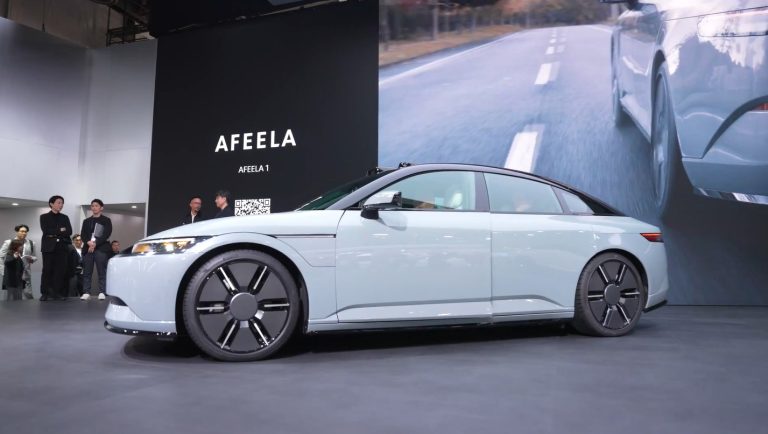
  • World Premiere of AFEELA Prototype 2026: SHM showcased its newest prototype at CES 2026, an SUV-influenced evolution of the AFEELA 1. While the sedan begins deliveries in California in late 2026, this new prototype serves as the testbed for SHM’s next-gen E/E architecture, utilizing Qualcomm’s Snapdragon Digital Chassis to centralize all cabin and driving functions.
  • End-to-End AI with Integrated VLM: A major 2026 technical pivot, SHM revealed that its “AFEELA Intelligent Drive” (ADAS) has evolved into an end-to-end AI model incorporating a Vision-Language Model (VLM). This allows the vehicle to reason through complex urban scenarios like a human would, rather than following rigid code. Inside the cabin, the VLM enables the AFEELA Personal Agent (built on Microsoft Azure OpenAI) to understand multi-modal context, such as identifying a passenger’s gesture toward a landmark or recognizing their emotional state through in-cabin cameras to suggest a “Mood Theme” for the panoramic display.
AFEELA CES

Source: CES

7. Novelic: Radar + Vision Fusion for Redundant Safety

Novelic showcased their ACAM 60 GHz radar-based in-cabin monitoring module, which is officially entering mass production in 2026. The highlight of their demo was the successful fusion of this radar technology with a camera-based DMS, creating a redundant safety solution that meets the strictest Euro NCAP requirements. By combining mmWave radar’s ability to detect micro-motions (for Child Presence Detection) with vision’s semantic depth (for tracking drowsiness, microsleep, and distraction), Novelic provides a cost-effective, high-performance architecture that remains effective even when occupants are obscured by blankets or seats.

8. Aptiv: The Next-Gen Digital Cockpit

  • Next-Generation Digital Cockpit Unveil: Aptiv introduced its latest Digital Cockpit technologies, designed as a “Software-Defined Vehicle” (SDV) platform that bridges the gap between interior experience and external ADAS. By utilizing their Intelligent Edge architecture, Aptiv processes in-cabin sensor data locally at the edge. This provides the low-latency response times required for safety-critical decisions while allowing for continuous performance optimization through a digital feedback loop.
  • Vision-Based Occupant Sensing (Sensor Reduction): A key 2026 technical highlight is the ability of Aptiv’s Cabin Monitoring System (CMS) to entirely replace traditional seat-based weight sensors with vision-based occupancy detection. This reduces vehicle weight and cabling complexity while providing far more granular data for airbag deployment optimization and Child Presence Detection (CPD). To scale these systems across diverse vehicle types, Aptiv showcased its use of synthetic data environments to generate the realistic datasets needed to train and validate its AI-powered cabin monitoring algorithms.
  • Personalized Safety & Directional Audio: The 2026 platform integrates the Aptiv Cockpit Sound Suite and Face ID. The system uses Face ID to automatically adjust driver preferences (seats, mirrors, ADAS sensitivity) upon entry, while directional audio alerts deliver safety-critical warnings specifically to the driver’s headrest, ensuring they are informed of hazards without disrupting the overall cabin experience.

Source: Aptiv

9. LG Innotek: Invisible Sensing and AI Restoration

LG Innotek unveiled its “Next-Generation Under-Display Camera (UDC),” a flagship Driver Monitoring System (DMS) module designed to be installed behind the instrument cluster, making it completely invisible to the driver. Developed in collaboration with LG Display, this solution addresses the historical 30% image degradation caused by display panels through proprietary AI image restoration software that deblurs and denoises frames to achieve 99% image fidelity. 

Beyond drowsiness and gaze tracking, the system supports a “dual recording” function for in-vehicle vlogging and utilizes Ultra-Wideband (UWB) radar for high-precision Child Presence Detection (CPD) and biometric vital sensing, providing a seamless blend of premium aesthetics and robust safety compliance for the upcoming Euro NCAP 2026 mandates.

10. Bosch: The "AI Extension" and Proactive Cockpit

  • World Premiere of the AI Extension Platform: Bosch debuted its AI Extension Platform, a high-performance computing unit specifically engineered to scale AI-powered cockpits. Powered by the NVIDIA DRIVE AGX Orin SoC, the platform delivers an additional 150 to 200 TOPS of compute, allowing automakers to quickly upgrade current vehicle generations with sophisticated AI agents. This platform is a breakthrough for the Software-Defined Vehicle (SDV), as it connects via simple Ethernet and power interfaces, enabling advanced AI without requiring a complete overhaul of the vehicle’s electrical/electronic (E/E) architecture.
  • Generative AI & NVIDIA Nemotron Reasoning: Through a collaboration with NVIDIA, Bosch is utilizing Vision Language Models (VLM) and the NVIDIA NeMo framework to achieve deep situational awareness within the cabin. The system goes beyond reactive commands; by leveraging NVIDIA Nemotron models, the cockpit can perform multi-step reasoning and contextual understanding. For example, a simple phrase like “I’m feeling cold” can trigger a coordinated set of actions, adjusting the dual-zone climate, activating seat heaters, and even suggesting a warmer route.
  • Microsoft 365 & Safety-Prioritized Productivity: A flagship 2026 demonstration showed the results of Bosch’s partnership with Microsoft Foundry. The platform transforms the vehicle into a secure “mobile office” by integrating the Microsoft 365 productivity suite. Crucially, this integration is safety-aware; when a driver uses a voice command to join a Microsoft Teams call, the system automatically engages Adaptive Cruise Control (ACC) and heightens the sensitivity of the Driver Monitoring System (DMS). This ensures that as the driver’s focus shifts to work, the vehicle proactively increases its level of autonomous support, minimizing the risk of distraction-related incidents.

11. Uber, Lucid & Nuro: The Robotaxi "Sensor Halo"

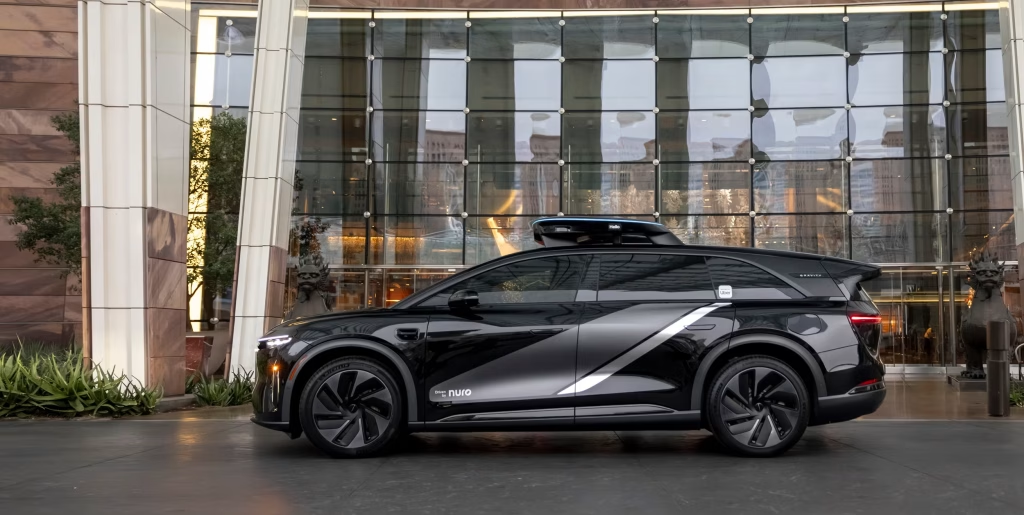
In a landmark fleet announcement at CES 2026, Uber presented its next-generation Robotaxi, built on the Lucid Gravity luxury SUV and powered by Nuro’s Level 4 autonomous technology. With the removal of the human driver, traditional Driver Monitoring Systems (DMS) have been replaced by high-fidelity Passenger Monitoring. While the exterior is defined by a roof-mounted “sensor halo”, a multi-sensor array providing 360º perception and rider identification via LEDs, the interior utilizes an advanced in-cabin suite to track occupant safety. This system monitors passenger health, detects left-behind items, and ensures ride security, marking a critical industry shift where in-cabin sensing moves from preventing driver distraction to delivering a premium, secure, and fully automated passenger experience.

Source: Nuro

12. Renesas: R-Car X5H Gen 5 SoC and Integrated In-Cabin AI 

  • Renesas introduced its R-Car X5H Gen 5 SoC, the industry’s first 3nm multi-domain automotive processor, at CES 2026. The platform now natively supports Smart Eye’s Human Insight AI through the Renesas RoX Whitebox SDK, enabling safety-critical DMS/OMS software to run alongside high-performance infotainment in a protected, ASIL-B-compliant environment. By directly mapping Smart Eye’s software to the R-Car X5H silicon, Renesas removes traditional integration bottlenecks, accelerating deployment of Euro NCAP-compliant in-cabin monitoring solutions.

13. Qualcomm: Snapdragon Cockpit Elite as Cabin Compute Backbone

At CES 2026, Qualcomm Technologies reinforced Snapdragon Cockpit™ Elite as a core compute platform for next‑generation in‑cabin intelligence. The platform is powering vehicle AI cabins, including LG’s AI Cabin Platform, where generative models (VLMs/LLMs) run on‑device with real‑time context awareness from internal and external cameras. Leveraging Snapdragon Cockpit Elite’s high‑performance compute, automotive partners demonstrated centralized AI cabins and cross‑domain solutions that integrate infotainment, perception, and automated driving compute. Qualcomm also expanded collaborations in the automotive ecosystem, with solutions that underpin high‑performance cockpit architectures and work with partners such as Visteon and Leapmotor to deliver scalable AI experiences across vehicle domains.

14. NVIDIA: AI Compute & Reasoning Engines for Autonomous and Cabin AI

At CES 2026, NVIDIA highlighted its expanding role in AI compute, reasoning models, and physical AI workflows that span from autonomous driving to intelligent cabin experiences. The company unveiled its next‑generation AI model portfolio Alpamayo, including open reasoning Vision‑Language‑Action models and simulation blueprints designed for advanced autonomy and sensor fusion tasks. Working with partners like Mercedes‑Benz, NVIDIA showcased vehicles deploying these models on its full‑stack autonomous platform, extending AI capabilities from perception to real‑time decision making. NVIDIA also emphasized its broader AI ecosystem, including simulation tools capable of generating high‑fidelity scenarios for training and testing and modular DRIVE Hyperion architectures adopted across automotive partners, positioning AI reasoning and large‑scale compute as foundational for both safety‑critical autonomy and future in‑cabin intelligence.

CES 2026 Marks the Rise of Agentic, Regulation-Driven In-Cabin Intelligence

CES 2026 made it clear that in-cabin monitoring is no longer a standalone safety feature, it is becoming the cognitive layer of the vehicle. Driver monitoring has expanded into holistic cabin intelligence, where perception, reasoning, and actuation operate as a closed safety loop spanning occupants, vehicle systems, and the external environment.

As regulations such as Euro NCAP 2026 push requirements toward impairment detection, child presence detection, and sudden sickness monitoring, the industry’s primary challenge is no longer innovation but validation. These systems must perform reliably across diverse occupants, complex lighting conditions, rare medical events, and edge cases that cannot be ethically or practically captured at scale in the real world.

CES 2026 demonstrated that the transition to agent-driven, medical-grade, and regulation-ready cabins is already underway. The remaining gap between compelling demonstrations and certified production systems will be closed not by additional sensors alone, but by robust training and validation pipelines capable of generating exhaustive, ground-truth data for the most difficult scenarios. Physics-based synthetic data has therefore moved from an optimization tool to a foundational requirement for delivering safe, compliant, and intelligent in-cabin systems.

Technical FAQ: In-Cabin Monitoring & Euro NCAP 2026

What is the primary drowsiness metric for Euro NCAP 2026?

Systems must classify drivers as drowsy when they reach Karolinska Sleepiness Scale (KSS) level >7. This requires high-precision frame-level eyelid aperture tracking.

How does the protocol define "Lizard" vs. "Owl" movement?

Lizard movement refers to eye-only gaze tracking, while Owl movement refers to head-based tracking. Euro NCAP 2026 requires systems to handle both, specifically during distraction assessment.

Does Euro NCAP 2026 require impairment detection?

Points are now awarded for identifying signs of drug or alcohol impairment and for systems capable of safely bringing the vehicle to a halt (Minimum Risk Maneuver) if the driver becomes unresponsive.

How are automotive companies using Generative AI and Large Language Models inside the vehicle?

As demonstrated at CES 2026, use cases have evolved from chatbots to reasoning engines. Bosch’s AI Extension uses an LLM for multi-step reasoning (e.g., “I’m cold” triggers climate, seats, and route change). Sony Honda’s AFEELA uses a VLM to understand passenger gesture intent relative to the outside world. This represents a shift from reactive functions to proactive, context-aware agency.

What is the biggest technical challenge in deploying these new in-cabin AI systems?

Validation and training data. The shift to holistic monitoring and LLM-based agents requires training on millions of complex, rare, and safety-critical scenarios (e.g., driver stroke, obscured child). Physics-based synthetic data generation is the only scalable method to create the labeled, diverse, and ethical datasets needed for both training these generative models and proving their safety for certification like Euro NCAP 2026.

Which companies showed the most advanced in-cabin AI at CES 2026?

The article highlights leaders in key categories: Sony Honda Mobility and Bosch for LLM/VLM agent integration; Smart Eye and Gentex for advanced gaze/behavioral and medical monitoring; Seeing Machines and Valeo for holistic safety systems; and NVIDIA, Qualcomm, and Renesas for the AI compute backbone enabling these features.

Enjoyed this article?

Add us as a Preferred Source on Google to see more content like this in Discover and Top Stories.

About Anyverse

With over 25 years of heritage in physics-based simulation and a 2008 Academy Technical Achievement Award, Anyverse is a leading provider of high-fidelity synthetic data and validation tools for advanced Perception AI.

While Anyverse remains a premier partner for the Automotive market, specializing in In-Cabin Monitoring systems and ADAS, its technology is increasingly adopted across Defence, Robotics, and Industry 4.0. Leveraging a proprietary physics-grounded engine, procedural synthetic data generation, and next-gen Generative AI, Anyverse produces datasets with unmatched realism and sensor-level accuracy (including RGB, NIR, Radar, LiDAR, and Thermal).

Its unified validation framework helps partners ensure compliance with specific regulations like Euro NCAP, as well as broader safety standards for autonomous systems. By bridging the gap between simulation and reality, Anyverse accelerates development, reduces costs, and ensures trustworthy perception for vehicles, robots, and intelligent machines.

In-Cabin Monitoring at CES 2026: From Driver Monitoring to Agentic Cabin Intelligence

In-Cabin Monitoring at CES 2026 From Driver Monitoring to Agentic Cabin Intelligence
SHARE

Table of Contents

Table of Contents

Executive Summary: In-Cabin Monitoring at CES 2026

CES 2026 marked a transition in automotive in-cabin monitoring from driver-only attention systems to full-cabin, AI-driven intelligence. Automakers and Tier-1 suppliers showcased integrated Driver and Occupant Monitoring Systems (DMS/OMS) capable of detecting distraction, drowsiness, impairment, child presence, and medical emergencies in real time.

Key trends included the adoption of Vision-Language Models (VLMs) and Large Language Models (LLMs) for multi-modal reasoning inside the cabin, combining gaze, gesture, speech, and contextual data to enable intent prediction and proactive vehicle behavior. Sensor fusion architectures, particularly radar plus vision, emerged as the dominant approach for robust Child Presence Detection and occupant classification under occlusion.

Euro NCAP 2026 significantly influenced system design by expanding safety scoring to include holistic in-cabin sensing, impairment detection, and Minimum Risk Maneuvers. To meet these requirements, companies demonstrated under-display cameras, centralized AI compute platforms from Qualcomm, Renesas, and NVIDIA, and mixed-criticality software architectures capable of running safety-critical monitoring alongside infotainment.

As in-cabin systems evolve toward medical-grade monitoring and agent-based decision making, validation and training have become the primary bottlenecks. Physics-based synthetic data was widely referenced as the only scalable and ethical method for generating the long-tail, safety-critical scenarios required for validating and certifying these systems under upcoming regulatory frameworks.

CES 2026

Source: CES

In-Cabin Monitoring at CES 2026: From Driver Monitoring to Agentic Cabin Intelligence

CES 2026 represented a structural shift in automotive in-cabin monitoring. What was once a collection of isolated Driver Monitoring Systems (DMS) has evolved into a unified, AI-driven cabin intelligence stack that combines perception, reasoning, and actuation.

Automakers and Tier-1 suppliers demonstrated systems capable of understanding not only driver attention, but also occupant behavior, health, impairment, and intent, in real time.

Three forces converged to drive this transition. First, the maturation of Vision-Language Models (VLMs) and Large Language Models (LLMs) has moved cockpit AI beyond voice assistants into multi-modal reasoning engines that fuse gaze, gesture, speech, and environmental context.

Second, the UNECE Global Safety Regulations (GSR) now formally recognize in-cabin monitoring as a core component of driver and occupant safety, while Euro NCAP 2026 protocols have elevated in-cabin sensing to a key safety category, shifting regulatory focus from driver-only monitoring to full-cabin awareness, impairment detection, and child presence detection.

Third, advances in sensor integration, including under-display cameras, radar-vision fusion, and centralized domain controllers, enabled these capabilities to be deployed without compromising interior design or cost.

At the same time, CES 2026 exposed a new bottleneck. As in-cabin systems expand to medical-grade monitoring, behavioral impairment detection, and agent-driven decision making, validation and training have become the limiting factors. Proving safety across rare, ethically sensitive, and long-tail scenarios is no longer achievable with real-world data alone.

CES 2026 In-Cabin Monitoring: Trends and Implications

To understand the specific launches, we must first look at the fiver “macro-trends” dominating the automotive engineering space this year:

  • “Invisible” Integration & High-Transmittance Displays: Shifting IR cameras behind LCD/OLED displays (UDC) to maintain optimal Owl (head-based) and Lizard (eye-based) tracking angles (required for GSR and NCAP compliance) without compromising cabin aesthetics.
  • Behavioral Impairment Detection: Moving beyond breathalyzers to detect intoxication and Cognitive State Recognition (stress, rage, sudden sickness) via micro-expression and pupil-pattern analysis.
  • The Rise of Vision Language Models (VLM): Cockpit AI now utilizes VLMs to achieve Intent Prediction. Systems correlate passenger gestures with external GPS data to provide a context-aware concierge experience.
  • Sensor Fusion (Radar + Vision): The “Radar vs. Camera” debate has ended in fusion. Radar provides the “micro-motion” detection needed for Child Presence Detection (CPD) through blankets, while vision provides the semantic data for occupant classification.
  • Medical-Grade Monitoring: DMS is evolving into a health tool, capable of detecting “Sudden Sickness” (seizures/strokes) and tracking vital signs like heart rate and breathing wirelessly.

CES 2026 In-Cabin Monitoring: Company Announcements and Innovations

What Was Shown at CES 2026: In-Cabin Monitoring Technology Overview & System Classification

Company / PartnerTechnology / ModuleMonitoring TypeKey Feature / DifferentiatorRegulatory / Safety Relevance
Smart EyeDMS behind LCD (Invisible Cabin)Driver MonitoringEye/eyelid tracking, real-time alcohol detectionEuro NCAP 2026, GSR
Seeing MachinesICMS + 3D Cabin MappingDriver & OccupantHolistic safety loop, hazard detection via gazeEuro NCAP 2026
ValeoPanovision HUDDriver AwarenessTracks if driver sees hazards, helmet detection for 2-wheelersEuro NCAP, GSR
MagnaNVIDIA DRIVE Hyperion ECUFull-cabinHigh-performance compute for holistic monitoringEuro NCAP, SDV architecture
Gentex2D + 3D Sensor FusionOccupant & MedicalSix-seat vital signs, Sudden Sickness detectionEuro NCAP, GSR
Sony Honda Mobility (AFEELA)VLM-powered AI AgentDriver & PassengerIntent prediction, mood-aware cabin personalizationEuro NCAP 2026, VLM, LLM
NovelicRadar + Camera FusionOccupant & Child PresenceRedundant detection under blankets/occlusionEuro NCAP 2026
AptivVision-based CMSOccupantReplaces weight sensors, edge processing, synthetic data trainingEuro NCAP, CPD, SDV, Synthetic Data
LG InnotekUnder-Display Camera + AI RestorationDriver & OccupantInvisible camera, 99% image fidelity, UWB CPDEuro NCAP 2026
BoschAI Extension Platform + VLMDriver & PassengerMulti-step reasoning, context-aware actionsEuro NCAP, VLM, LLM
Uber / Lucid / NuroRobotaxi Sensor HaloPassenger360° perception, health monitoring, left-behind itemsEuro NCAP, Level 4 autonomy
RenesasR-Car X5H SoCDriver & OccupantASIL-B compliant, Smart Eye integrationEuro NCAP, SDV compute backbone
QualcommSnapdragon Cockpit EliteFull-cabinHigh-performance compute for VLM/LLM, centralized AIEuro NCAP, SDV architecture
NVIDIAAlpamayo + DRIVE HyperionDriver & OccupantVision-Language-Action models, full-stack AI computeEuro NCAP, simulation & AI training

1. Smart Eye: Alcohol Detection & The Invisible Cabin

Smart Eye dominated the conversation with two major breakthroughs:

Smart Eye CES

Source: Smart Eye

2. Seeing Machines: 3D Mapping & Holistic Safety

Seeing Machines showcased its leadership in high-fidelity sensing through:

  • StradVision Partnership: This collaboration fuses StradVision’s SVNet (external perception) with Seeing Machines’ internal DMS to create a “holistic” safety loop, correlating road hazards with driver gaze to provide context-aware warnings.
  • 3D Cabin Perception Mapping: Seeing Machines unveiled a live, high-fidelity 3D map of the cabin that tracks the presence, position, and behavior of all occupants in real-time for advanced restraint optimization, specifically designed to meet 2026 Euro NCAP protocols.

Source: Seeing Machines

3. Valeo & Seeing Machines: Integrated In‑Cabin Monitoring

Valeo showcased its next‑generation in‑cabin monitoring applications in collaboration with Seeing Machines’ ICMS software at CES 2026, combining Valeo’s system‑level design and integration expertise with advanced perception for enhanced safety and regulatory readiness. The demonstrations included the Valeo Panovision head‑up display, which uses gaze tracking to assess whether drivers have noticed detected hazards, and the Valeo Safe InSight vehicle demo that layers interior sensing to observe driver and passenger states. Valeo also highlighted a SmartCluster Helmet Detection system for two‑wheelers that identifies an absent helmet before departure, underscoring how integrated in‑cabin monitoring can extend across mobility segments. This partnership demonstrates how Seeing Machines’ DMS/OMS capabilities are embedded into Valeo’s safety‑centric architectures to meet emerging global vehicle safety demands.

4. Magna: Scaling Impairment Detection & AI Compute

NVIDIA DRIVE Hyperion Integration: In a major 2026 move toward the Software-Defined Vehicle (SDV), Magna announced it is now providing Hyperion-compatible ECUs for the NVIDIA DRIVE AGX Thor platform. For ML engineers, this means Magna is providing the high-performance hardware architecture required to run the “Holistic” safety loops that fuse internal occupant monitoring with external ADAS data.

5. Gentex: Medical-Grade Monitoring and Cognitive Awareness

  • Scalable In-Cabin Monitoring (Six-Seater Demo): Gentex brought to CES an all-new monitoring demonstrator in a six-seater van, utilizing a fusion of 2D and structured-light 3D sensors. For the first time, this system tracks head pose, gaze, and posture for all six occupants simultaneously. It moves beyond occupancy to detect biometric vital signs, tracking respiratory rates and micro-variations in skin tone, to identify Sudden Sickness (seizures/strokes) and verify a driver’s mental readiness during Return of Control handovers in Level 3 autonomous systems.
  • Next-Gen FDM with Dynamic View Assist: A major 2026 hardware evolution, this digital rearview mirror features Dynamic View Assist, which utilizes proprietary algorithms to automatically expand the digital field of vision at low speeds, tilt downward when reversing, and monitor blind spots in real-time. This system is designed as a software-defined safety platform, allowing OEMs to integrate Cognitive State Recognition (detecting confusion or advanced fatigue) directly into the mirror housing, significantly reducing cabin clutter and BOM costs.

6. Sony Honda Mobility (AFEELA): The Contextual "VLM" Agent

  • World Premiere of AFEELA Prototype 2026: SHM showcased its newest prototype at CES 2026, an SUV-influenced evolution of the AFEELA 1. While the sedan begins deliveries in California in late 2026, this new prototype serves as the testbed for SHM’s next-gen E/E architecture, utilizing Qualcomm’s Snapdragon Digital Chassis to centralize all cabin and driving functions.
  • End-to-End AI with Integrated VLM: A major 2026 technical pivot, SHM revealed that its “AFEELA Intelligent Drive” (ADAS) has evolved into an end-to-end AI model incorporating a Vision-Language Model (VLM). This allows the vehicle to reason through complex urban scenarios like a human would, rather than following rigid code. Inside the cabin, the VLM enables the AFEELA Personal Agent (built on Microsoft Azure OpenAI) to understand multi-modal context, such as identifying a passenger’s gesture toward a landmark or recognizing their emotional state through in-cabin cameras to suggest a “Mood Theme” for the panoramic display.
AFEELA CES

Source: CES

7. Novelic: Radar + Vision Fusion for Redundant Safety

Novelic showcased their ACAM 60 GHz radar-based in-cabin monitoring module, which is officially entering mass production in 2026. The highlight of their demo was the successful fusion of this radar technology with a camera-based DMS, creating a redundant safety solution that meets the strictest Euro NCAP requirements. By combining mmWave radar’s ability to detect micro-motions (for Child Presence Detection) with vision’s semantic depth (for tracking drowsiness, microsleep, and distraction), Novelic provides a cost-effective, high-performance architecture that remains effective even when occupants are obscured by blankets or seats.

8. Aptiv: The Next-Gen Digital Cockpit

  • Next-Generation Digital Cockpit Unveil: Aptiv introduced its latest Digital Cockpit technologies, designed as a “Software-Defined Vehicle” (SDV) platform that bridges the gap between interior experience and external ADAS. By utilizing their Intelligent Edge architecture, Aptiv processes in-cabin sensor data locally at the edge. This provides the low-latency response times required for safety-critical decisions while allowing for continuous performance optimization through a digital feedback loop.
  • Vision-Based Occupant Sensing (Sensor Reduction): A key 2026 technical highlight is the ability of Aptiv’s Cabin Monitoring System (CMS) to entirely replace traditional seat-based weight sensors with vision-based occupancy detection. This reduces vehicle weight and cabling complexity while providing far more granular data for airbag deployment optimization and Child Presence Detection (CPD). To scale these systems across diverse vehicle types, Aptiv showcased its use of synthetic data environments to generate the realistic datasets needed to train and validate its AI-powered cabin monitoring algorithms.
  • Personalized Safety & Directional Audio: The 2026 platform integrates the Aptiv Cockpit Sound Suite and Face ID. The system uses Face ID to automatically adjust driver preferences (seats, mirrors, ADAS sensitivity) upon entry, while directional audio alerts deliver safety-critical warnings specifically to the driver’s headrest, ensuring they are informed of hazards without disrupting the overall cabin experience.

Source: Aptiv

9. LG Innotek: Invisible Sensing and AI Restoration

LG Innotek unveiled its “Next-Generation Under-Display Camera (UDC),” a flagship Driver Monitoring System (DMS) module designed to be installed behind the instrument cluster, making it completely invisible to the driver. Developed in collaboration with LG Display, this solution addresses the historical 30% image degradation caused by display panels through proprietary AI image restoration software that deblurs and denoises frames to achieve 99% image fidelity. 

Beyond drowsiness and gaze tracking, the system supports a “dual recording” function for in-vehicle vlogging and utilizes Ultra-Wideband (UWB) radar for high-precision Child Presence Detection (CPD) and biometric vital sensing, providing a seamless blend of premium aesthetics and robust safety compliance for the upcoming Euro NCAP 2026 mandates.

10. Bosch: The "AI Extension" and Proactive Cockpit

  • World Premiere of the AI Extension Platform: Bosch debuted its AI Extension Platform, a high-performance computing unit specifically engineered to scale AI-powered cockpits. Powered by the NVIDIA DRIVE AGX Orin SoC, the platform delivers an additional 150 to 200 TOPS of compute, allowing automakers to quickly upgrade current vehicle generations with sophisticated AI agents. This platform is a breakthrough for the Software-Defined Vehicle (SDV), as it connects via simple Ethernet and power interfaces, enabling advanced AI without requiring a complete overhaul of the vehicle’s electrical/electronic (E/E) architecture.
  • Generative AI & NVIDIA Nemotron Reasoning: Through a collaboration with NVIDIA, Bosch is utilizing Vision Language Models (VLM) and the NVIDIA NeMo framework to achieve deep situational awareness within the cabin. The system goes beyond reactive commands; by leveraging NVIDIA Nemotron models, the cockpit can perform multi-step reasoning and contextual understanding. For example, a simple phrase like “I’m feeling cold” can trigger a coordinated set of actions, adjusting the dual-zone climate, activating seat heaters, and even suggesting a warmer route.
  • Microsoft 365 & Safety-Prioritized Productivity: A flagship 2026 demonstration showed the results of Bosch’s partnership with Microsoft Foundry. The platform transforms the vehicle into a secure “mobile office” by integrating the Microsoft 365 productivity suite. Crucially, this integration is safety-aware; when a driver uses a voice command to join a Microsoft Teams call, the system automatically engages Adaptive Cruise Control (ACC) and heightens the sensitivity of the Driver Monitoring System (DMS). This ensures that as the driver’s focus shifts to work, the vehicle proactively increases its level of autonomous support, minimizing the risk of distraction-related incidents.

11. Uber, Lucid & Nuro: The Robotaxi "Sensor Halo"

In a landmark fleet announcement at CES 2026, Uber presented its next-generation Robotaxi, built on the Lucid Gravity luxury SUV and powered by Nuro’s Level 4 autonomous technology. With the removal of the human driver, traditional Driver Monitoring Systems (DMS) have been replaced by high-fidelity Passenger Monitoring. While the exterior is defined by a roof-mounted “sensor halo”, a multi-sensor array providing 360º perception and rider identification via LEDs, the interior utilizes an advanced in-cabin suite to track occupant safety. This system monitors passenger health, detects left-behind items, and ensures ride security, marking a critical industry shift where in-cabin sensing moves from preventing driver distraction to delivering a premium, secure, and fully automated passenger experience.
Source: Nuro

12. Renesas: R-Car X5H Gen 5 SoC and Integrated In-Cabin AI 

  • Renesas introduced its R-Car X5H Gen 5 SoC, the industry’s first 3nm multi-domain automotive processor, at CES 2026. The platform now natively supports Smart Eye’s Human Insight AI through the Renesas RoX Whitebox SDK, enabling safety-critical DMS/OMS software to run alongside high-performance infotainment in a protected, ASIL-B-compliant environment. By directly mapping Smart Eye’s software to the R-Car X5H silicon, Renesas removes traditional integration bottlenecks, accelerating deployment of Euro NCAP-compliant in-cabin monitoring solutions.

13. Qualcomm: Snapdragon Cockpit Elite as Cabin Compute Backbone

At CES 2026, Qualcomm Technologies reinforced Snapdragon Cockpit™ Elite as a core compute platform for next‑generation in‑cabin intelligence. The platform is powering vehicle AI cabins, including LG’s AI Cabin Platform, where generative models (VLMs/LLMs) run on‑device with real‑time context awareness from internal and external cameras. Leveraging Snapdragon Cockpit Elite’s high‑performance compute, automotive partners demonstrated centralized AI cabins and cross‑domain solutions that integrate infotainment, perception, and automated driving compute. Qualcomm also expanded collaborations in the automotive ecosystem, with solutions that underpin high‑performance cockpit architectures and work with partners such as Visteon and Leapmotor to deliver scalable AI experiences across vehicle domains.

14. NVIDIA: AI Compute & Reasoning Engines for Autonomous and Cabin AI

At CES 2026, NVIDIA highlighted its expanding role in AI compute, reasoning models, and physical AI workflows that span from autonomous driving to intelligent cabin experiences. The company unveiled its next‑generation AI model portfolio Alpamayo, including open reasoning Vision‑Language‑Action models and simulation blueprints designed for advanced autonomy and sensor fusion tasks. Working with partners like Mercedes‑Benz, NVIDIA showcased vehicles deploying these models on its full‑stack autonomous platform, extending AI capabilities from perception to real‑time decision making. NVIDIA also emphasized its broader AI ecosystem, including simulation tools capable of generating high‑fidelity scenarios for training and testing and modular DRIVE Hyperion architectures adopted across automotive partners, positioning AI reasoning and large‑scale compute as foundational for both safety‑critical autonomy and future in‑cabin intelligence.

CES 2026 Marks the Rise of Agentic, Regulation-Driven In-Cabin Intelligence

CES 2026 made it clear that in-cabin monitoring is no longer a standalone safety feature, it is becoming the cognitive layer of the vehicle. Driver monitoring has expanded into holistic cabin intelligence, where perception, reasoning, and actuation operate as a closed safety loop spanning occupants, vehicle systems, and the external environment.

As regulations such as Euro NCAP 2026 push requirements toward impairment detection, child presence detection, and sudden sickness monitoring, the industry’s primary challenge is no longer innovation but validation. These systems must perform reliably across diverse occupants, complex lighting conditions, rare medical events, and edge cases that cannot be ethically or practically captured at scale in the real world.

CES 2026 demonstrated that the transition to agent-driven, medical-grade, and regulation-ready cabins is already underway. The remaining gap between compelling demonstrations and certified production systems will be closed not by additional sensors alone, but by robust training and validation pipelines capable of generating exhaustive, ground-truth data for the most difficult scenarios. Physics-based synthetic data has therefore moved from an optimization tool to a foundational requirement for delivering safe, compliant, and intelligent in-cabin systems.

Technical FAQ: In-Cabin Monitoring & Euro NCAP 2026

What is the primary drowsiness metric for Euro NCAP 2026?

Systems must classify drivers as drowsy when they reach Karolinska Sleepiness Scale (KSS) level >7. This requires high-precision frame-level eyelid aperture tracking.

How does the protocol define "Lizard" vs. "Owl" movement?

Lizard movement refers to eye-only gaze tracking, while Owl movement refers to head-based tracking. Euro NCAP 2026 requires systems to handle both, specifically during distraction assessment.

Does Euro NCAP 2026 require impairment detection?

Points are now awarded for identifying signs of drug or alcohol impairment and for systems capable of safely bringing the vehicle to a halt (Minimum Risk Maneuver) if the driver becomes unresponsive.

How are automotive companies using Generative AI and Large Language Models inside the vehicle?

As demonstrated at CES 2026, use cases have evolved from chatbots to reasoning engines. Bosch’s AI Extension uses an LLM for multi-step reasoning (e.g., “I’m cold” triggers climate, seats, and route change). Sony Honda’s AFEELA uses a VLM to understand passenger gesture intent relative to the outside world. This represents a shift from reactive functions to proactive, context-aware agency.

What is the biggest technical challenge in deploying these new in-cabin AI systems?

Validation and training data. The shift to holistic monitoring and LLM-based agents requires training on millions of complex, rare, and safety-critical scenarios (e.g., driver stroke, obscured child). Physics-based synthetic data generation is the only scalable method to create the labeled, diverse, and ethical datasets needed for both training these generative models and proving their safety for certification like Euro NCAP 2026.

Which companies showed the most advanced in-cabin AI at CES 2026?

The article highlights leaders in key categories: Sony Honda Mobility and Bosch for LLM/VLM agent integration; Smart Eye and Gentex for advanced gaze/behavioral and medical monitoring; Seeing Machines and Valeo for holistic safety systems; and NVIDIA, Qualcomm, and Renesas for the AI compute backbone enabling these features.
Enjoyed this article?

Tap to add us as a Preferred Source on Google to see more content like this.

About Anyverse

With over 25 years of heritage in physics-based simulation and a 2008 Academy Technical Achievement Award, Anyverse is a leading provider of high-fidelity synthetic data and validation tools for advanced Perception AI.

While Anyverse remains a premier partner for the Automotive market, specializing in In-Cabin Monitoring systems and ADAS, its technology is increasingly adopted across Defence, Robotics, and Industry 4.0. Leveraging a proprietary physics-grounded engine, procedural synthetic data generation, and next-gen Generative AI, Anyverse produces datasets with unmatched realism and sensor-level accuracy (including RGB, NIR, Radar, LiDAR, and Thermal).

Its unified validation framework helps partners ensure compliance with specific regulations like Euro NCAP, as well as broader safety standards for autonomous systems. By bridging the gap between simulation and reality, Anyverse accelerates development, reduces costs, and ensures trustworthy perception for vehicles, robots, and intelligent machines.