
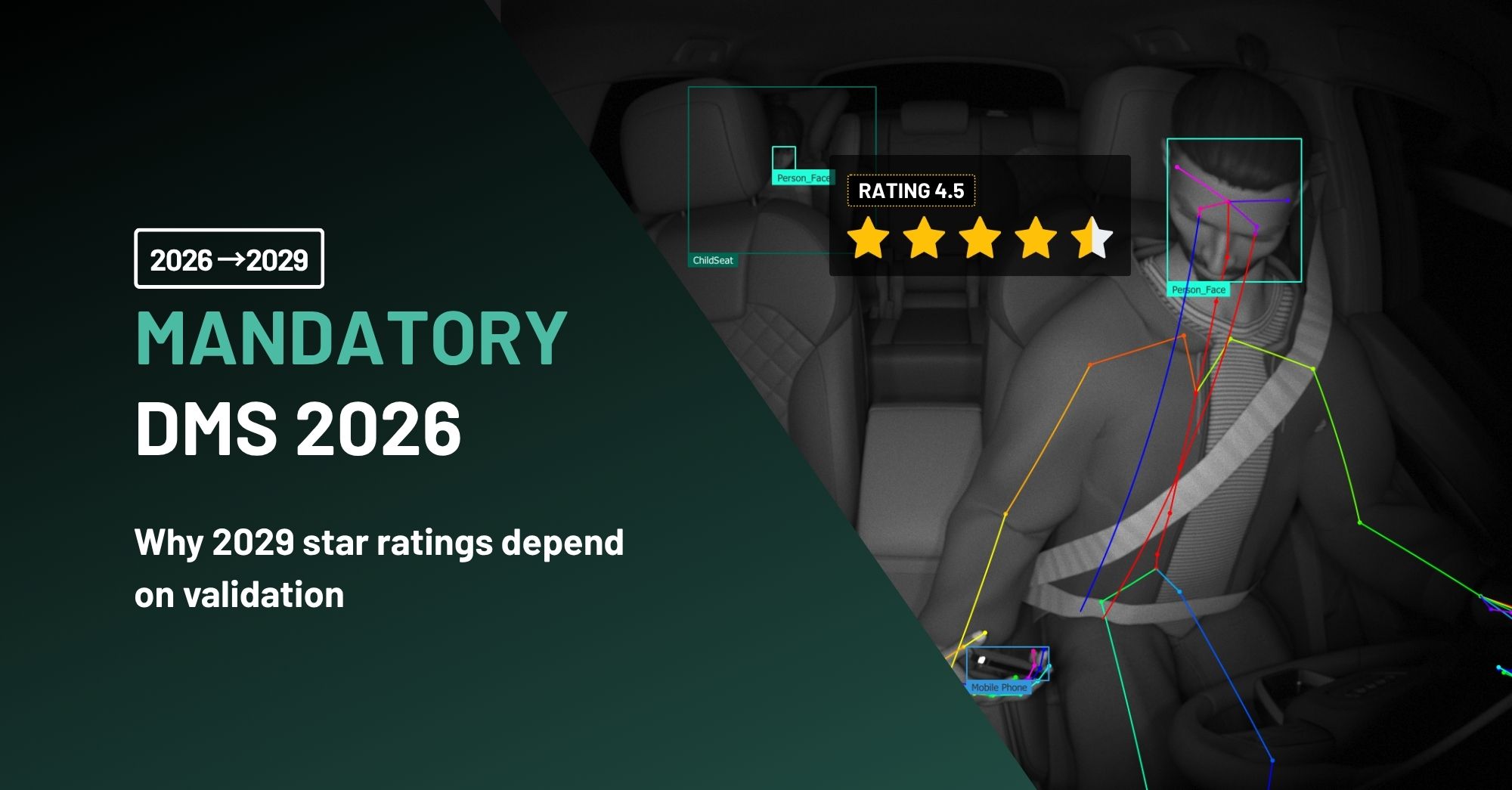
Mandatory DMS 2026: Why 2029 Star Ratings Depend on Validation
Mandatory DMS 2026 Why 2029 Star Ratings Depend on Validation
SHARE

Table of Contents

Table of Contents

In 2026, mandatory DMS redefined the baseline for in-cabin safety. But as we look toward 2029, the industry is realizing a hard truth: safety stars aren’t won with hardware alone—they are won, or lost, in the rigor of validation.

DMS Is Mandatory in The EU. Now What?

In 2026, the European automotive landscape reached a point of no return and largely completed the rollout phase for in-cabin monitoring technologies.  

The General Safety Regulation (GSR) is no longer a target for the future but a present-day legal mandate. Every new vehicle rolling off production lines in the EU must now be equipped with Advanced Driver Distraction Warning (ADDW) and Driver Drowsiness and Attention Warning (DDAW) systems. At the same time, Euro NCAP’s 2026 protocols expanded the scope of in-cabin sensing within the Safe Driving category, encouraging OEMs to integrate Driver Monitoring Systems (DMS), Occupant Monitoring Systems (OMS), and Child Presence Detection (CPD).
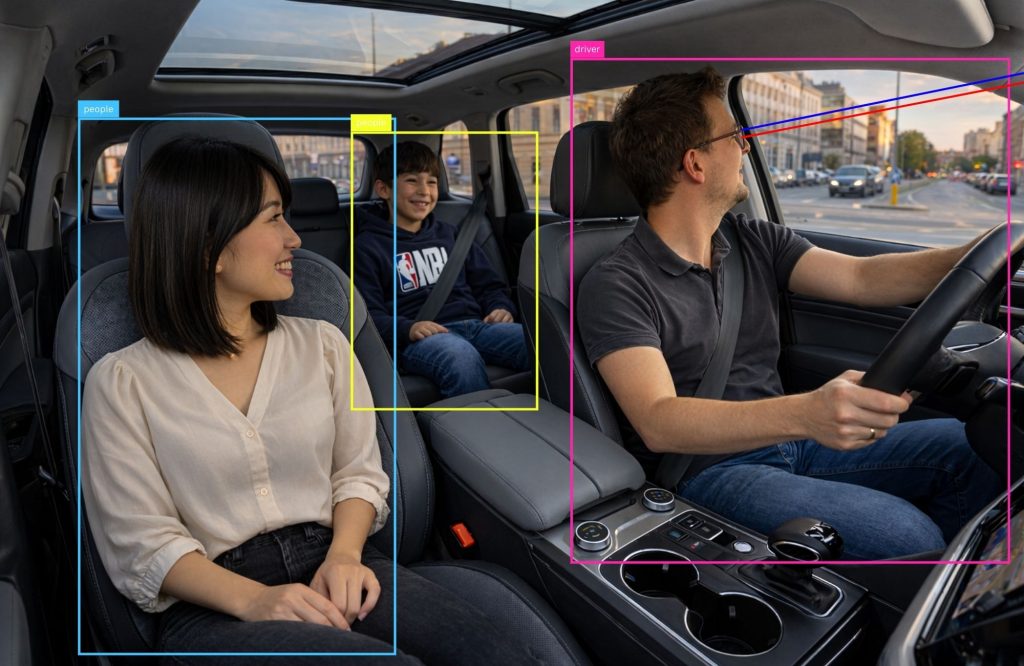
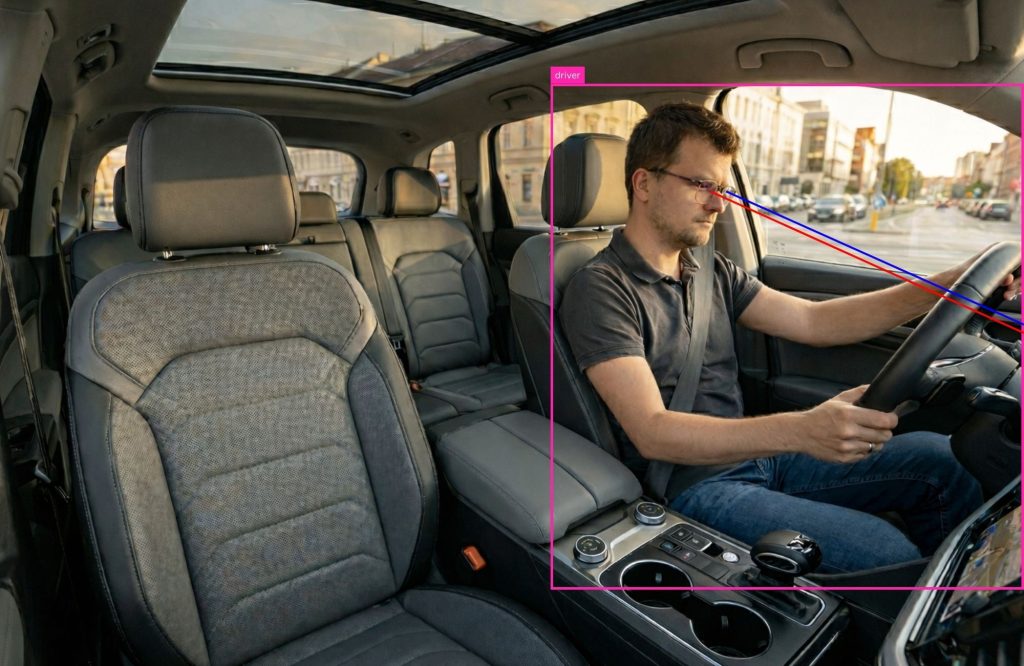
Solving False Positives in DMS Synthetic Data for True Attention Validation
Meeting 2026 GSR Standards for Advanced Distraction (ADDW) and Drowsiness (DDAW)
Solving False Positives in DMS Synthetic Data for True Attention Validation
Next-Gen In-Cabin Perception: Validating DMS for Mandatory European Safety Mandates
What the industry achieved by 2026

The deployment phase established a common technological foundation for in-cabin monitoring systems across vehicles:

  • Sensor infrastructure: Radar, Near-infrared and RGB cameras integrated into dashboards, steering columns, and rear-view mirrors
  • Perception algorithms: AI models capable of detecting gaze direction, eyelid closure, and driver attention state
  • Embedded compute: Edge processing platforms enabling real-time inference in production vehicles

By 2026, hardware and software are now largely solved. Vehicles are capable of meeting current standards, and production-ready systems exist across OEM platforms.

Euro NCAP 2029: The pivot from “equipped” to “assessed”

While 2026 was about compliance (having the system), the next milestone is about performance. Deployment is complete, the next stage – validation and certification under Euro NCAP 2029 protocols, is far more demanding. It focuses on how well DMS perform, not simply whether they are installed. Evaluations will require systems to interpret nuanced driver behavior and complex cabin dynamics. 

The real pain for OEMs and suppliers is now validation. Automakers must prove that these systems consistently detect distraction, impairment, fatigue, and critical in-cabin events under real-driving conditions. The real differentiator will be which players can ensure their in-cabin systems consistently comply with the demanding Euro NCAP 2029  tests and achieve the desired 5-star safety rating. 

Let’s take a look at the state of the market to see how some of the most important players have arrived at 2026 and begin to glimpse how they are preparing to face what’s coming.

Who Are the Key Players in The 2026 In-Cabin Monitoring Market?

As of 2026, the in-cabin monitoring market is defined by a highly integrated supply chain in which OEMs like Volvo define system requirements and deploy them across vehicles, Tier-1 integrators such as Aptiv provide the standardized hardware and embedded compute platforms, and Tier-2 algorithm specialists like Seeing Machines deliver the AI intelligence that interprets driver and occupant behavior. 

The companies highlighted below represent some of the most influential participants in each segment. This list is not an exhaustive analysis of the market but rather a representative snapshot of organizations shaping in-cabin monitoring deployment across the automotive industry.

OEM Programs Driving Cabin Intelligence
  • Key players: Tesla, Mercedes-Benz, Volkswagen Group, General Motors, Volvo Cars, BMW Group, Toyota, Ford, Stellantis, Hyundai Motor Group
  • Role: These automakers define the system architecture and integrate DMS, OMS, and CPD directly into software-defined vehicles. They determine how sensors, AI algorithms, and embedded compute interact, establishing the foundation for holistic cabin intelligence. They are ultimately accountable for meeting regulatory standards.
  • Example: Volkswagen uses mirror-integrated DMS/OMS modules across multiple models, cutting hardware costs by ~30% while enabling standardized deployment of driver monitoring.
Tier-1 Integrators Delivering Production Hardware
  • Key players: Valeo, Bosch, Magna, Continental, Aptiv, ZF Group, Denso, Forvia (Faurecia), Panasonic Automotive
  • Role: Tier-1 suppliers provide production-ready in-cabin modules such as cameras, IR illumination, and embedded compute that can scale across OEM platforms.
  • Example: Valeo, with Seeing Machines, delivers a mirror-integrated DMS/OMS module used in several European OEMs, reducing hardware complexity and enabling standardized deployment.
Tier-2 Algorithm Specialists Powering DMS

Will the system detect false positives? Will it send unnecessary alerts that annoy the user? Will it be able to detect drunk drivers? 

The Euro NCAP 2029 tests will demand this and much more. The following section examines the foundations on which the assessment will be built, the validation data gap the market will face, and how it will address it effectively.

Euro NCAP 2029 Assessments: How In-Cabin Monitoring Performance Will Be Evaluated

By 2029, in-cabin monitoring systems will face their most rigorous evaluation yet. While 2026 marked the widespread deployment of driver monitoring systems (DMS), occupant monitoring systems (OMS), and child presence detection (CPD), the next stage focuses on proving these systems deliver reliable safety performance under demanding global protocols.

Euro NCAP is currently developing these assessments in collaboration with industry partners and technology providers. Through a strategic collaboration, Anyverse is supporting Euro NCAP in the development of a virtual testing framework. This initiative enables a comprehensive, multimodal assessment of advanced in-cabin monitoring systems by seamlessly integrating physical and virtual testing protocols.

Road to Euro NCAP 2029
  • Largest revision in history: Building on the 2026 rollout, the 2029 assessment will introduce detailed scenario-based testing for in-cabin systems.

  • Expanded assessment scope: Systems must interpret complex driver behaviors, including different gaze strategies (“Lizard” vs. “Owl”) and subtle signs of fatigue or distraction.

  • Environmental robustness: Performance must be reliable across varied lighting, occlusions, and diverse passenger demographics.

  • Child Presence Detection (CPD): Accuracy must approach near-perfect reliability, with failures directly affecting a vehicle’s 5-star rating.

  • Multi-passenger awareness: Evaluations will consider occluded or overlapping occupants, passenger interactions, and seat configurations, pushing systems beyond single-occupant monitoring.

Beyond scenario coverage, the upcoming protocols are expected to emphasize quantifiable system performance metrics. Rather than simply verifying whether a system exists, future assessments will increasingly evaluate how well it performs under measurable conditions.

Key performance dimensions likely to be assessed include:

  • Detection accuracy:
    Systems will need to demonstrate high true-positive rates when identifying distraction, fatigue, or unsafe cabin conditions while minimizing false positives that could degrade user experience.
  • Reaction time:
    The delay between hazard detection and driver alerting will become critical, particularly in scenarios involving distraction or drowsiness.
  • Robustness under extreme conditions:
    Systems must perform reliably across challenging lighting environments (night driving, backlighting, glare), partial occlusions (sunglasses, hands, objects), and varied seating positions.
  • Demographic generalization:
    AI models must function accurately across diverse ethnicities, ages, facial structures, and body characteristics, reducing bias risks in safety-critical detection systems.
  • Behavioral complexity:
    Algorithms must distinguish between benign movements and genuine safety risks, such as differentiating natural driver behavior from dangerous distraction.
  • Integration with vehicle safety systems:
    In-cabin monitoring will increasingly interact with broader ADAS and vehicle safety functions, requiring seamless communication between driver monitoring, automated driving features, and alert systems.

Taken together, these evaluation dimensions significantly raise the bar for manufacturers. Meeting the 2029 protocols will require systems that are not only functional but mathematically validated across a wide range of controlled scenarios, making performance measurement far more rigorous than previous assessment cycles.

The ICMS validation challenge

With hardware largely standardized and software algorithms maturing, validation is now the critical differentiator. 

To meet Euro NCAP 2029 and other global requirements, automakers and Tier-1 suppliers must prove that their in-cabin systems perform consistently and measurably across every mandated condition. This makes scalable, deterministic, and repeatable validation, which real-world data simply cannot provide, the linchpin of regulatory success and the key to achieving five-star safety ratings worldwide.

How to Prepare for Euro NCAP: Assessing DMS, OMS, and CPD via Synthetic Data

Preparing for the Euro NCAP 2029 assessment requires something the industry has rarely needed before: large-scale validation of in-cabin monitoring AI systems across the full spectrum of human behavior.

In-cabin monitoring systems are  AI systems making safety decisions in environments defined by unpredictable human actions and environmental conditions.

When perception fails in these contexts, the consequences extend beyond algorithm accuracy to driver trust, regulatory compliance, and vehicle safety ratings.

Because of this, validation must move beyond traditional data collection methods. This is where synthetic data becomes essential.

The Data Bottleneck

Real-world data has fundamental limitations that make large-scale validation extremely difficult:

  • Ethical constraints: Capturing scenarios like drowsy drivers, distracted behavior, or children left unattended is sensitive and legally constrained.
  • Sparse coverage: Critical behaviors, unusual lighting, and multi-passenger interactions occur infrequently, leaving gaps.
  • Bias risk: Real datasets may lack demographic diversity, creating blind spots in AI performance.
  • Repeatability challenge: Regulatory testing requires controlled, repeatable scenarios, nearly impossible to achieve with live data alone.

These constraints make it extremely difficult for OEMs and Tier-1s to validate systems before production, increasing compliance risk and slowing development cycles.

As the Euro NCAP 2029 protocols push systems to demonstrate reliability across extreme lighting conditions, diverse occupants, and complex behavioral scenarios, these data limitations become even more pronounced. Real-world collection simply cannot guarantee that every safety-critical situation will be captured often enough to train and validate AI models effectively.

The Anyverse Advantage

Synthetic data is foundatio  nal infrastructure, not just a tool for edge cases. 

In fact, Anyverse acts as a “Pre-Certification Lab”, enabling engineers to validate in-cabin AI systems under fully controllable, realistic conditions using a physics-constrained synthetic data workflow.

The Anyverse InCabin platform includes a library of simulation scenarios aligned with Euro NCAP safety protocols, enabling OEMs and suppliers to generate datasets specifically designed to validate Driver Monitoring Systems (DMS), Occupant Monitoring Systems (OMS), and Child Presence Detection (CPD).

This environment allows engineers to achieve:

  • Accelerated compliance: Algorithms can be tested against Euro NCAP 2029 protocols before the first physical prototype exists.
  • Mission-critical scenarios: All critical behaviors such as distraction, fatigue, multi-passenger interactions, and child presence detection, can be tested thoroughly.
  • Diversity and realism: Synthetic datasets cover multiple ethnicities, lighting conditions, and sensor configurations, ensuring AI robustness.
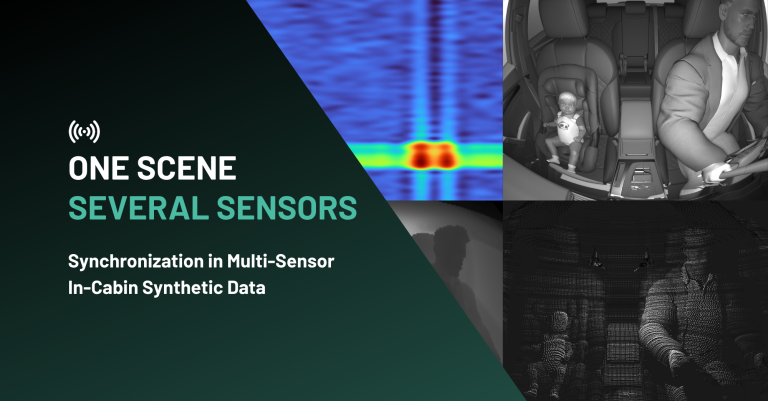
  • Multi-sensor simulation: Camera, IR, and radar sensors can all be validated together for holistic cabin intelligence.
  • Repeatable conditions: Every scenario can be reproduced consistently to align with upcoming assessment protocols.

As the platform enables multi–sensor-accurate simulation, sensors can be placed anywhere in the cabin to match production vehicle architectures. This physically accurate simulation and deterministic scenario control bridges the gap between simulation and real-world deployment, allowing AI systems to be validated long before vehicles reach production and Physical AI is exposed to the real world.

Streamlining Certification and Improving Experience

Validation is not just about regulatory compliance. It also improves real-world performance:

  • Reducing false positives: Synthetic testing enables algorithms to differentiate true distraction from benign movement, improving user experience.
  • Iterative fine-tuning: Engineers can safely adjust detection thresholds in controlled environments before deployment.

Anyverse ensures DMS, OMS, and CPD systems are “born compliant”, ready for Euro NCAP 2029 evaluations, and optimized for real-world safety and usability. Deterministic validation at scale helps ensure that in-cabin AI systems are not only compliant with regulatory expectations but also trusted by the people who rely on them every day.

In this context, synthetic data becomes more than a development tool but rather the deterministic foundation for Physical AI systems operating in safety-critical environments.

This shift points to a broader industry trend: the future of AI-driven safety will depend not just on what systems can detect, but on how rigorously their performance can be validated.

Validation, Assessment… It All Comes Down to Building Trust in In-Cabin AI

In-cabin monitoring has moved from optional convenience to mandatory safety infrastructure. By 2026, hardware and baseline software are largely deployed across the industry, but the true test now lies in validation. With Euro NCAP 2029 and other emerging protocols, vehicles will be rigorously evaluated on their ability to detect distraction, fatigue, child presence, and multi-passenger interactions, and these assessments will directly impact safety ratings and consumer trust.

This next era of cabin intelligence extends beyond automotive: AI systems are increasingly responsible for observing human behavior and making real-time safety decisions across industries. In this context, robust, scalable validation is no longer optional but mission-critical.

Synthetic data platforms like Anyverse provide the foundation for this reliability. They allow manufacturers to test, refine, and certify their systems confidently, ensuring compliance and enhancing real-world performance. As AI continues to advance, the importance of proven, repeatable validation pipelines will only grow, cementing synthetic data as a strategic enabler for the next generation of safety-critical technologies.

The lesson is clear: building driver monitoring systems is no longer enough. The companies that succeed in this new era will be those that prove their systems work — everywhere, for everyone, and every time.

FAQs: Reducing False Positives in Driver Monitoring Systems

What is the difference between detection accuracy and system reliability in DMS?

Detection accuracy measures how often the system correctly identifies a specific event (e.g., distraction), typically via true positive/false positive rates. System reliability, however, refers to consistent performance across varying conditions – lighting, demographics, occlusions, and behavior variability. Euro NCAP 2029 is expected to prioritize reliability over isolated accuracy metrics.

What role does temporal modeling play in driver monitoring systems?

Temporal modeling (e.g., using recurrent neural networks or transformers) allows DMS to analyze sequences of behavior rather than single frames. This is critical for detecting gradual fatigue, distraction patterns, or intent. Validation must therefore assess not just frame-level predictions but time-dependent behavior consistency and detection latency.

How are multi-passenger interactions modeled and validated in OMS systems?

OMS systems must interpret complex interactions such as passengers leaning forward, handing objects, or obstructing the driver. These interactions introduce dynamic occlusions and behavioral dependencies. Validation requires combinatorial scenario testing, which becomes infeasible with real-world data alone but scalable with simulation.

What does “deterministic validation” mean in the context of in-cabin monitoring?

Deterministic validation refers to the ability to reproduce identical test conditions and outcomes across multiple runs. This is critical for debugging, benchmarking, and regulatory compliance. Unlike real-world testing, where conditions vary unpredictably, deterministic simulation ensures that system performance can be measured, compared, and certified with precision.

What metrics are used to evaluate DMS performance in safety assessments?

Evaluation goes beyond accuracy and includes:

  • True Positive Rate (TPR) for correct hazard detection
  • False Positive Rate (FPR) for unnecessary alerts
  • False Negative Rate (FNR) for missed detections
  • Detection latency (time-to-alert)
  • Robustness metrics across environmental and demographic variations

These metrics are expected to be formalized in Euro NCAP 2029 scoring methodologies.
Enjoyed this article?

Add us as a Preferred Source on Google to see more content like this in Discover and Top Stories.

About Anyverse

With over 25 years of heritage in physics-based simulation and a 2008 Academy Technical Achievement Award, Anyverse is a leading provider of high-fidelity synthetic data and validation tools for advanced Perception AI.

While Anyverse remains a premier partner for the Automotive market, specializing in In-Cabin Monitoring systems and ADAS, its technology is increasingly adopted across Defence, Robotics, and Industry 4.0. Leveraging a proprietary physics-grounded engine, procedural synthetic data generation, and next-gen Generative AI, Anyverse produces datasets with unmatched realism and sensor-level accuracy (including RGB, NIR, Radar, LiDAR, and Thermal).

Its unified validation framework helps partners ensure compliance with specific regulations like Euro NCAP, as well as broader safety standards for autonomous systems. By bridging the gap between simulation and reality, Anyverse accelerates development, reduces costs, and ensures trustworthy perception for vehicles, robots, and intelligent machines.

Mandatory DMS 2026: Why 2029 Star Ratings Depend on Validation

Mandatory DMS 2026 Why 2029 Star Ratings Depend on Validation
SHARE

Table of Contents

Table of Contents

In 2026, mandatory DMS redefined the baseline for in-cabin safety. But as we look toward 2029, the industry is realizing a hard truth: safety stars aren’t won with hardware alone—they are won, or lost, in the rigor of validation.

DMS Is Mandatory in The EU. Now What?

In 2026, the European automotive landscape reached a point of no return and largely completed the rollout phase for in-cabin monitoring technologies.  

The General Safety Regulation (GSR) is no longer a target for the future but a present-day legal mandate. Every new vehicle rolling off production lines in the EU must now be equipped with Advanced Driver Distraction Warning (ADDW) and Driver Drowsiness and Attention Warning (DDAW) systems. At the same time, Euro NCAP’s 2026 protocols expanded the scope of in-cabin sensing within the Safe Driving category, encouraging OEMs to integrate Driver Monitoring Systems (DMS), Occupant Monitoring Systems (OMS), and Child Presence Detection (CPD).

Solving False Positives in DMS Synthetic Data for True Attention Validation
Meeting 2026 GSR Standards for Advanced Distraction (ADDW) and Drowsiness (DDAW)
Solving False Positives in DMS Synthetic Data for True Attention Validation
Next-Gen In-Cabin Perception: Validating DMS for Mandatory European Safety Mandates
What the industry achieved by 2026

The deployment phase established a common technological foundation for in-cabin monitoring systems across vehicles:

  • Sensor infrastructure: Radar, Near-infrared and RGB cameras integrated into dashboards, steering columns, and rear-view mirrors
  • Perception algorithms: AI models capable of detecting gaze direction, eyelid closure, and driver attention state
  • Embedded compute: Edge processing platforms enabling real-time inference in production vehicles

By 2026, hardware and software are now largely solved. Vehicles are capable of meeting current standards, and production-ready systems exist across OEM platforms.

Euro NCAP 2029: The pivot from “equipped” to “assessed”

While 2026 was about compliance (having the system), the next milestone is about performance. Deployment is complete, the next stage – validation and certification under Euro NCAP 2029 protocols, is far more demanding. It focuses on how well DMS perform, not simply whether they are installed. Evaluations will require systems to interpret nuanced driver behavior and complex cabin dynamics. 

The real pain for OEMs and suppliers is now validation. Automakers must prove that these systems consistently detect distraction, impairment, fatigue, and critical in-cabin events under real-driving conditions. The real differentiator will be which players can ensure their in-cabin systems consistently comply with the demanding Euro NCAP 2029  tests and achieve the desired 5-star safety rating. 

Let’s take a look at the state of the market to see how some of the most important players have arrived at 2026 and begin to glimpse how they are preparing to face what’s coming.

Who Are the Key Players in The 2026 In-Cabin Monitoring Market?

As of 2026, the in-cabin monitoring market is defined by a highly integrated supply chain in which OEMs like Volvo define system requirements and deploy them across vehicles, Tier-1 integrators such as Aptiv provide the standardized hardware and embedded compute platforms, and Tier-2 algorithm specialists like Seeing Machines deliver the AI intelligence that interprets driver and occupant behavior. 

The companies highlighted below represent some of the most influential participants in each segment. This list is not an exhaustive analysis of the market but rather a representative snapshot of organizations shaping in-cabin monitoring deployment across the automotive industry.

OEM Programs Driving Cabin Intelligence
  • Key players: Tesla, Mercedes-Benz, Volkswagen Group, General Motors, Volvo Cars, BMW Group, Toyota, Ford, Stellantis, Hyundai Motor Group
  • Role: These automakers define the system architecture and integrate DMS, OMS, and CPD directly into software-defined vehicles. They determine how sensors, AI algorithms, and embedded compute interact, establishing the foundation for holistic cabin intelligence. They are ultimately accountable for meeting regulatory standards.
  • Example: Volkswagen uses mirror-integrated DMS/OMS modules across multiple models, cutting hardware costs by ~30% while enabling standardized deployment of driver monitoring.
Tier-1 Integrators Delivering Production Hardware
  • Key players: Valeo, Bosch, Magna, Continental, Aptiv, ZF Group, Denso, Forvia (Faurecia), Panasonic Automotive
  • Role: Tier-1 suppliers provide production-ready in-cabin modules such as cameras, IR illumination, and embedded compute that can scale across OEM platforms.
  • Example: Valeo, with Seeing Machines, delivers a mirror-integrated DMS/OMS module used in several European OEMs, reducing hardware complexity and enabling standardized deployment.
Tier-2 Algorithm Specialists Powering DMS

Will the system detect false positives? Will it send unnecessary alerts that annoy the user? Will it be able to detect drunk drivers? 

The Euro NCAP 2029 tests will demand this and much more. The following section examines the foundations on which the assessment will be built, the validation data gap the market will face, and how it will address it effectively.

Euro NCAP 2029 Assessments: How In-Cabin Monitoring Performance Will Be Evaluated

By 2029, in-cabin monitoring systems will face their most rigorous evaluation yet. While 2026 marked the widespread deployment of driver monitoring systems (DMS), occupant monitoring systems (OMS), and child presence detection (CPD), the next stage focuses on proving these systems deliver reliable safety performance under demanding global protocols.

Euro NCAP is currently developing these assessments in collaboration with industry partners and technology providers. Through a strategic collaboration, Anyverse is supporting Euro NCAP in the development of a virtual testing framework. This initiative enables a comprehensive, multimodal assessment of advanced in-cabin monitoring systems by seamlessly integrating physical and virtual testing protocols.

Road to Euro NCAP 2029
  • Largest revision in history: Building on the 2026 rollout, the 2029 assessment will introduce detailed scenario-based testing for in-cabin systems.

  • Expanded assessment scope: Systems must interpret complex driver behaviors, including different gaze strategies (“Lizard” vs. “Owl”) and subtle signs of fatigue or distraction.

  • Environmental robustness: Performance must be reliable across varied lighting, occlusions, and diverse passenger demographics.

  • Child Presence Detection (CPD): Accuracy must approach near-perfect reliability, with failures directly affecting a vehicle’s 5-star rating.

  • Multi-passenger awareness: Evaluations will consider occluded or overlapping occupants, passenger interactions, and seat configurations, pushing systems beyond single-occupant monitoring.

Beyond scenario coverage, the upcoming protocols are expected to emphasize quantifiable system performance metrics. Rather than simply verifying whether a system exists, future assessments will increasingly evaluate how well it performs under measurable conditions.

Key performance dimensions likely to be assessed include:

  • Detection accuracy:
    Systems will need to demonstrate high true-positive rates when identifying distraction, fatigue, or unsafe cabin conditions while minimizing false positives that could degrade user experience.
  • Reaction time:
    The delay between hazard detection and driver alerting will become critical, particularly in scenarios involving distraction or drowsiness.
  • Robustness under extreme conditions:
    Systems must perform reliably across challenging lighting environments (night driving, backlighting, glare), partial occlusions (sunglasses, hands, objects), and varied seating positions.
  • Demographic generalization:
    AI models must function accurately across diverse ethnicities, ages, facial structures, and body characteristics, reducing bias risks in safety-critical detection systems.
  • Behavioral complexity:
    Algorithms must distinguish between benign movements and genuine safety risks, such as differentiating natural driver behavior from dangerous distraction.
  • Integration with vehicle safety systems:
    In-cabin monitoring will increasingly interact with broader ADAS and vehicle safety functions, requiring seamless communication between driver monitoring, automated driving features, and alert systems.

Taken together, these evaluation dimensions significantly raise the bar for manufacturers. Meeting the 2029 protocols will require systems that are not only functional but mathematically validated across a wide range of controlled scenarios, making performance measurement far more rigorous than previous assessment cycles.

The ICMS validation challenge

With hardware largely standardized and software algorithms maturing, validation is now the critical differentiator. 

To meet Euro NCAP 2029 and other global requirements, automakers and Tier-1 suppliers must prove that their in-cabin systems perform consistently and measurably across every mandated condition. This makes scalable, deterministic, and repeatable validation, which real-world data simply cannot provide, the linchpin of regulatory success and the key to achieving five-star safety ratings worldwide.

How to Prepare for Euro NCAP: Assessing DMS, OMS, and CPD via Synthetic Data

Preparing for the Euro NCAP 2029 assessment requires something the industry has rarely needed before: large-scale validation of in-cabin monitoring AI systems across the full spectrum of human behavior.

In-cabin monitoring systems are  AI systems making safety decisions in environments defined by unpredictable human actions and environmental conditions.

When perception fails in these contexts, the consequences extend beyond algorithm accuracy to driver trust, regulatory compliance, and vehicle safety ratings.

Because of this, validation must move beyond traditional data collection methods. This is where synthetic data becomes essential.

The Data Bottleneck

Real-world data has fundamental limitations that make large-scale validation extremely difficult:

  • Ethical constraints: Capturing scenarios like drowsy drivers, distracted behavior, or children left unattended is sensitive and legally constrained.
  • Sparse coverage: Critical behaviors, unusual lighting, and multi-passenger interactions occur infrequently, leaving gaps.
  • Bias risk: Real datasets may lack demographic diversity, creating blind spots in AI performance.
  • Repeatability challenge: Regulatory testing requires controlled, repeatable scenarios, nearly impossible to achieve with live data alone.

These constraints make it extremely difficult for OEMs and Tier-1s to validate systems before production, increasing compliance risk and slowing development cycles.

As the Euro NCAP 2029 protocols push systems to demonstrate reliability across extreme lighting conditions, diverse occupants, and complex behavioral scenarios, these data limitations become even more pronounced. Real-world collection simply cannot guarantee that every safety-critical situation will be captured often enough to train and validate AI models effectively.

The Anyverse Advantage

Synthetic data is foundatio  nal infrastructure, not just a tool for edge cases. 

In fact, Anyverse acts as a “Pre-Certification Lab”, enabling engineers to validate in-cabin AI systems under fully controllable, realistic conditions using a physics-constrained synthetic data workflow.

The Anyverse InCabin platform includes a library of simulation scenarios aligned with Euro NCAP safety protocols, enabling OEMs and suppliers to generate datasets specifically designed to validate Driver Monitoring Systems (DMS), Occupant Monitoring Systems (OMS), and Child Presence Detection (CPD).

This environment allows engineers to achieve:

  • Accelerated compliance: Algorithms can be tested against Euro NCAP 2029 protocols before the first physical prototype exists.
  • Mission-critical scenarios: All critical behaviors such as distraction, fatigue, multi-passenger interactions, and child presence detection, can be tested thoroughly.
  • Diversity and realism: Synthetic datasets cover multiple ethnicities, lighting conditions, and sensor configurations, ensuring AI robustness.
  • Multi-sensor simulation: Camera, IR, and radar sensors can all be validated together for holistic cabin intelligence.
  • Repeatable conditions: Every scenario can be reproduced consistently to align with upcoming assessment protocols.

As the platform enables multi–sensor-accurate simulation, sensors can be placed anywhere in the cabin to match production vehicle architectures. This physically accurate simulation and deterministic scenario control bridges the gap between simulation and real-world deployment, allowing AI systems to be validated long before vehicles reach production and Physical AI is exposed to the real world.

Streamlining Certification and Improving Experience

Validation is not just about regulatory compliance. It also improves real-world performance:

  • Reducing false positives: Synthetic testing enables algorithms to differentiate true distraction from benign movement, improving user experience.
  • Iterative fine-tuning: Engineers can safely adjust detection thresholds in controlled environments before deployment.

Anyverse ensures DMS, OMS, and CPD systems are “born compliant”, ready for Euro NCAP 2029 evaluations, and optimized for real-world safety and usability. Deterministic validation at scale helps ensure that in-cabin AI systems are not only compliant with regulatory expectations but also trusted by the people who rely on them every day.

In this context, synthetic data becomes more than a development tool but rather the deterministic foundation for Physical AI systems operating in safety-critical environments.

This shift points to a broader industry trend: the future of AI-driven safety will depend not just on what systems can detect, but on how rigorously their performance can be validated.

Validation, Assessment… It All Comes Down to Building Trust in In-Cabin AI

In-cabin monitoring has moved from optional convenience to mandatory safety infrastructure. By 2026, hardware and baseline software are largely deployed across the industry, but the true test now lies in validation. With Euro NCAP 2029 and other emerging protocols, vehicles will be rigorously evaluated on their ability to detect distraction, fatigue, child presence, and multi-passenger interactions, and these assessments will directly impact safety ratings and consumer trust.

This next era of cabin intelligence extends beyond automotive: AI systems are increasingly responsible for observing human behavior and making real-time safety decisions across industries. In this context, robust, scalable validation is no longer optional but mission-critical.

Synthetic data platforms like Anyverse provide the foundation for this reliability. They allow manufacturers to test, refine, and certify their systems confidently, ensuring compliance and enhancing real-world performance. As AI continues to advance, the importance of proven, repeatable validation pipelines will only grow, cementing synthetic data as a strategic enabler for the next generation of safety-critical technologies.

The lesson is clear: building driver monitoring systems is no longer enough. The companies that succeed in this new era will be those that prove their systems work — everywhere, for everyone, and every time.

FAQs: Reducing False Positives in Driver Monitoring Systems

What is the difference between detection accuracy and system reliability in DMS?

Detection accuracy measures how often the system correctly identifies a specific event (e.g., distraction), typically via true positive/false positive rates. System reliability, however, refers to consistent performance across varying conditions – lighting, demographics, occlusions, and behavior variability. Euro NCAP 2029 is expected to prioritize reliability over isolated accuracy metrics.

What role does temporal modeling play in driver monitoring systems?

Temporal modeling (e.g., using recurrent neural networks or transformers) allows DMS to analyze sequences of behavior rather than single frames. This is critical for detecting gradual fatigue, distraction patterns, or intent. Validation must therefore assess not just frame-level predictions but time-dependent behavior consistency and detection latency.

How are multi-passenger interactions modeled and validated in OMS systems?

OMS systems must interpret complex interactions such as passengers leaning forward, handing objects, or obstructing the driver. These interactions introduce dynamic occlusions and behavioral dependencies. Validation requires combinatorial scenario testing, which becomes infeasible with real-world data alone but scalable with simulation.

What does “deterministic validation” mean in the context of in-cabin monitoring?

Deterministic validation refers to the ability to reproduce identical test conditions and outcomes across multiple runs. This is critical for debugging, benchmarking, and regulatory compliance. Unlike real-world testing, where conditions vary unpredictably, deterministic simulation ensures that system performance can be measured, compared, and certified with precision.

What metrics are used to evaluate DMS performance in safety assessments?

Evaluation goes beyond accuracy and includes:

  • True Positive Rate (TPR) for correct hazard detection
  • False Positive Rate (FPR) for unnecessary alerts
  • False Negative Rate (FNR) for missed detections
  • Detection latency (time-to-alert)
  • Robustness metrics across environmental and demographic variations

These metrics are expected to be formalized in Euro NCAP 2029 scoring methodologies.
Enjoyed this article?

Tap to add us as a Preferred Source on Google to see more content like this.

About Anyverse

With over 25 years of heritage in physics-based simulation and a 2008 Academy Technical Achievement Award, Anyverse is a leading provider of high-fidelity synthetic data and validation tools for advanced Perception AI.

While Anyverse remains a premier partner for the Automotive market, specializing in In-Cabin Monitoring systems and ADAS, its technology is increasingly adopted across Defence, Robotics, and Industry 4.0. Leveraging a proprietary physics-grounded engine, procedural synthetic data generation, and next-gen Generative AI, Anyverse produces datasets with unmatched realism and sensor-level accuracy (including RGB, NIR, Radar, LiDAR, and Thermal).

Its unified validation framework helps partners ensure compliance with specific regulations like Euro NCAP, as well as broader safety standards for autonomous systems. By bridging the gap between simulation and reality, Anyverse accelerates development, reduces costs, and ensures trustworthy perception for vehicles, robots, and intelligent machines.