Table of Contents
Table of Contents
Executive Summary
As Driver Monitoring Systems (DMS) become a global regulatory baseline, the industry faces a critical inflection point: moving beyond simple detection accuracy to master the driver monitoring user experience. Traditional validation has perfected the ability to catch risks (Recall) but often fails to filter out benign behaviors, creating intrusive systems that drivers ignore or disable due to alert habituation.
This article argues that “False Positives” are a safety risk, not just a nuisance. The solution lies in shifting from “Recall-Only” validation to Precision-First Engineering. By leveraging synthetic data to simulate millions of scenarios, automakers and in-cabin monitoring system suppliers can finally optimize their DMS & OMS user experience, building robust systems that remain silent during normal driving and intervene only when it truly matters.
The Evolution of Driver Monitoring Systems (DMS): Safety and User Experience
Driver Monitoring Systems have evolved from simple compliance tools into safety-critical systems that must simultaneously meet regulatory requirements and earn driver acceptance, and this dual mandate now defines their success. As DMS and ICMS adoption accelerates under rigorous regulations, effectiveness is no longer measured solely by detection performance, but by how well these systems integrate into everyday driving without causing distraction or frustration. The core challenge in modern driver monitoring is therefore not whether risk can be detected, but whether safety interventions are delivered in a way that drivers accept, trust, and respond to, aligning regulatory safety objectives with real-world user experience.
The rapid deployment of Driver Monitoring Systems has been driven primarily by regulation. General Safety Regulation (GSR) mandates and the growing influence of Euro NCAP protocols have transformed In-Cabin Monitoring Systems from optional features into baseline safety requirements. In response, OEMs and Tier-1 suppliers have focused heavily on meeting protocol criteria, optimizing detection performance for distraction, drowsiness, and inattentiveness under standardized test conditions. From a regulatory standpoint, driver monitoring is now firmly established as a cornerstone of modern vehicle safety.
However, this regulatory progress has exposed a fundamental DMS design conflict. To avoid missed detections, many systems are tuned for high sensitivity, often without sufficient contextual reasoning. In real-world driving, this results in frequent alerts triggered by everyday, non-risky behaviors, such as:
- Checking mirrors or blind spots
- Scanning intersections or traffic flow
- Natural head, eye, or facial movements
When warnings occur too often or feel unjustified, drivers adapt quickly: alerts are ignored, systems are muted, or features are disabled altogether. At this point, technical compliance no longer translates into real-world safety.
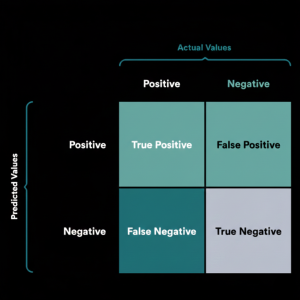
This gap reveals a limitation in traditional validation approaches. Detection accuracy, often measured through recall-focused metrics, answers only one question: Can the system detect a risky state? It does not answer an equally critical one: Can the system distinguish between genuine risk and the benign behaviors that mimic it, avoiding false positives? In practice, user experience is not defined by the obvious, safety-critical events that are easy to detect, but by how the system behaves during the 99% of driving time where behavior is subtle, variable, and benign.
The next evolution of driver and occupant monitoring systems is therefore not about detecting more, but about detecting more intelligently.
Effective DMS must:
- Reliably distinguish genuine safety risk from benign behavior
- Balance sensitivity with contextual robustness
- Deliver safety without constant interruption
Key takeaway: Safety compliance does not equal acceptance. Driver monitoring systems fail when they meet safety protocols but ignore the “nuisance factor.” Success requires engineering regulatory objectives and human acceptance as a single, unified problem.
The “Nuisance” Factor: Why Excessive Sensitivity and Context Misinterpretation Cause False Positives in Driver Monitoring Systems
Driver monitoring systems generate nuisance alerts when high sensitivity is applied without sufficient contextual understanding, causing normal driving behaviors to be misclassified as safety risks. To avoid missing genuine distraction or drowsiness events, many systems adopt conservative thresholds, but this approach increases false positives in everyday driving. The result is a growing gap between technical detection logic and real-world driver behavior, where alerts are triggered correctly according to signal thresholds but incorrectly according to actual risk.
Current algorithms often rely on cues that resemble distraction or drowsiness but do not reflect actual risk. Systems default to conservative behavior, triggering alerts that feel unjustified, causing alert fatigue, and eroding trust.
In driving simulator studies aligned with Euro NCAP distraction detection logic, drivers received frequent attention warnings even while performing normal, safe driving maneuvers such as mirror checks or adjusting sunglasses. For example, a driver checking blind spots or side mirrors involves a “gaze away from road” signal. In a low-context system, this triggers a Long Distraction alert.
Common False-Positive Scenarios:
- Active Scanning: Mirror/blind spot checks exceeding 1 second but remaining under 3 seconds.
- Vocal Engagement: Singing or animated conversation misclassified as yawning or drowsiness.
- Morphological Noise: Deep-set eyes or heavy eyelids flagged as microsleeps or drowsiness.
- Environmental Occlusion: Adjusting sunglasses or head position flagged as “eye closure,” or inattentiveness.
These alerts are not true positives indicating danger. They are routine driving behaviors misclassified as risk. When systems respond aggressively to such actions, the result is alert fatigue, frustration, and erosion of trust. Behavioral research consistently shows that users adapt to unreliable alerts by deprioritizing them, a phenomenon known as alert habituation. In safety-critical systems, this learned disregard directly reduces intervention effectiveness when genuine risk arises.
Importantly, regulatory bodies are increasingly aware of this problem. Euro NCAP and similar consumer assessment programs are moving toward frameworks that implicitly penalize overly intrusive systems. Consumer-facing assessments increasingly emphasize repeatability, realism, and driver acceptance, recognizing that a system that drivers frequently override or ignore cannot deliver real-world safety benefits.
In this context, robustness is becoming as important as sensitivity. A system is only “safe” if it is accepted and consistently used.
User Acceptance: How to Prevent Building a Driver Monitoring System That Users Want to Disable
To prevent drivers from ignoring or disabling driver monitoring systems, automakers must treat false positives as a primary safety risk, and not a secondary UX concern. In modern driver monitoring systems (DMS), user acceptance depends on whether alerts align with actual safety risk rather than abstract compliance thresholds. Optimizing solely for detection accuracy increases the likelihood of nuisance alerts, which erode trust, accelerate alert habituation, and ultimately undermine both Euro NCAP objectives and EU GSR intent. Preventing feature rejection, therefore, requires prioritizing precision, contextual robustness, and real-world usability alongside recall.
In a Tier-1 supplier study, drivers’ mirror checks and brief glances at pedestrians were repeatedly flagged as distractions despite compliance with safe driving practices. While recall remained high, drivers learned to override or ignore alerts, illustrating the operational impact of false positives.
The Engineering Gap: Recall vs. Real Accuracy
Most driver monitoring models focus on recall, capturing every possible instance of drowsiness, distraction, or misuse. While this creates a form of ‘excessive accuracy’, where nothing is ever missed, it is not real accuracy. True accuracy is not just about detection; it is the in-cabin monitoring system’s ability to successfully make the correct decision: triggering an alert when risk is real, and successfully remaining silent when it is not.”
Key points for engineers:
- Operating-point trade-offs: DMS sensitivity curves (ROC curves) balance recall and precision. Increasing recall typically increases false positives.
- Context matters: False positives arise across lighting conditions, driver morphology, gaze, posture, and real-world driving behaviors.
- Behavioral nuance: A driver not looking straight ahead may be checking mirrors, scanning for pedestrians, or anticipating traffic—not necessarily distracted.
The Real Cost of False Positives: Alert Habituation and System Rejection
False positives create alert habituation, where drivers learn to ignore warnings, and are increasingly recognized as a regulatory and safety risk. The EU GSR (ADDW) explicitly mandates that systems “shall be designed to minimise the system error rate (false positive) under real driving conditions.” Validating this balance through traditional methods is extremely challenging.
User experience cannot be reliably assessed on a test track alone. It is neither scalable nor realistic to expect test drivers to behave naturally for hundreds of hours just to capture rare false alarms.
Robustness testing addresses this challenge by deliberately stress-testing DMS against everyday, low-risk scenarios, shifting validation from “Can the system detect risk?” to “Can the system remain silent when there is no risk?” This approach ensures that alerts are meaningful and builds the trust necessary for real-world adoption.
Reducing False Alerts and Boosting Robustness: How Synthetic Data Optimizes User Experience in Driver Monitoring Systems
Synthetic data enables driver monitoring system AI models to be explicitly validated for user experience by allowing engineers to define scenarios where the correct system response is no alert, making UX a measurable and controllable design variable. Real-world datasets are inherently biased toward rare safety-critical events and lack sufficient coverage of everyday benign behaviors. Synthetic data overcomes this limitation by enabling large-scale modeling of normal driving actions under controlled conditions. As a result, DMS UX shifts from an emergent byproduct of training data to an intentional engineering outcome. By providing controlled, repeatable scenarios, synthetic data allows engineers to systematically study the point at which a system should remain silent versus when it should trigger, directly linking model performance to driver acceptance.
Synthetic data solutions for in-cabin monitoring, such as Anyverse InCabin, enable the simulation of test cases that evaluate system responses to everyday, low-risk behaviors. This ensures that robustness and UX are considered alongside detection performance, without relying solely on scarce real-world observations.
Anyverse InCabin allows engineers to define user-centered scenarios – situations where the expected outcome is system silence. These “negative tests” or silence scenarios teach models what not to flag, which is essential for reducing false positives and improving the overall driving experience.
How Synthetic Data Improves DMS Robustness:
- Procedural Diversity: Generating thousands of variations of a driver adjusting sunglasses across all Fitzpatrick Skin Types (1–6) and lighting conditions (e.g., strobing tunnel lights).
- Controlled Ambiguity: Explicitly simulating “Lizard” (eye only) and “Owl” (head movement) behaviors to define the exact threshold where a scan becomes a distraction.
- Sensor-Realistic Noise: Simulating Near-Infrared (NIR) reflections from cabin materials or lens flare that typically trigger “ghost” alerts in the real world.
- Micro-event Validation: Training the model to recognize the difference between a 1.5s “mirror glance” and a 3.5s “distraction glance” with millisecond-perfect ground truth.
Crucially, these scenarios are not random. Engineers can control variables such as head pose, gaze direction, lighting conditions, occlusions, and timing, allowing precise identification of the threshold where a safe behavior becomes genuinely risky. This controlled variability allows testing of edge cases that would be nearly impossible to capture with conventional road-testing alone, improving both system robustness and confidence in model behavior before physical deployment.
DMS Sensor Fusion + Synthetic Data to Ensure In-Cabin Safety
The Synthetic Data Payoff: Deploying UX-First Driver Monitoring Systems That Users Won't Want to Disable
Synthetic data enables OEMs and Tier-1 suppliers to treat user experience as a measurable engineering objective, not just a subjective afterthought. By creating controlled, large-scale simulations of benign, everyday driving behaviors, engineers can systematically tune driver monitoring systems to intervene only when genuine risk exists. This approach reduces nuisance alerts, strengthens precision, and ensures that drivers trust the system instead of ignoring or disabling it.
Key benefits of a UX-first validation strategy enabled by synthetic data include:
- Reduced false alarms and higher driver trust: Systems trained and validated against realistic, low-risk behaviors intervene less often, creating a smoother, less intrusive driving experience and lowering alert fatigue. Research on adaptive warning systems shows that perceived usefulness and ease of use are critical to driver acceptance; reducing nuisance alerts directly improves system adoption.
- Faster and more controlled sensitivity tuning: Synthetic data allows engineers to adjust variables such as lighting, driver posture, gaze direction, and behavior in simulation. Tools like Anyverse InCabin enable rapid creation of thousands of scenario variations, mirror checks, brief glances, natural gestures, allowing sensitivity thresholds to be optimized efficiently before road testing.
- Higher Euro NCAP readiness and competitive differentiation: Modern consumer assessment protocols like Euro NCAP increasingly value driver engagement and realistic system behavior. DMS that demonstrate robustness without unnecessary alerts gain scoring advantages, positioning OEMs and Tier-1s to meet regulatory expectations while delivering superior user experience.
By embedding synthetic data–driven UX validation into the development pipeline, organizations move beyond pass/fail compliance. Safety, precision, and usability are validated together, ensuring that driver monitoring systems are trusted and relied upon in real-world conditions – a critical factor for both regulatory compliance and market adoption.
Why User Experience-Centered Design Equals Robust Driver Monitoring Systems
Safety technology truly works when it earns trust by intervening only when necessary, remaining unobtrusive during normal operation while responding decisively to genuine risk. In driver monitoring, this requires systems that are not only accurate but also predictable and restrained. Drivers quickly learn whether alerts are meaningful; when they are not, trust deteriorates. This expectation aligns closely with evolving consumer assessment philosophies, including Euro NCAP, which increasingly recognize that intrusive systems undermine both usability and safety. Invisibility, operating reliably in the background until a true safety threshold is crossed, has therefore become a defining characteristic of effective driver monitoring.
The most trusted driver monitoring systems are not those that intervene the most, but those that intervene at the right moment. True safety operates quietly in the background, reinforcing confidence rather than demanding attention.
Synthetic data is enabling this shift. What began as a tool for protocol-driven validation is now evolving into a foundation for holistic system assessment, where user experience and robustness are validated alongside detection performance.
Takeaway:
By leveraging synthetic data for UX validation, OEMs and Tier-1 suppliers can build driver monitoring systems that drivers trust rather than tolerate.
Anyverse is leading this transition by expanding the role of synthetic data beyond safety compliance to support the development of human-centric, robust, and trusted in-cabin monitoring systems.
FAQs: Driver Monitoring Validation, UX, and Noise Variables
What is a false positive in driver monitoring systems, and why does it matter?
A false positive occurs when a driver monitoring system triggers an alert despite the driver exhibiting safe, non-risky behavior, such as checking mirrors, briefly looking at pedestrians, or adjusting sunglasses. While false positives do not reduce detection capability on paper, they have a direct negative impact on user experience, leading to alert fatigue, reduced trust, and increased likelihood that drivers ignore or disable the system. From a validation perspective, minimizing false positives requires testing not only safety-critical events but also large volumes of benign, everyday driving scenarios, where the correct system response is no alert.
How do lighting conditions affect driver monitoring system validation?
Variable lighting, such as low sun angles, night driving, or rapidly changing shadows, can degrade detection accuracy by confusing eye-closure or gaze-estimation algorithms. Validating models under these conditions with synthetic data ensures the system maintains robust performance across real-world scenarios.
Why are occlusions a key UX consideration in ICMS?
Occlusions from sunglasses, hands, or masks can trigger nuisance alerts that frustrate drivers. Testing and designing for these scenarios ensures alerts occur only when truly necessary, improving driver trust and acceptance without compromising safety.
How does driver morphology, including Fitzpatrick skin types, influence model validation?
Differences in skin tone, facial structure, or eye shape can impact camera-based detection algorithms. Including Fitzpatrick skin type diversity in synthetic datasets allows engineers to validate model robustness across populations, ensuring consistent detection without introducing bias.
How can posture and movement variability improve UX?
Natural behaviors like leaning forward, reaching for controls, or adjusting posture can be misclassified as a distraction. Incorporating these variations in synthetic data enables engineers to design systems that minimize nuisance alerts, creating a smoother and less intrusive driving experience.
Why is temporal variability important for UX-aware system design?
Short, safe actions, mirror checks, talking, or yawning, can be misinterpreted as distraction if timing is ignored. Synthetic data allows precise control over action duration and sequence, helping systems intervene only when necessary, which preserves driver trust and reduces alert fatigue.
What are "Noise Variables" in DMS validation?
These are variables that the system must “ignore” or remain robust against to score points. They include a wide variety of driver statures (from 5th to 95th percentile), occlusions (glasses, hats, face masks), and lighting conditions (direct sunlight to complete darkness).