
China NCAP Explained: New Safety Ratings for Driver Monitoring and In-Cabin Systems

China NCAP Explained New Safety Ratings for Driver Monitoring and In-Cabin Systems
SHARE

Table of Contents

Table of Contents

Executive Summary

China NCAP 2024 marks a decisive inflection point in global vehicle safety assessment, formally elevating Driver Monitoring Systems (DMS) and in-cabin intelligence from optional features to scored, safety-critical technologies. Driven by China’s top-down regulatory model and enforced through MIIT and CATARC, the updated C-NCAP protocol shifts the focus from passive crash protection to proactive accident prevention, aligning safety ratings with real-world driver behavior, attention, and fitness.

For the first time, DMS directly contributes to the overall NCAP score, with stringent performance thresholds (≥90% detection accuracy), defined fatigue and distraction scenarios, and evaluation of sensor fusion between in-cabin and exterior ADAS systems. In parallel, Road Feature Recognition (RFR) and enhanced Vulnerable Road User (VRU) testing underscore China’s ambition to reduce accidents before impact, not just mitigate injury afterward.

Backed by new GB/T national standards and reinforced by MIIT’s crackdown on misleading ADAS claims, China NCAP 2024 creates both urgency and opportunity for OEMs and Tier-1 suppliers. Compliance now depends on robust validation strategies, scalable testing across edge cases, and privacy-preserving data pipelines. In this context, synthetic data and simulation-based validation are emerging as essential enablers, allowing manufacturers to meet aggressive timelines, control costs, and “build once, comply everywhere” across China, Europe, and beyond.

Introduction

China’s automotive landscape is evolving at a rapid pace, driven by fierce competition, fast innovation, and a uniquely top-down regulatory approach. With the largest vehicle market in the world and a growing influence on global automotive standards, China is not just following trends, it’s setting them. The country saw over 30 million vehicles sold in 2023 alone, accounting for nearly one-third of global auto sales. At the same time, Chinese automakers are aggressively expanding into international markets, particularly Europe, prompting new demands for compliance with foreign safety protocols.

The government plays an increasingly hands-on role in shaping this future through institutions like the Ministry of Industry and Information Technology (MIIT). In response to safety concerns and incidents involving driver monitoring (DMS) or advanced driver-assistance systems (ADAS), MIIT has announced sweeping new regulations covering how automakers develop, label, and market autonomous driving systems in the country. These changes aim to eliminate consumer confusion, enforce SAE-level transparency, and ensure rigorous technical validation before deployment.

In this evolving environment, the China New Car Assessment Program (C-NCAP) is emerging as a linchpin that aligns market forces with national policy goals. As in-cabin monitoring systems gain prominence globally, China’s approach is notable for its integration of regulatory enforcement, market-driven adaptation, and technical evaluation. The latest C-NCAP update, effective July 2024, officially incorporates Driver Monitoring Systems (DMS) and Road Feature Recognition (RFR) into its scoring. China NCAP 2024 reflects a decisive shift from passive crash protection to proactive accident prevention. This evolution supports China’s Vision Zero ambitions and cements its role in the global safety conversation.

As in-cabin monitoring systems gain prominence, it’s crucial to understand how regulations are evolving worldwide. For a global perspective, check out our overview of in-cabin monitoring system regulations around the globe. Europe’s Safe-Driving standards are setting the bar for in-cabin monitoring, and the new EU AI Act is reshaping what’s considered an unacceptable risk in AI-driven safety systems. Meanwhile, across the Atlantic, U.S. regulators are still defining best practices for driver monitoring.

C-NCAP: Overview of China’s Driver Monitoring Regulations

China’s automotive safety framework now requires:

  • Driver Fitness Monitoring (DFM): Measures driver physical-cognitive state—eyelid gap, head pose—and prompts fatigue warnings after specified thresholds.
  • Driver Attention Monitoring (DAM): Detects gaze direction and distraction, issuing escalation alerts if eyes leave the road for more than 3–5 seconds.
  • Data Privacy & Security: Collected driver data must comply with China’s Personal Information Protection Law (PIPL), anonymizing biometric info, and securing transmissions.

What Is C-NCAP?

Launched in 2006 and modeled after Euro NCAP, C-NCAP (China New Car Assessment Program) is China’s official vehicle safety rating system. Managed by the China Automotive Technology and Research Center (CATARC), the program now evaluates both passive and active safety performance.

Key Milestones

  • 2006: Inception of C-NCAP, focused on occupant crashworthiness.
  • 2018–2021: Introduction of passive-safety enhancements (side-pole and whiplash tests).
  • 2024 Revision: Major inclusion of active safety, with new tests for AEB, DMS, RFR, and Vulnerable Road User (VRU) protection.

China NCAP 2024: Spotlight on Active Safety

The 2024 C-NCAP protocol elevates active safety to a central role, allocating up to 2 points out of the overall score to in-cabin monitoring and ADAS features. It marks the first time DMS contributes directly to the overall safety rating.

Highlights:

  • Scoring Breakdown: DMS contributes 2 points, second only to AEB’s 3 points.
  • Test Scenarios:
    • DFM Tests: Eye closure, yawning, head nodding
    • DAM Tests: Eyes off-road, phone usage
  • Scoring Criteria: ≥90% detection accuracy required for full points.
  • Sensor Fusion: Evaluates integration between cabin and exterior sensors (e.g., DMS + AEB + VRU).
  • Road Feature Recognition (RFR): Assesses traffic sign and lane detection under variable weather and lighting conditions.

Prioritizing Vulnerable Road User (VRU) Safety

Historically, pedestrian and cyclist protection received limited attention. C-NCAP 2024 changes this by integrating VRU-AEB tests and passive impact evaluations:

  • Active VRU-AEB: Scenarios include occluded pedestrians and cyclists, tested both day and night
  • Passive Safety Tests: Head and leg impact assessments on pedestrian dummies
  • Global Best Practices Alignment: By merging avoidance (AEB-VRU) and injury mitigation tests, C-NCAP parallels Euro NCAP’s dual-approach to VRU safety.

This dual approach, reflecting global best practices, addresses both avoidance and injury mitigation. The measures push OEMs to integrate advanced sensor fusion and robust vehicle structures, making streets safer for all users.

Key GB/T National Standards for In-Cabin Monitoring

To standardize DMS performance, China’s Ministry of Industry and Information Technology (MIIT) introduced three foundational GB/T standards:

  • GB/T 41796-2022: Performance and durability standards for sensing modules.
  • GB/T 41797-2022: Algorithmic accuracy and detection thresholds for fatigue/distraction.
  • GB/T 41798-2022: Environmental robustness under real-world scenarios (e.g., lighting, occlusion).

Together, these standards ensure that hardware and algorithms used in DMS are not only functional but also consistent across OEMs and suppliers.

MIIT’s Crackdown on Misleading ADAS Claims

China’s push for safety has intensified following a tragic Xiaomi SU7 crash in early 2025 involving its “Navigate on Autopilot” feature.

Regulatory Reactions:

  • SAE Level Labeling: All ADAS functions must be transparently labeled (e.g., “Level 2”) to prevent consumer confusion.
  • OTA Regulation: Over-the-air updates for safety features now require the same scrutiny as hardware recalls.
  • Advertising Restrictions: Terms like “autonomous driving” or “smart driving” are banned in marketing materials.
  • Penalties: Violations can lead to fines, license revocation, and criminal charges.

Industry Adoption and Challenges

OEM Rollout

Major Chinese OEMs (e.g., SAIC, Geely, BYD) have incorporated C-NCAP-compliant DMS in all new models since China NCAP 2024.

Tier-1 Suppliers:

Industry leaders like Bosch and Valeo have released integrated DMS platforms using multi-modal sensor stacks (IR, RGB, radar).

Validation Trends:

  • Virtual Simulation: Combines physics-based sensor modeling with AI for accelerated validation.
  • Synthetic Data: Reduces real-world test dependency and speeds up compliance workflows.

Common Roadblocks

  • Cost Pressures: Balancing high-performance ADAS hardware with competitive pricing
  • Adverse-Condition Reliability: Ensuring detection in rain, snow, fog, and low light
  • Complex Protocols: The breadth of AEB, DMS, and RFR tests strains in-house R&D teams
  • Time-to-Market: Rapid product cycles in China demand turnkey validation workflows

Best Practices for Compliance

  • Comprehensive Testing: Use mixed-reality simulation, hardware-in-the-loop (HIL), and diverse virtual driver profiles.
  • Data Governance: On-device anonymization, PIPL-compliant data storage, and secure cloud architectures.
  • Model Maintenance: Ongoing model retraining using real and synthetic edge case data.

How Anyverse Helps OEMs Navigate Safety Compliance in China and Abroad

Platforms like Anyverse are revolutionizing how OEMs test and validate Driver Monitoring Systems:

  • Simulate thousands of in-cabin scenarios (demographics, behavior, lighting)
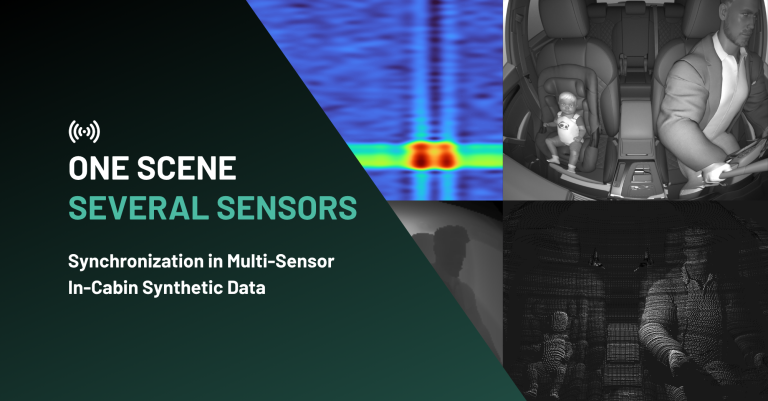
  • Create perfect alignment across camera, IR, and radar modalities
  • Pre-validate against GB/T and C-NCAP benchmarks—reducing physical prototypes by up to 80%

By using synthetic data, manufacturers can confidently scale development, accelerate validation, and maintain safety compliance, even under the intense scrutiny of Chinese regulators.

Anyverse is already helping OEMs and Tier-1 suppliers achieve Euro NCAP compliance by providing a catalog of test scenarios aligned to European safety protocols. This makes it easier for Chinese OEMs aiming to enter European markets to validate their systems in advance, using synthetic data to meet the latest EU regulations.

With Anyverse | InCabin, OEMs benefit from a turnkey platform aligned to NCAP requirements, capable of generating all the data they need to validate systems against C-NCAP‘s and Euro NCAP’s exact test scenarios. This readiness empowers automotive players to build once and comply everywhere, accelerating time to market while lowering the cost and complexity of validation.

Conclusion

China’s evolving in-cabin monitoring regulations and the China NCAP 2024 active safety focus underscore a broader shift: from passive crash protection to proactive accident prevention. By aligning with GB/T standards and leveraging physics-based simulation, OEMs and suppliers can not only comply but excel, delivering robust, reliable in-cabin AI that meets the strictest safety and regulatory benchmarks in China and beyond.

FAQ: China NCAP

What is the difference between Driver Fitness Monitoring (DFM) and Driver Attention Monitoring (DAM) in C-NCAP?

DFM and DAM address distinct but complementary safety risks. Driver Fitness Monitoring (DFM) evaluates the driver’s physiological and cognitive readiness to drive, focusing on indicators such as eyelid closure rate (PERCLOS), yawning frequency, and head nodding associated with fatigue or drowsiness. Driver Attention Monitoring (DAM), by contrast, assesses whether the driver is visually and cognitively engaged with the driving task, tracking gaze direction, eyes-off-road duration, and distraction behaviors such as phone usage. C-NCAP scores both domains separately to ensure systems detect not only whether the driver is awake, but also whether they are paying attention.

What is PIPL and how does it impact in-cabin data collection?

China’s Personal Information Protection Law (PIPL) governs the collection, processing, and storage of personal data, including biometric signals captured by DMS (e.g., facial features, eye movement). OEMs must ensure data minimization, anonymization, on-device processing where possible, and secure transmission. Non-compliance can lead to severe penalties and product bans, making privacy-by-design a core technical requirement for in-cabin AI systems.

What is VRU-AEB and why is it emphasized in China NCAP 2024?

VRU-AEB (Vulnerable Road User Automatic Emergency Braking) refers to braking systems designed to detect and avoid collisions with pedestrians and cyclists. China NCAP 2024 emphasizes VRU-AEB by testing complex, real-world scenarios, including occluded pedestrians, night-time cyclists, and urban intersections. The protocol evaluates both avoidance capability and injury mitigation, aligning China with global best practices while addressing its dense urban traffic conditions.

How does OTA regulation affect ADAS and DMS deployment in China?

Under MIIT’s updated rules, over-the-air (OTA) updates that modify safety-relevant behavior—including DMS algorithms or ADAS logic—are treated similarly to hardware recalls. OEMs must submit updates for regulatory review, validate performance changes, and ensure no regression against approved safety benchmarks. This significantly raises the bar for continuous deployment practices and increases the importance of pre-validated models.

What are GB/T standards and why are they critical for in-cabin monitoring systems?

GB/T standards are national recommended technical standards issued in China, often serving as de facto requirements when referenced by regulators or assessment programs like C-NCAP. For DMS, the GB/T 41796–41798 series defines performance metrics, algorithm accuracy thresholds, and environmental robustness expectations. Compliance ensures consistency across OEMs and suppliers and provides a measurable technical baseline for audits, NCAP testing, and regulatory approval.

What does “build once, comply everywhere” mean in an NCAP context?

“Build once, comply everywhere” refers to designing validation pipelines that simultaneously address multiple regulatory and NCAP protocols (e.g., C-NCAP and Euro NCAP). By aligning test scenarios, performance metrics, and data generation methods early, often using simulation and synthetic data, OEMs can avoid duplicative testing, accelerate homologation, and scale globally with minimal re-engineering.
Enjoyed this article?

Add us as a Preferred Source on Google to see more content like this in Discover and Top Stories.

About Anyverse

With over 25 years of heritage in physics-based simulation and a 2008 Academy Technical Achievement Award, Anyverse is a leading provider of high-fidelity synthetic data and validation tools for advanced Perception AI.

While Anyverse remains a premier partner for the Automotive market, specializing in In-Cabin Monitoring systems and ADAS, its technology is increasingly adopted across Defence, Robotics, and Industry 4.0. Leveraging a proprietary physics-grounded engine, procedural synthetic data generation, and next-gen Generative AI, Anyverse produces datasets with unmatched realism and sensor-level accuracy (including RGB, NIR, Radar, LiDAR, and Thermal).

Its unified validation framework helps partners ensure compliance with specific regulations like Euro NCAP, as well as broader safety standards for autonomous systems. By bridging the gap between simulation and reality, Anyverse accelerates development, reduces costs, and ensures trustworthy perception for vehicles, robots, and intelligent machines.

China NCAP Explained: New Safety Ratings for Driver Monitoring and In-Cabin Systems

China NCAP Explained New Safety Ratings for Driver Monitoring and In-Cabin Systems
SHARE

Table of Contents

Table of Contents

Executive Summary

China NCAP 2024 marks a decisive inflection point in global vehicle safety assessment, formally elevating Driver Monitoring Systems (DMS) and in-cabin intelligence from optional features to scored, safety-critical technologies. Driven by China’s top-down regulatory model and enforced through MIIT and CATARC, the updated C-NCAP protocol shifts the focus from passive crash protection to proactive accident prevention, aligning safety ratings with real-world driver behavior, attention, and fitness.

For the first time, DMS directly contributes to the overall NCAP score, with stringent performance thresholds (≥90% detection accuracy), defined fatigue and distraction scenarios, and evaluation of sensor fusion between in-cabin and exterior ADAS systems. In parallel, Road Feature Recognition (RFR) and enhanced Vulnerable Road User (VRU) testing underscore China’s ambition to reduce accidents before impact, not just mitigate injury afterward.

Backed by new GB/T national standards and reinforced by MIIT’s crackdown on misleading ADAS claims, China NCAP 2024 creates both urgency and opportunity for OEMs and Tier-1 suppliers. Compliance now depends on robust validation strategies, scalable testing across edge cases, and privacy-preserving data pipelines. In this context, synthetic data and simulation-based validation are emerging as essential enablers, allowing manufacturers to meet aggressive timelines, control costs, and “build once, comply everywhere” across China, Europe, and beyond.

Introduction

China’s automotive landscape is evolving at a rapid pace, driven by fierce competition, fast innovation, and a uniquely top-down regulatory approach. With the largest vehicle market in the world and a growing influence on global automotive standards, China is not just following trends, it’s setting them. The country saw over 30 million vehicles sold in 2023 alone, accounting for nearly one-third of global auto sales. At the same time, Chinese automakers are aggressively expanding into international markets, particularly Europe, prompting new demands for compliance with foreign safety protocols.

The government plays an increasingly hands-on role in shaping this future through institutions like the Ministry of Industry and Information Technology (MIIT). In response to safety concerns and incidents involving driver monitoring (DMS) or advanced driver-assistance systems (ADAS), MIIT has announced sweeping new regulations covering how automakers develop, label, and market autonomous driving systems in the country. These changes aim to eliminate consumer confusion, enforce SAE-level transparency, and ensure rigorous technical validation before deployment.

In this evolving environment, the China New Car Assessment Program (C-NCAP) is emerging as a linchpin that aligns market forces with national policy goals. As in-cabin monitoring systems gain prominence globally, China’s approach is notable for its integration of regulatory enforcement, market-driven adaptation, and technical evaluation. The latest C-NCAP update, effective July 2024, officially incorporates Driver Monitoring Systems (DMS) and Road Feature Recognition (RFR) into its scoring. China NCAP 2024 reflects a decisive shift from passive crash protection to proactive accident prevention. This evolution supports China’s Vision Zero ambitions and cements its role in the global safety conversation.

As in-cabin monitoring systems gain prominence, it’s crucial to understand how regulations are evolving worldwide. For a global perspective, check out our overview of in-cabin monitoring system regulations around the globe. Europe’s Safe-Driving standards are setting the bar for in-cabin monitoring, and the new EU AI Act is reshaping what’s considered an unacceptable risk in AI-driven safety systems. Meanwhile, across the Atlantic, U.S. regulators are still defining best practices for driver monitoring.

C-NCAP: Overview of China’s Driver Monitoring Regulations

China’s automotive safety framework now requires:

  • Driver Fitness Monitoring (DFM): Measures driver physical-cognitive state—eyelid gap, head pose—and prompts fatigue warnings after specified thresholds.
  • Driver Attention Monitoring (DAM): Detects gaze direction and distraction, issuing escalation alerts if eyes leave the road for more than 3–5 seconds.
  • Data Privacy & Security: Collected driver data must comply with China’s Personal Information Protection Law (PIPL), anonymizing biometric info, and securing transmissions.

What Is C-NCAP?

Launched in 2006 and modeled after Euro NCAP, C-NCAP (China New Car Assessment Program) is China’s official vehicle safety rating system. Managed by the China Automotive Technology and Research Center (CATARC), the program now evaluates both passive and active safety performance.

Key Milestones

  • 2006: Inception of C-NCAP, focused on occupant crashworthiness.
  • 2018–2021: Introduction of passive-safety enhancements (side-pole and whiplash tests).
  • 2024 Revision: Major inclusion of active safety, with new tests for AEB, DMS, RFR, and Vulnerable Road User (VRU) protection.

China NCAP 2024: Spotlight on Active Safety

The 2024 C-NCAP protocol elevates active safety to a central role, allocating up to 2 points out of the overall score to in-cabin monitoring and ADAS features. It marks the first time DMS contributes directly to the overall safety rating.

Highlights:

  • Scoring Breakdown: DMS contributes 2 points, second only to AEB’s 3 points.
  • Test Scenarios:
    • DFM Tests: Eye closure, yawning, head nodding
    • DAM Tests: Eyes off-road, phone usage
  • Scoring Criteria: ≥90% detection accuracy required for full points.
  • Sensor Fusion: Evaluates integration between cabin and exterior sensors (e.g., DMS + AEB + VRU).
  • Road Feature Recognition (RFR): Assesses traffic sign and lane detection under variable weather and lighting conditions.

Prioritizing Vulnerable Road User (VRU) Safety

Historically, pedestrian and cyclist protection received limited attention. C-NCAP 2024 changes this by integrating VRU-AEB tests and passive impact evaluations:

  • Active VRU-AEB: Scenarios include occluded pedestrians and cyclists, tested both day and night
  • Passive Safety Tests: Head and leg impact assessments on pedestrian dummies
  • Global Best Practices Alignment: By merging avoidance (AEB-VRU) and injury mitigation tests, C-NCAP parallels Euro NCAP’s dual-approach to VRU safety.

This dual approach, reflecting global best practices, addresses both avoidance and injury mitigation. The measures push OEMs to integrate advanced sensor fusion and robust vehicle structures, making streets safer for all users.

Key GB/T National Standards for In-Cabin Monitoring

To standardize DMS performance, China’s Ministry of Industry and Information Technology (MIIT) introduced three foundational GB/T standards:

  • GB/T 41796-2022: Performance and durability standards for sensing modules.
  • GB/T 41797-2022: Algorithmic accuracy and detection thresholds for fatigue/distraction.
  • GB/T 41798-2022: Environmental robustness under real-world scenarios (e.g., lighting, occlusion).

Together, these standards ensure that hardware and algorithms used in DMS are not only functional but also consistent across OEMs and suppliers.

MIIT’s Crackdown on Misleading ADAS Claims

China’s push for safety has intensified following a tragic Xiaomi SU7 crash in early 2025 involving its “Navigate on Autopilot” feature.

Regulatory Reactions:

  • SAE Level Labeling: All ADAS functions must be transparently labeled (e.g., “Level 2”) to prevent consumer confusion.
  • OTA Regulation: Over-the-air updates for safety features now require the same scrutiny as hardware recalls.
  • Advertising Restrictions: Terms like “autonomous driving” or “smart driving” are banned in marketing materials.
  • Penalties: Violations can lead to fines, license revocation, and criminal charges.

Industry Adoption and Challenges

OEM Rollout

Major Chinese OEMs (e.g., SAIC, Geely, BYD) have incorporated C-NCAP-compliant DMS in all new models since China NCAP 2024.

Tier-1 Suppliers:

Industry leaders like Bosch and Valeo have released integrated DMS platforms using multi-modal sensor stacks (IR, RGB, radar).

Validation Trends:

  • Virtual Simulation: Combines physics-based sensor modeling with AI for accelerated validation.
  • Synthetic Data: Reduces real-world test dependency and speeds up compliance workflows.

Common Roadblocks

  • Cost Pressures: Balancing high-performance ADAS hardware with competitive pricing
  • Adverse-Condition Reliability: Ensuring detection in rain, snow, fog, and low light
  • Complex Protocols: The breadth of AEB, DMS, and RFR tests strains in-house R&D teams
  • Time-to-Market: Rapid product cycles in China demand turnkey validation workflows

Best Practices for Compliance

  • Comprehensive Testing: Use mixed-reality simulation, hardware-in-the-loop (HIL), and diverse virtual driver profiles.
  • Data Governance: On-device anonymization, PIPL-compliant data storage, and secure cloud architectures.
  • Model Maintenance: Ongoing model retraining using real and synthetic edge case data.

How Anyverse Helps OEMs Navigate Safety Compliance in China and Abroad

Platforms like Anyverse are revolutionizing how OEMs test and validate Driver Monitoring Systems:

  • Simulate thousands of in-cabin scenarios (demographics, behavior, lighting)
  • Create perfect alignment across camera, IR, and radar modalities
  • Pre-validate against GB/T and C-NCAP benchmarks—reducing physical prototypes by up to 80%

By using synthetic data, manufacturers can confidently scale development, accelerate validation, and maintain safety compliance, even under the intense scrutiny of Chinese regulators.

Anyverse is already helping OEMs and Tier-1 suppliers achieve Euro NCAP compliance by providing a catalog of test scenarios aligned to European safety protocols. This makes it easier for Chinese OEMs aiming to enter European markets to validate their systems in advance, using synthetic data to meet the latest EU regulations.

With Anyverse | InCabin, OEMs benefit from a turnkey platform aligned to NCAP requirements, capable of generating all the data they need to validate systems against C-NCAP‘s and Euro NCAP’s exact test scenarios. This readiness empowers automotive players to build once and comply everywhere, accelerating time to market while lowering the cost and complexity of validation.

Conclusion

China’s evolving in-cabin monitoring regulations and the China NCAP 2024 active safety focus underscore a broader shift: from passive crash protection to proactive accident prevention. By aligning with GB/T standards and leveraging physics-based simulation, OEMs and suppliers can not only comply but excel, delivering robust, reliable in-cabin AI that meets the strictest safety and regulatory benchmarks in China and beyond.

FAQ: China NCAP

What is the difference between Driver Fitness Monitoring (DFM) and Driver Attention Monitoring (DAM) in C-NCAP?

DFM and DAM address distinct but complementary safety risks. Driver Fitness Monitoring (DFM) evaluates the driver’s physiological and cognitive readiness to drive, focusing on indicators such as eyelid closure rate (PERCLOS), yawning frequency, and head nodding associated with fatigue or drowsiness. Driver Attention Monitoring (DAM), by contrast, assesses whether the driver is visually and cognitively engaged with the driving task, tracking gaze direction, eyes-off-road duration, and distraction behaviors such as phone usage. C-NCAP scores both domains separately to ensure systems detect not only whether the driver is awake, but also whether they are paying attention.

What is PIPL and how does it impact in-cabin data collection?

China’s Personal Information Protection Law (PIPL) governs the collection, processing, and storage of personal data, including biometric signals captured by DMS (e.g., facial features, eye movement). OEMs must ensure data minimization, anonymization, on-device processing where possible, and secure transmission. Non-compliance can lead to severe penalties and product bans, making privacy-by-design a core technical requirement for in-cabin AI systems.

What is VRU-AEB and why is it emphasized in China NCAP 2024?

VRU-AEB (Vulnerable Road User Automatic Emergency Braking) refers to braking systems designed to detect and avoid collisions with pedestrians and cyclists. China NCAP 2024 emphasizes VRU-AEB by testing complex, real-world scenarios, including occluded pedestrians, night-time cyclists, and urban intersections. The protocol evaluates both avoidance capability and injury mitigation, aligning China with global best practices while addressing its dense urban traffic conditions.

How does OTA regulation affect ADAS and DMS deployment in China?

Under MIIT’s updated rules, over-the-air (OTA) updates that modify safety-relevant behavior—including DMS algorithms or ADAS logic—are treated similarly to hardware recalls. OEMs must submit updates for regulatory review, validate performance changes, and ensure no regression against approved safety benchmarks. This significantly raises the bar for continuous deployment practices and increases the importance of pre-validated models.

What are GB/T standards and why are they critical for in-cabin monitoring systems?

GB/T standards are national recommended technical standards issued in China, often serving as de facto requirements when referenced by regulators or assessment programs like C-NCAP. For DMS, the GB/T 41796–41798 series defines performance metrics, algorithm accuracy thresholds, and environmental robustness expectations. Compliance ensures consistency across OEMs and suppliers and provides a measurable technical baseline for audits, NCAP testing, and regulatory approval.

What does “build once, comply everywhere” mean in an NCAP context?

“Build once, comply everywhere” refers to designing validation pipelines that simultaneously address multiple regulatory and NCAP protocols (e.g., C-NCAP and Euro NCAP). By aligning test scenarios, performance metrics, and data generation methods early, often using simulation and synthetic data, OEMs can avoid duplicative testing, accelerate homologation, and scale globally with minimal re-engineering.

Enjoyed this article?

Tap to add us as a Preferred Source on Google to see more content like this.

About Anyverse

With over 25 years of heritage in physics-based simulation and a 2008 Academy Technical Achievement Award, Anyverse is a leading provider of high-fidelity synthetic data and validation tools for advanced Perception AI.

While Anyverse remains a premier partner for the Automotive market, specializing in In-Cabin Monitoring systems and ADAS, its technology is increasingly adopted across Defence, Robotics, and Industry 4.0. Leveraging a proprietary physics-grounded engine, procedural synthetic data generation, and next-gen Generative AI, Anyverse produces datasets with unmatched realism and sensor-level accuracy (including RGB, NIR, Radar, LiDAR, and Thermal).

Its unified validation framework helps partners ensure compliance with specific regulations like Euro NCAP, as well as broader safety standards for autonomous systems. By bridging the gap between simulation and reality, Anyverse accelerates development, reduces costs, and ensures trustworthy perception for vehicles, robots, and intelligent machines.